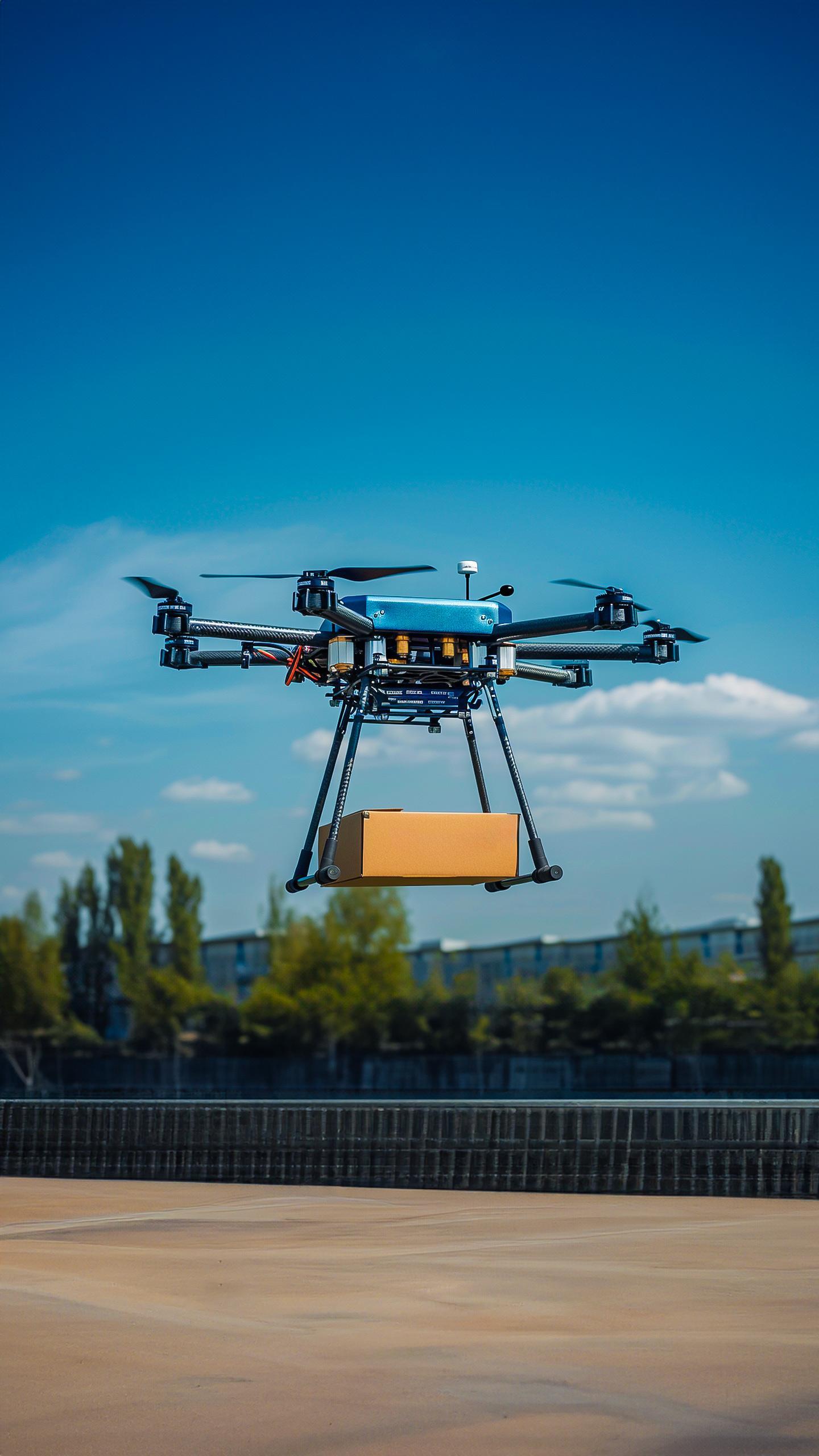
Walmart Expands Drone Delivery Service Nationwide with Zipline Partnership

What's Happening?
Walmart has announced a new multi-year agreement with Zipline to significantly expand its retail drone delivery service across the United States. This partnership aims to add 300 new drone delivery sites,
with potential for further expansion, building on Walmart's existing drone delivery program which has already completed over 2 million deliveries. The collaboration, which began in 2021, allows customers to receive tens of thousands of eligible items in as little as 30 minutes. Customers can access this service through the Walmart app or Walmart.com if their address falls within the delivery range, or via the Zipline app. Orders are delivered directly to the customer's front yard, backyard, or driveway. Keller Cliffton, CEO and co-founder of Zipline, highlighted the shift from autonomous delivery being perceived as impossible to becoming a routine convenience for customers, enabling them to prioritize personal time over errands.
Why It's Important?
This expansion signifies a major step forward in the adoption of drone delivery as a mainstream retail service in the U.S. For Walmart, it leverages their extensive network of stores, with 90% of Americans living within 10 miles of a Walmart, to offer rapid delivery and enhance customer convenience. This move could set a new standard for last-mile delivery, pressuring competitors to invest in similar technologies to remain competitive. Consumers stand to gain significant benefits, including increased access to urgent necessities and a reduction in time spent on errands. The success of this large-scale deployment could also accelerate regulatory advancements and public acceptance of drone technology for commercial purposes, potentially transforming the logistics and retail sectors by making on-demand delivery a more common expectation.
What's Next?
The immediate next step involves the rollout of the 300 new drone delivery sites across the country, which will progressively make the service available to more communities. As the service expands, Walmart and Zipline will likely focus on optimizing delivery routes, expanding the range of eligible items, and refining the customer experience. The increased volume of drone operations will also provide valuable data for further technological advancements and operational efficiencies. This expansion could also prompt other major retailers to accelerate their own drone delivery initiatives, leading to a more competitive landscape in the rapid delivery market. Furthermore, the broader adoption of drone delivery may influence urban planning and infrastructure development to accommodate drone landing zones and operational hubs.
Beyond the Headlines
The widespread implementation of drone delivery by a retail giant like Walmart carries deeper implications beyond mere convenience. It represents a significant shift in consumer behavior, potentially reducing reliance on traditional shopping trips and personal vehicle use for small, urgent purchases. This could have environmental benefits through reduced road traffic and emissions, depending on the energy source for the drones. On the other hand, it raises questions about noise pollution, airspace management, and data privacy. The integration of autonomous delivery systems into daily life also pushes the boundaries of human-technology interaction, potentially leading to new societal norms around instant gratification and the expectation of immediate access to goods. This technological leap could also create new job categories in drone operation, maintenance, and logistics, while potentially displacing traditional delivery roles.