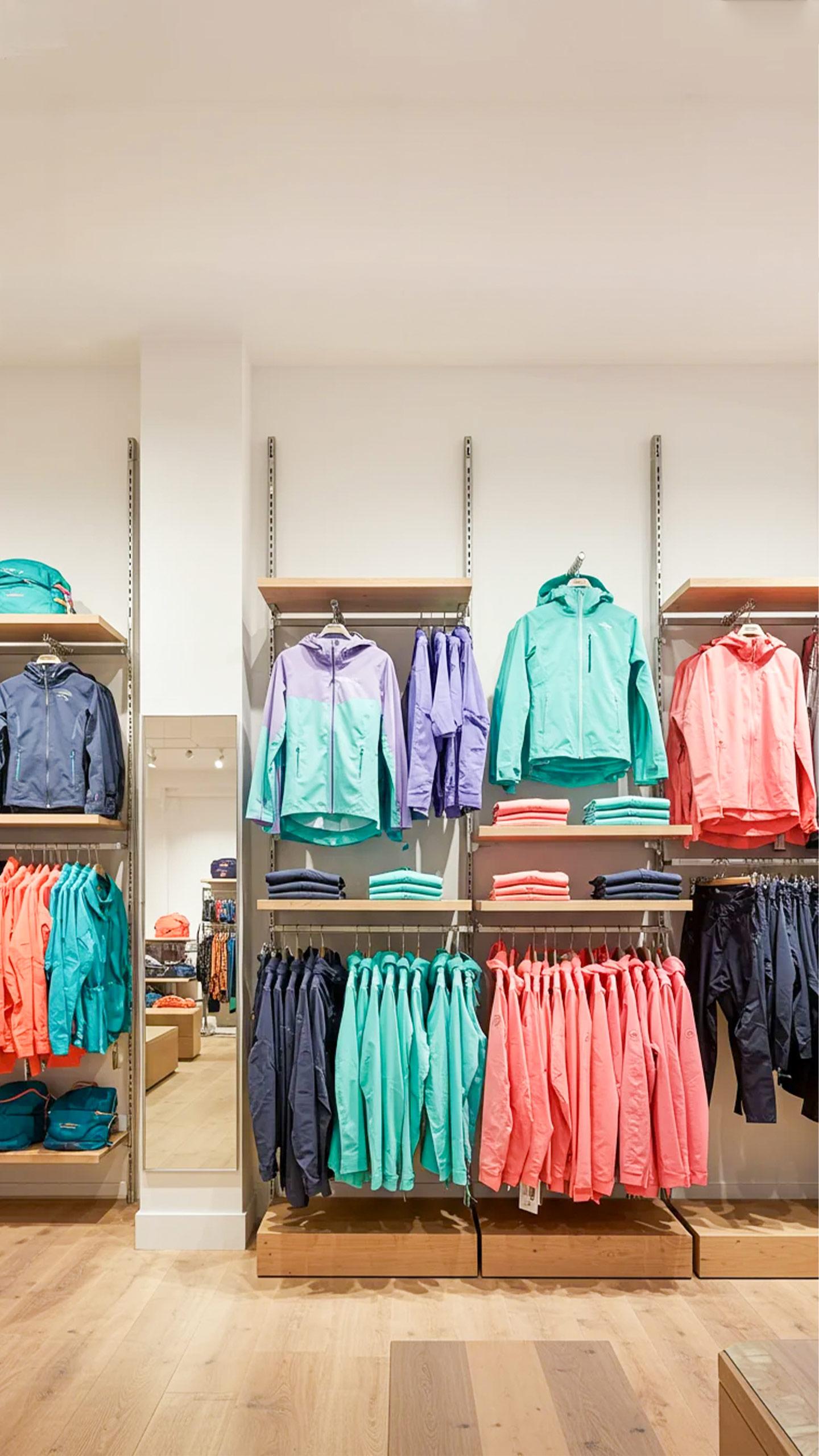
Lululemon Faces Intensifying Competition and Slowing Demand in North American Market

What's Happening?
Lululemon, a prominent premium athletic apparel company, is currently navigating challenges stemming from increased competition and a deceleration in demand within its primary North American market. Despite
its strong brand recognition and a loyal customer base, the company's revenue growth has slowed to 1.7% for the 12 months ending August 2, 2026, reaching approximately $11.1 billion. This slowdown is attributed to established athletic apparel giants like Nike and Adidas, as well as emerging premium brands, all vying for market share. Lululemon's strategy involves operating through a network of retail stores and direct-to-consumer channels, with international expansion being a key component of its long-term growth plans. The company reported a net income of approximately $1.4 billion, achieving a net profit margin of 12.8%, indicating its ability to maintain profitability amidst these growth challenges. Lululemon also maintains a robust financial position, with a debt-to-equity ratio of approximately 0.4 and a current ratio of 2.3 as of February 2026, generating about $921.7 million in free cash flow during fiscal 2025.
Why It's Important?
The challenges faced by Lululemon are significant for the U.S. athleisure market and broader retail sector. As a leader in premium athletic apparel, Lululemon's struggle with slowing demand and heightened competition signals a maturing market where consumer preferences are evolving and brand loyalty is being tested. Its premium pricing strategy, once a key differentiator, now makes it vulnerable to shifts in consumer spending habits and the rise of more affordable or equally aspirational brands. This situation could lead to increased promotional activities across the sector, impacting profit margins for all players. For investors, Lululemon's current valuation, with a Forward P/E of 11.2x and a P/S ratio of 1.1x, suggests that the market has already factored in considerable pessimism regarding its growth prospects. However, its strong profitability and healthy balance sheet could present an attractive opportunity if the company can stabilize revenue growth and maintain its profit margins, making it a compelling risk-reward scenario for investors looking into 2027.
What's Next?
Looking ahead, Lululemon's immediate focus will likely be on strategies to reignite growth in its core North American market and accelerate its international expansion efforts. The company will need to innovate its product offerings, enhance its marketing strategies, and potentially adjust its pricing to remain competitive against both established rivals and new entrants. Monitoring consumer preferences and adapting quickly will be crucial. The success of its international expansion will be a key determinant of its overall performance, as it seeks to offset the slowdown in its domestic market. Investors will be closely watching for signs of revenue stabilization and continued strong profitability. Any strategic partnerships or acquisitions aimed at diversifying its product portfolio or expanding its market reach could also be on the horizon. The company's ability to maintain its premium brand image while navigating a more competitive landscape will define its trajectory in the coming years.
Beyond the Headlines
Beyond the immediate financial metrics, Lululemon's situation highlights broader trends in consumer behavior and the retail industry. The increasing competition in the athleisure sector suggests a shift towards a more fragmented market where consumers have a wider array of choices. This could lead to a re-evaluation of what constitutes 'premium' in athletic wear, potentially pushing brands to focus more on sustainability, technological innovation, or unique community engagement models to differentiate themselves. The vulnerability of Lululemon's premium pricing also points to a potential ceiling for high-end brands in certain economic climates, forcing them to balance exclusivity with accessibility. Furthermore, the emphasis on international expansion underscores the global nature of modern retail, where domestic market saturation often necessitates looking abroad for growth. This could also lead to cultural adaptations in product design and marketing as brands seek to resonate with diverse international consumer bases.