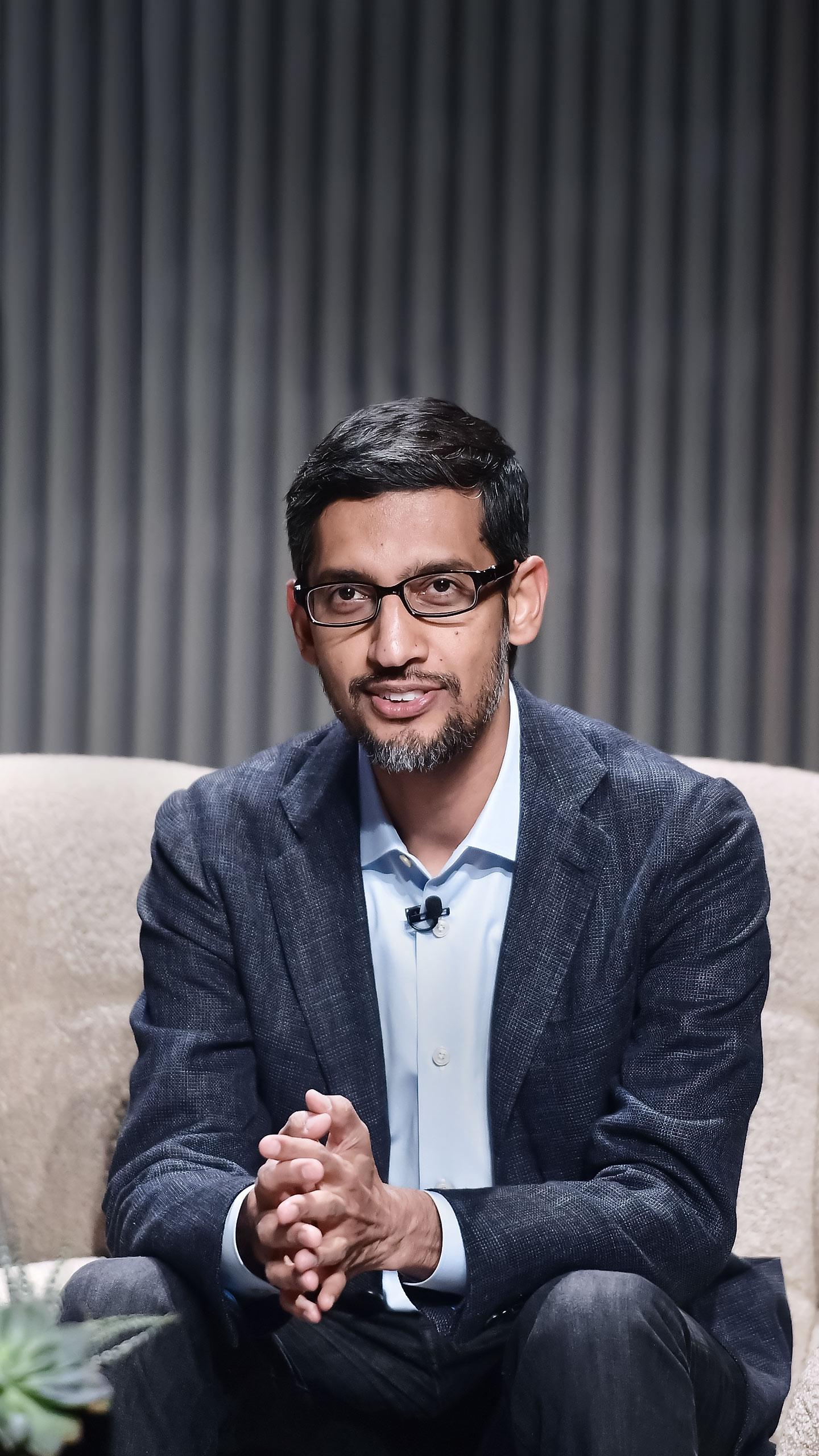
Alphabet CEO Sundar Pichai's Stock Holdings Detailed in SEC Filing

What's Happening?
Sundar Pichai, CEO of Alphabet, holds 3.2 million shares of Alphabet stock, as detailed in an SEC filing from October 2026. This ownership includes 1,678,737 shares of Class C Capital Stock, 191,759 Class C Google
stock units, and 227,560 shares of Class A common stock. Additionally, Pichai's indirect ownership accounts for 1.1 million shares of Class C Capital Stock held in annuity trusts by him and his wife, Anjali. Pichai, 53, joined Alphabet in 2004, initially leading product management and development. He ascended to CEO of Google's services and cloud division before becoming CEO of Alphabet in 2015, succeeding Brin in 2019. Class C shares (GOOG) do not carry voting rights, while Class A shares (GOOGL) do. Class B shares, which are not publicly traded, hold significant voting power and are primarily held by founders Larry Page and Sergey Brin, who collectively control the majority of Alphabet's voting power.
Why It's Important?
The detailed disclosure of Sundar Pichai's stock ownership provides transparency into the compensation structure of a major U.S. tech executive and highlights the distinct share class system at Alphabet. The significant holdings of Class C shares by Pichai, which lack voting rights, underscore the concentrated control maintained by co-founders Larry Page and Sergey Brin through their Class B shares. This structure allows the founders to retain strategic direction over the company despite a large public float and substantial institutional ownership. For investors, understanding the distribution of stock and voting power is crucial for assessing corporate governance and potential influence on long-term decision-making. Institutional investors, such as The Vanguard Group and BlackRock, collectively own a substantial 89.8% of Alphabet's GOOGL stock, indicating broad market confidence but also a reliance on the company's established leadership and governance framework.
What's Next?
As Sundar Pichai continues his tenure as CEO of Alphabet, his compensation and stock holdings will likely remain a subject of public and investor scrutiny, particularly through future SEC filings. The ongoing performance of Alphabet's various divisions, including Search, Chrome, Maps, Android, Gmail, and Google Workspace, will directly impact the value of his holdings and the company's overall market capitalization. Any changes in the company's share structure or executive compensation policies could draw significant attention from shareholders and regulatory bodies. The long-term implications of the dual-class share structure, which grants founders disproportionate voting power, will continue to be a key aspect of Alphabet's corporate governance, potentially influencing future strategic shifts and investor relations.
Beyond the Headlines
The structure of Alphabet's stock ownership, particularly the existence of non-voting Class C shares and the concentrated voting power of Class B shares held by the founders, raises broader questions about corporate democracy and executive influence in major U.S. corporations. While this structure provides stability and allows founders to pursue long-term visions without immediate pressure from short-term market fluctuations, it also limits the influence of public shareholders on critical decisions. This model is not unique to Alphabet, with other tech giants employing similar structures. The ongoing debate about the balance between founder control and shareholder rights will likely continue to shape discussions around corporate governance, potentially influencing future regulatory considerations regarding public companies with multi-class share structures. The accumulation of wealth by executives like Pichai through stock ownership also highlights the significant financial incentives tied to leadership roles in the technology sector.