Oil prices settle near 4-week high as Middle East crisis escalates

By Arathy Somasekhar
HOUSTON, Aug 19 (Reuters) - Crude oil prices rose on Wednesday and settled at the highest in nearly four weeks, as investors worried about escalating tensions in the Middle East after
the United Arab Emirates decided to suspend all financial and economic transactions with Iran, and as ship traffic through the Strait of Hormuz remained slow.
Brent crude futures settled at $91.62 a barrel, up 60 cents, or 0.7%. U.S. West Texas Intermediate crude futures rose 89 cents, or 1.1%, to settle at $85.83 a barrel.
Both benchmarks closed at their highest since July 24.
"Crude futures remain supported by the geopolitical tensions that remain in the Middle East, now with the UAE stating they have cut off all financial ties to Iran due to the latest missile attacks," said Dennis Kissler, senior vice president of trading at BOK Financial.
On Tuesday, U.S. President Donald Trump said no talks were taking place with Iran and that the Strait of Hormuz was open. Iran, however, said the waterway remained shut.
A temporary ceasefire agreement expired on Monday and a senior Iranian official told Reuters his country was moving to a "fully offensive" military posture due to the diplomatic stalemate. There were no reports of strikes by either side on Tuesday.
Iran is eyeing military targets in Europe if Trump escalates the war, the Financial Times reported, citing sources.
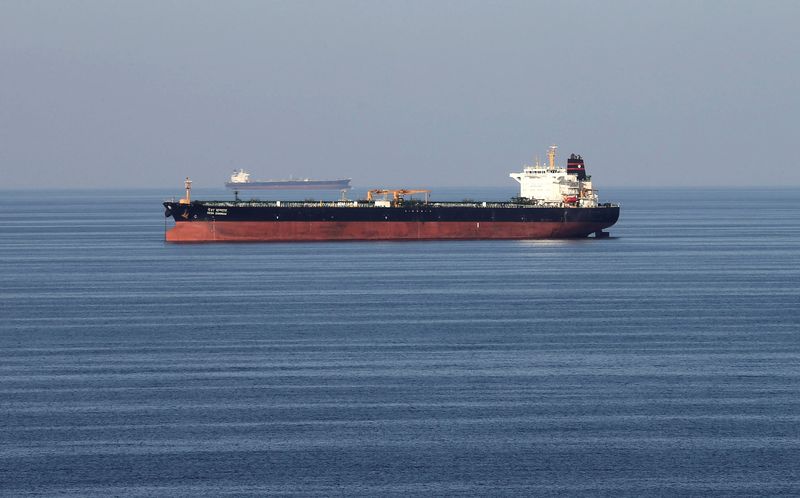
The oil market remains focused on the Strait of Hormuz, through which about one-fifth of global oil and liquefied natural gas supplies passed before the U.S.-Israeli war on Iran began at the end of February. Only six commodity vessels crossed the strait on Tuesday, Kpler data showed by 0258 GMT, down from nine a day earlier and below the 10-day daily average of 11.
Brent's move above $91 a barrel suggests traders are pricing in a higher risk premium, with prices potentially returning to three-digit levels, said Ahmad Assiri, research strategist at brokerage Pepperstone.
Meanwhile, oil shipments from Russia's western ports have fallen to about 2.3 million barrels per day in the first half of August, 15% below the initial loading plan, because of disruptions at the Black Sea port of Novorossiysk.
In the U.S., crude inventories rose by 4.4 million barrels to 428.8 million barrels last week, the Energy Information Administration said, easing concerns about tight supplies.
Globally, refiners have been snapping up crude barrels due to high margins and as Ukraine's attacks on Russia’s refining sector kept global fuel supplies tight, BOK's Kissler noted.
U.S. refinery utilization rates rose by 1 percentage point in the week to 97.2%, EIA data showed.
(Reporting by Arathy Somasekhar in Houston, Anushree Mukherjee in Bengaluru, Jeslyn Lerh in Singapore; Additional reporting by Georgina McCartney in Houston; Editing by Barbara Lewis, Joe Bavier, Emelia Sithole-Matarise and David Gregorio)