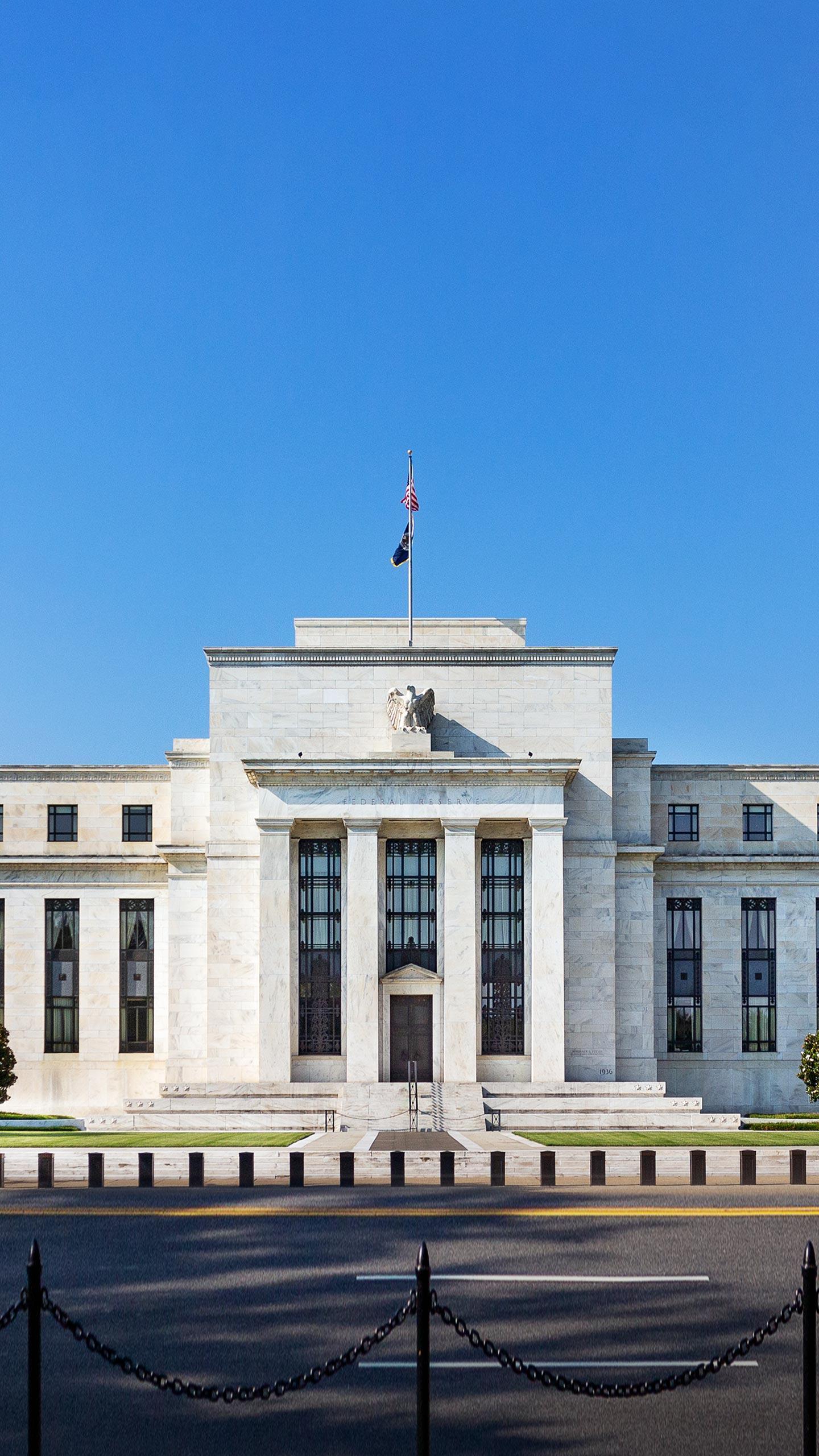
US Federal Reserve Poised for Further Rate Hikes Amid Strong Job Growth and Steady Unemployment

What's Happening?
The United States is anticipating further interest rate increases from the Federal Reserve in the coming months, driven by expectations of continued job growth and a stable unemployment rate. Forecasters
predict that the monthly job growth for October will more than double to 65,000, while the unemployment rate is projected to remain at 4.2%. This data, along with other labor market indicators such as job openings and low jobless claims, suggests a resilient labor market. Manufacturing figures are also expected to show robust activity in October, and trade data will likely confirm an expanding trade deficit due to AI-related imports. Additionally, a report on productivity is anticipated to reveal a 2.6% boost in the third quarter, marking the largest increase in a year. These economic signals collectively reinforce the Federal Reserve's trajectory towards additional rate hikes to manage inflation.
Why It's Important?
The Federal Reserve's anticipated interest rate hikes carry significant implications for various sectors of the U.S. economy. Higher interest rates typically lead to increased borrowing costs for businesses and consumers, potentially impacting investment, spending, and overall economic growth. Industries reliant on consumer credit or large capital expenditures, such as housing and manufacturing, could experience a slowdown. For financial markets, rate hikes can influence bond yields and stock valuations, potentially leading to shifts in investment strategies. While the aim is to curb inflation, an aggressive tightening policy could risk slowing economic momentum too much. Conversely, a failure to address inflation could erode purchasing power and economic stability. The stability of the labor market, characterized by low unemployment and steady job growth, provides the Fed with room to maneuver, but the balance between controlling inflation and sustaining growth remains a critical challenge.
What's Next?
The immediate focus will be on the upcoming monthly employment report from the Bureau of Labor Statistics, expected on Friday, which will provide definitive data on job growth and unemployment. Other key data releases include a monthly report on job openings on Tuesday, and weekly jobless claims figures on Thursday. These reports will be closely scrutinized by the Federal Reserve and market participants for further indications of economic health and inflationary pressures. Should the data align with current forecasts of strong job growth and stable unemployment, the Fed is likely to proceed with additional interest rate increases. The timing and magnitude of these hikes will depend on the evolving economic landscape and the Fed's assessment of inflation trends. Businesses and consumers should prepare for a continued environment of higher borrowing costs as the Fed works to achieve its inflation targets.
Beyond the Headlines
The Federal Reserve's policy decisions extend beyond immediate economic indicators, influencing long-term economic behavior and global financial flows. The sustained period of low interest rates following past economic crises has led to significant asset inflation and increased debt levels. The current tightening cycle represents a return to more normalized monetary policy, which could expose vulnerabilities in highly leveraged sectors or companies. Furthermore, the U.S. interest rate trajectory has global repercussions, as it can strengthen the dollar, impact emerging markets, and influence international trade dynamics. The Fed's commitment to price stability, even at the risk of slower growth, underscores a fundamental shift in economic priorities. This period of adjustment will test the resilience of the U.S. economy and its ability to navigate a higher interest rate environment without triggering a significant downturn, while also reshaping global capital allocation.