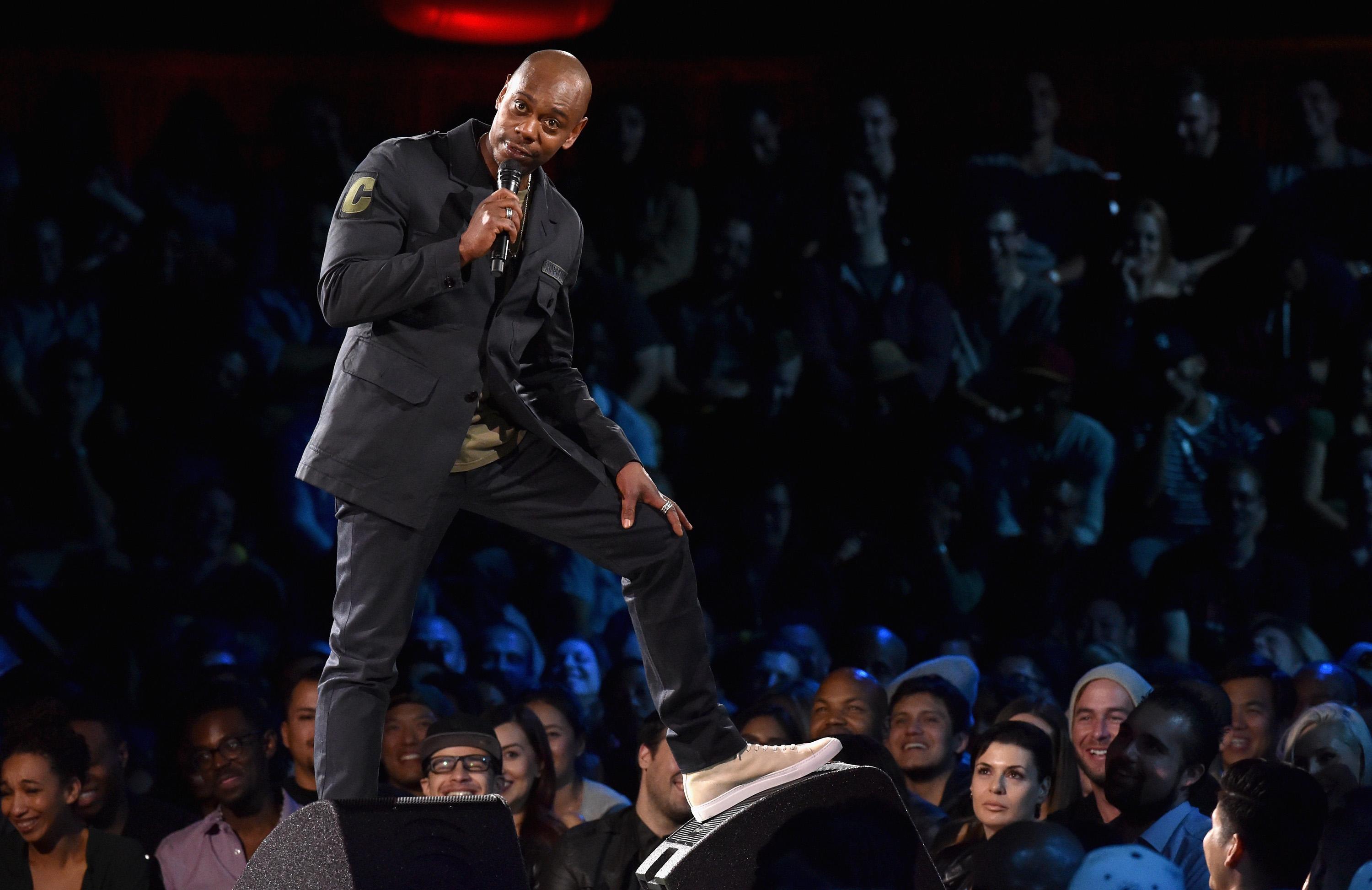
Dave Chappelle Faces Backlash for Controversial Remarks on Charlie Kirk's Death During Stand-Up Performance

What's Happening?
Comedian Dave Chappelle has drawn significant criticism for remarks made during a stand-up performance in New York City regarding the assassination of conservative activist Charlie Kirk. Performing at Madison
Square Garden as part of his 'Karmageddon' tour, Chappelle stated, "I feel f***ed up saying this. It's scary being a public speaker... Ever since that guy Charlie Kirk got murdered… and I shouldn't say this publicly, but I feel better." He clarified that this feeling was not a conscious choice. Charlie Kirk, founder of Turning Point USA, was fatally shot on September 10, 2025, while speaking at Utah Valley University. Chappelle had previously addressed Kirk's death in his Netflix special 'The Unstoppable,' expressing that he was shaken by the news. As of November 8, Chappelle has not publicly responded to the recent criticism.
Why It's Important?
These controversial remarks by Dave Chappelle highlight the ongoing tension between artistic freedom in comedy and public sensitivity, particularly concerning political violence. The backlash from figures like Kirk's widow, Erika Kirk, who called the comments "beyond disgusting," and Elon Musk, who stated, "Shame, shame, shame on Chappelle," underscores the deep societal divisions and the impact of public figures' statements. The incident also brings into focus the role of comedians in addressing sensitive topics and the potential for their words to be perceived as condoning or trivializing tragic events. This event could influence how public figures approach humor related to real-world tragedies, potentially leading to increased scrutiny or self-censorship in the entertainment industry.
What's Next?
The immediate aftermath will likely involve continued public debate and reactions from various commentators and social media users. Chappelle's decision to remain silent on the criticism so far suggests he may choose not to address it directly, or he might incorporate it into future performances, as he has done with past controversies. The incident could also prompt discussions within the comedy community about the boundaries of humor and the responsibility of comedians. Depending on the sustained public pressure, there might be calls for apologies or further explanations, though Chappelle is known for his unapologetic stance on his material. The event may also influence audience reception of his future shows and specials.
Beyond the Headlines
This incident delves into the complex ethical and cultural dimensions of humor, particularly when it intersects with real-world violence and political polarization. It raises questions about the societal role of comedy: Is it solely for entertainment, or does it carry a responsibility to reflect certain moral standards? The differing reactions from the public and prominent figures illustrate a broader cultural struggle over what constitutes acceptable discourse, especially in an era where political assassinations are a stark reality. The controversy also touches upon the concept of 'cancel culture' and the extent to which public figures should be held accountable for their statements, even within the context of a comedic performance. It highlights the challenge of navigating free speech in a highly sensitive and interconnected society.