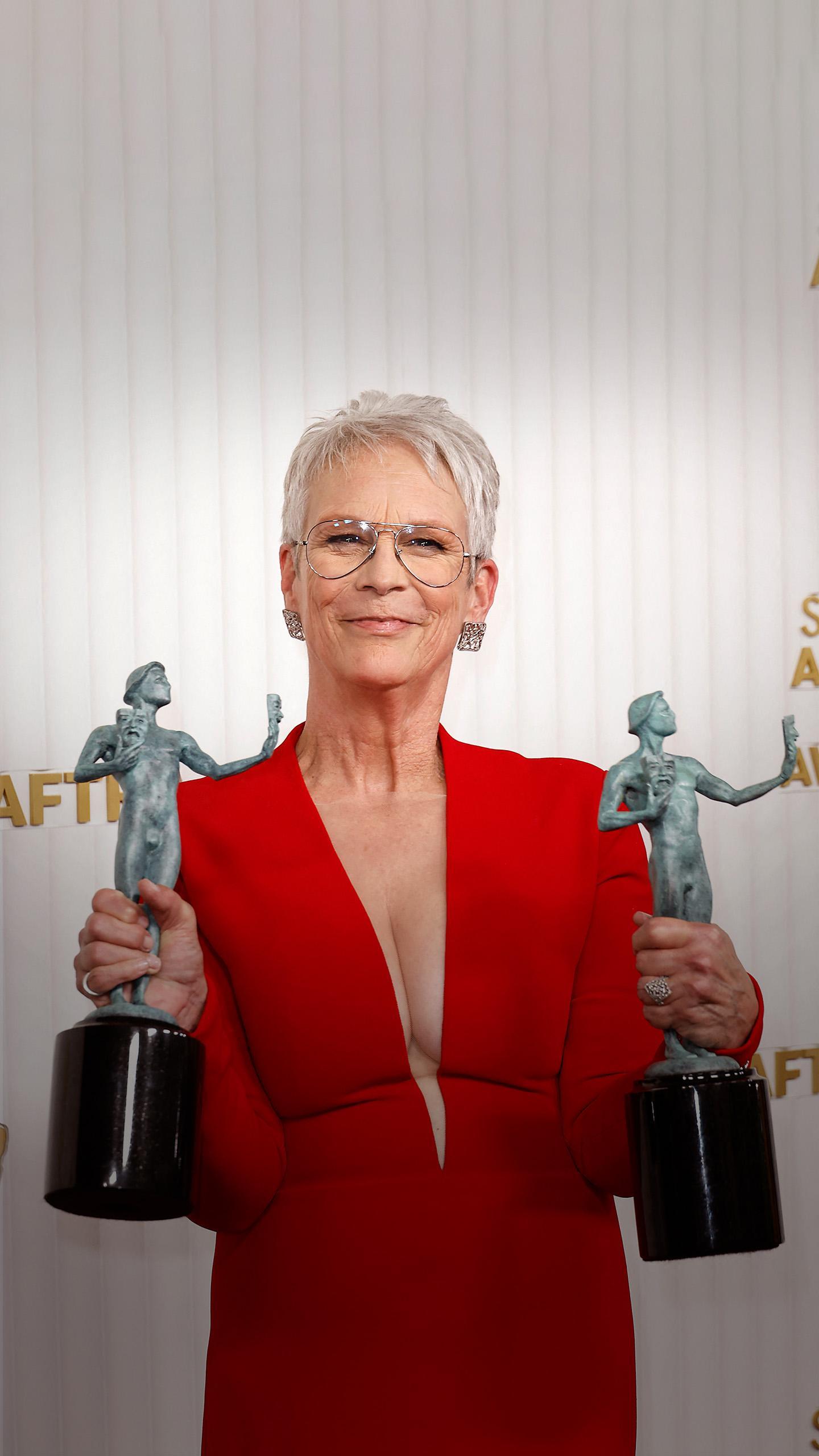
Jamie Lee Curtis Supports 'One Job Away' Campaign for SAG-AFTRA Health Insurance

What's Happening?
Academy Award-winning actress Jamie Lee Curtis is among prominent actors advocating for immediate action regarding SAG-AFTRA union health insurance. Many actors face the expiration of their health coverage
due to insufficient income, failing to meet the earnings threshold. The 'One Job Away' campaign was initiated by actor Cheyenne Jackson, who found himself one gig short of the required annual minimum of approximately $28,000 in earnings to qualify for SAG-AFTRA health insurance. This situation put his family's coverage, including his husband and two children, at risk. Jackson, known for roles in over 40 television series, highlighted the anxiety caused by this predicament and the critical reliance actors have on the union's health insurance. Jamie Lee Curtis has publicly supported the campaign by reposting Jackson's messages to her 6.7 million Instagram followers, drawing significant attention to the issue. Other actors, such as Drake Bell, have also publicly shared their inability to qualify for health plan coverage due to not meeting minimum eligibility requirements.
Why It's Important?
The 'One Job Away' campaign underscores a critical vulnerability within the U.S. entertainment industry, particularly for actors who, despite having significant careers, can struggle to maintain essential benefits like health insurance. The SAG-AFTRA health plan is a vital safety net for many performers, and its potential loss impacts not only the actors themselves but also their families. This situation highlights the precarious nature of employment in the arts, where income can be inconsistent and unpredictable, making it challenging to meet fixed earnings thresholds for benefits. The involvement of high-profile figures like Jamie Lee Curtis brings much-needed visibility to an issue that affects a broad spectrum of union members, from established actors to those just starting. The campaign's success could lead to a reevaluation of eligibility requirements or the implementation of more flexible benefit structures within the union, potentially setting a precedent for other gig-economy or project-based industries in the U.S. where workers face similar challenges in securing stable benefits.
What's Next?
The 'One Job Away' campaign aims to initiate a broader conversation about the functionality of the current system and push for changes within SAG-AFTRA regarding health insurance eligibility. The immediate next steps will likely involve continued advocacy from actors like Cheyenne Jackson and Jamie Lee Curtis, leveraging their platforms to pressure union leadership and potentially industry stakeholders. This could lead to internal discussions within SAG-AFTRA about adjusting the earnings threshold, exploring alternative qualification metrics, or establishing a fund to assist members who are marginally short of the requirements. The campaign may also inspire other unions or professional organizations in industries with fluctuating incomes to examine their own benefit structures. The public attention generated by celebrity endorsements could also prompt a wider societal debate on the provision of healthcare benefits for workers in non-traditional employment models across the U.S. The goal is to ensure that actors, who often face periods of unemployment between projects, do not lose access to crucial health coverage.
Beyond the Headlines
This campaign reveals deeper systemic issues within the U.S. labor market, particularly concerning the provision of benefits in industries characterized by project-based work and variable income. The 'one gig short' scenario faced by Cheyenne Jackson, despite his considerable net worth, illustrates that even successful individuals in these fields can be vulnerable to gaps in essential services like health insurance. This situation challenges the traditional employment model where benefits are tied to consistent, full-time employment. It raises ethical questions about the responsibility of unions and employers to provide a stable safety net for their members, especially when the nature of the work itself is inherently unstable. The campaign could catalyze a broader movement towards re-imagining benefit structures for independent contractors and gig workers across various sectors in the U.S., potentially influencing future labor policies and social safety nets to better accommodate the evolving workforce. It also highlights the psychological toll and anxiety that financial precarity, even for those in seemingly glamorous professions, can inflict.