U.S. Task Force Tests New Autonomous Counter-Drone System at Southern Border

What's Happening?
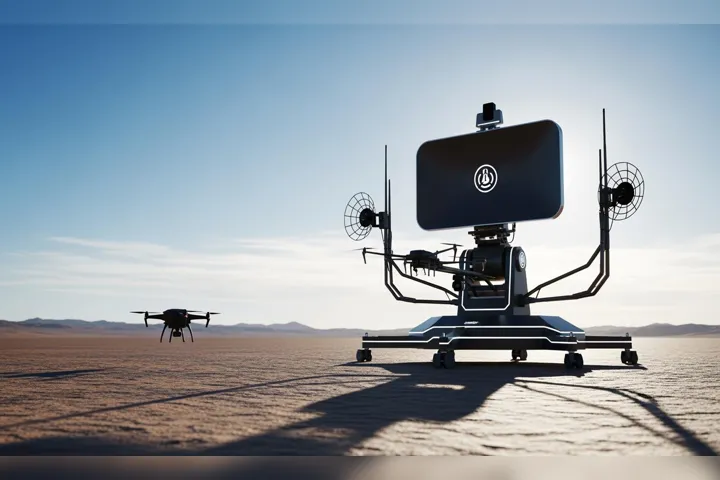
A U.S. task force, known as Joint Interagency Task Force 401 (JIATF-401), has successfully tested a new autonomous counter-drone system at the U.S. southern border. This Army-led initiative aims to enhance the Pentagon's capabilities in detecting, tracking, and neutralizing small drones. The system, named SkyValor, was evaluated at Marine Corps Air Station Yuma in Arizona. It employs non-kinetic methods, such as electronic warfare, to disrupt or disable drones without physical engagement. The test demonstrated the system's ability to detect, track, identify, and defeat small uncrewed aerial systems over extended ranges. This development is part of a broader effort to improve counter-drone capabilities, especially in areas like the southern border, which is increasingly used for drug trafficking activities.
Why It's Important?
The successful testing of the SkyValor system is significant as it addresses the growing threat posed by drones, which are increasingly used by both state and non-state actors for surveillance and attacks. The U.S. military has faced challenges from hostile drones, as evidenced by past incidents in Kuwait and Jordan, where U.S. service members were killed. The ability to counter these threats effectively is crucial for national security and the protection of U.S. personnel. The southern border serves as a strategic testing ground for these technologies, providing valuable insights into their operational effectiveness. The development of non-kinetic counter-drone systems offers a flexible and less destructive means of neutralizing threats, which is essential in complex environments where collateral damage must be minimized.
What's Next?
Following the successful test, the U.S. military and its partners are likely to continue refining and deploying the SkyValor system and similar technologies. The focus will be on integrating these systems into broader defense strategies and ensuring they are combat-ready. The southern border will remain a key area for testing and development, providing real-world scenarios to evaluate the effectiveness of these technologies. Additionally, the U.S. may explore partnerships with allies to share and develop counter-drone capabilities, enhancing collective security against the evolving drone threat.
AI Generated Content
For the benefit of users - Parts of this article may include content generated using AI tools. Our teams are making active and commercially reasonable efforts to moderate all AI generated content. Our moderation processes are improving however our processes are carried out on a best-effort basis and may not be exhaustive in nature. We encourage our users to consume the content judiciously and rely on their own research for accuracy of facts. We maintain that all AI generated content on our platform is for entertainment purposes only. To know more about how we use AI, you can write to us at
Close AI Generated Content