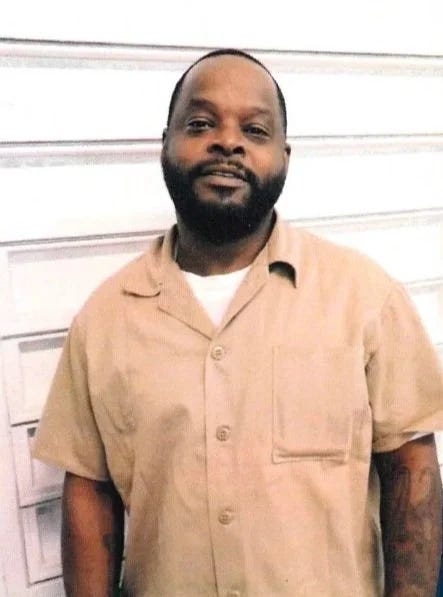
Alabama man on death row for 3 decades gets clemency: 'Thank you, Lord'

Alabama Gov. Kay Ivey has granted clemency to a man who has been on death row for nearly 30 years in connection with the murder of a sheriff's deputy in 1995.
In a rare move from the pro-death penalty Republican
governor, Ivey commuted Toforest Johnson's death sentence to life in prison on Oct. 20, saying in a statement that there was "not enough direct evidence to carry out the most serious punishment."
Johnson, 53, has always maintained his innocence in the 1995 murder of Deputy Sheriff William Hardy of Jefferson County, Alabama. A recent popular podcast, "Earwitness," helped renew attention to the case.
"Thank you, Lord," Johnson's daughter, Shanaye Poole, told USA TODAY shortly after Ivey's decision. "I literally cried out. The little girl in me cried out for something that I just never thought I would see the day. We are just so grateful."
Johnson's fight for freedom is not over. While Ivey took him off death row, she stopped short of declaring his innocence.
"Mr. Johnson will serve the remainder of his life behind bars for the senseless murder of Deputy Sheriff William Hardy," she said. "No doubt, he is paying the price. Today, I pray for Deputy Sheriff Hardy’s loved ones. Deputy Sheriff Hardy died a hero, working hard to protect his fellow citizens.”
But Johnson has staunch support from other powerful corners. In a 2021 op-ed in the Washington Post, former Alabama Attorney General Bill Baxley wrote that Johnson was "an innocent man trapped on Alabama's death row."
"Johnson’s murder trial was so deeply flawed, the evidence presented against him so thin, that no Alabamian should tolerate his incarceration, let alone his execution," Baxley wrote.
Johnson's attorneys are fighting for his conviction to be overturned but the office of current Alabama Attorney General Steve Marshall is opposing them. The matter may end up in another trial, a move supported by the same district attorney who prosecuted Johnson.
Here's what you need to know about the case, what evidence prosecutors had and how many times Ivey has commuted the sentences of death row prisoners.
What was Toforest Johnson convicted of?
A jury found Toforest Johnson guilty of the execution-style murder of Deputy William "Bill" Hardy in a hotel parking lot where the officer had been working off-duty security on July 19, 1995. The jury recommended the death penalty in a 10-2 vote, and a judge agreed.
The hotel manager testified at trial that he heard two popping noises around 12:30 a.m. and soon after found Hardy lying in a parking lot and suffering from multiple gunshot wounds to the head. Police later arrested Johnson after a woman they were interrogating in the case implicated him, but she later changed her story so many times that defense attorneys not only questioned her honesty but her sanity, according to an archived report in the Birmingham News.
Another witness in the case claimed to be a good Samaritan and testified that she overheard Johnson make incriminating statements at a local jail. But prosecutors had paid her $5,000 for her testimony, something jurors never knew, according to Johnson's current attorneys, who referred to the woman an "earwitness."
"More than 10 witnesses saw Toforest Johnson across town at the exact time Jefferson County Deputy Sheriff William Hardy was killed," they said. "Mr. Johnson was one of four young Black men who were arrested for the crime, despite overwhelming evidence that there was only one shooter. There was no physical evidence linking Mr. Johnson or any of the other men to the crime. Prosecutors presented no eyewitness that identified Mr. Johnson, and he has steadfastly maintained his innocence for more than 30 years."
In a 2024 report, the Jefferson County District Attorney’s Office concluded that the case against Johnson had “disintegrated." And Jeff Wallace, the original lead prosecutor, believes that the conviction can't stand, according to the report.
“Wallace served as the lead prosecutor in this case for four years and knew the case better than anyone else," according to the report. "He sought and obtained Johnson’s conviction and death sentence over the course of two trials and many years. He now firmly believes, in light of information about which he was unaware at the time he prosecuted this case, that Johnson should receive a new trial.”
The "Earwitness" podcast about Johnson's case renewed attention on the faulty prosecution and uncovered facts that "tear at the very foundation of the American criminal justice system," according to Apple's description of the eight-episode podcast.
What happens now?
Johnson has an outstanding appeal in front of Jefferson County Circuit Judge Kandace Pickett. They are asking Pickett to overturn Johnson's conviction, while the Attorney General's Office is arguing against it.
“This is an extraordinary case in which the totality of the circumstances cry out for this Court’s intervention,” Johnson’s lawyers wrote in a court filing.
“Toforest Johnson is innocent," they later said in a statement to reporters. "Now it is up to the courts to overturn his conviction and grant him a new trial. We will keep fighting until he is home with his family.”
Johnson's oldest daughter, 34-year-old Shanaye Poole, was 5 when her father was convicted of murder. In the 28 years he's been away from his family, Poole said his five children have made 18 grandchildren and that they're all eagerly waiting for his freedom.
"We have to keep the momentum going. The fight will continue," she said. "Just call me crazy but I know he's going to come home."
She called her dad her "superhero" and said that she's astounded by his strength and positivity after so many years on death row.
"At the end of the day, it's a sensitive topic because someone did lose their life, but two people did," Poole said. "My dad is here living on Earth and we're so grateful and thankful but he lost his childhood, too. And he lost the ability to see me get married, welcome my first child, purchase my first home."
In addition to fighting for her father's freedom, Poole said she wants to spread awareness about the criminal justice system and how it disproportionately punishes people of color, and in some cases, locks up innocent people.
"This situation is not an anomaly," she said. "Unfortunately that is the system that we are put up against, especially people that look like me. It is always important to me that people remember and know his name − Toforest Johnson − and that this is bigger than him this is bigger than us. ... I just pray that this case sheds light on the injustice that so many people have to face."
How many people has Alabama Gov. Kay Ivey pardoned?
Johnson is only the third person whose death sentences were commuted by Ivey in her more than nine years as governor.
In March, she stopped the execution of 75-year-old death row inmate Charles "Sonny" Burton two days before he was set to be put to death. Ivey commuted his sentence to life in prison, saying it would be "unjust" to take his life when he wasn't the triggerman in a robbery gone bad.
The other execution she stopped was that of Robin Dion "Rocky" Myers in 2025 over questions about his guilt.
Ivey has presided over 27 executions during her time in office, including seven that used a controversial new method of nitrogen gas.
Under her leadership, Ivey said in a statement Tuesday that "we have ensured justice could effectively be delivered through capital punishment."
She added: "And that will continue."
Amanda Lee Myers is a senior crime and courts reporter who covers the death penalty, cold cases and breaking news for USA TODAY. Follow her on X at @amandaleeusat