US Strikes on Iranian Port Cities Cause Civilian Casualties and Infrastructure Damage

What's Happening?
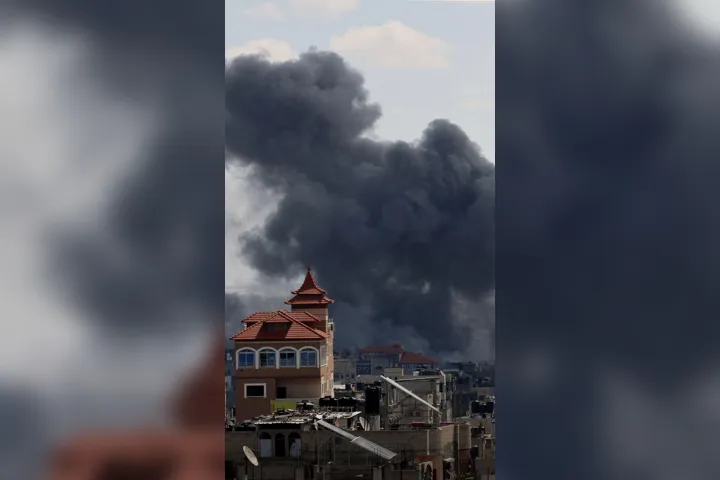
The United States has launched a series of airstrikes on Iranian port cities, including Bandar Abbas and Sirik, resulting in significant civilian casualties and infrastructure damage. According to US Central Command, the strikes were intended to degrade Iran's ability to threaten navigation in the Strait of Hormuz. Residents in the affected areas reported hearing multiple explosions, with at least 14 people killed and over 78 injured. The strikes have also exacerbated existing challenges, such as water shortages, by damaging water storage facilities, affecting over 20,000 civilians. The attacks have left residents in fear and uncertainty, with many expressing concerns about the continuation of hostilities and the impact on their livelihoods.
Why It's Important?
The escalation of military actions between the US and Iran has significant implications for regional stability and global economic interests. The Strait of Hormuz is a critical chokepoint for global oil shipments, and any disruption could lead to increased oil prices and economic instability. The strikes also highlight the fragile nature of the ceasefire and the potential for renewed conflict, which could further destabilize the Middle East. For local populations, the attacks have compounded existing hardships, such as water shortages and economic challenges, leading to increased humanitarian needs. The situation underscores the complex interplay between military actions and civilian impacts in conflict zones.
What's Next?
The continuation of hostilities between the US and Iran could lead to further military engagements and potential retaliatory actions by Iran. The international community may call for renewed diplomatic efforts to de-escalate tensions and prevent further civilian casualties. Humanitarian organizations may need to increase their presence in the region to address the growing needs of affected populations. Additionally, the situation may prompt discussions within the US government and its allies about the long-term strategy in the Middle East and the potential consequences of military interventions.
Beyond the Headlines
The ongoing conflict between the US and Iran raises ethical questions about the use of military force and its impact on civilian populations. The damage to critical infrastructure, such as water facilities, highlights the vulnerability of civilian systems in conflict zones and the need for measures to protect non-combatants. The situation also reflects broader geopolitical tensions and the challenges of achieving lasting peace in regions with deep-seated historical conflicts. The international community may need to consider new approaches to conflict resolution that prioritize humanitarian concerns and sustainable development.
AI Generated Content
For the benefit of users - Parts of this article may include content generated using AI tools. Our teams are making active and commercially reasonable efforts to moderate all AI generated content. Our moderation processes are improving however our processes are carried out on a best-effort basis and may not be exhaustive in nature. We encourage our users to consume the content judiciously and rely on their own research for accuracy of facts. We maintain that all AI generated content on our platform is for entertainment purposes only. To know more about how we use AI, you can write to us at
Close AI Generated Content