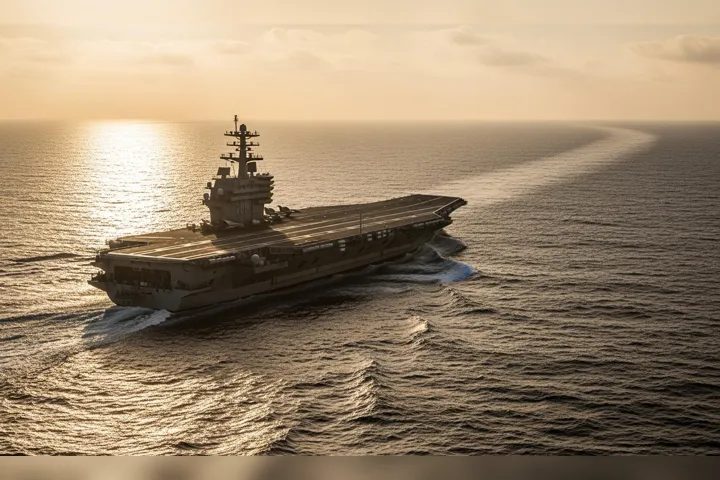
U.S. Navy Reevaluates Carrier Deployment Tempo Amid Operational Demands

What's Happening?
The U.S. Navy is reconsidering its carrier deployment strategies due to increased operational demands and the need for a more effective force generation model. This reassessment comes as the USS Gerald R. Ford returns from the longest deployment since Vietnam, highlighting the strain on current deployment cycles. Master Chief Petty Officer of the Navy John Perryman emphasized the need for a new model that better aligns with wartime readiness, moving away from the traditional peacetime approach. The Navy is also addressing challenges such as acquiring spare parts and ensuring adequate time for training and reset. This initiative is part of a broader effort to sustain a capable fighting force amid ongoing global military operations.
Why It's Important?
The Navy's reevaluation of its deployment tempo is crucial for maintaining military readiness and effectiveness in response to global threats. The current operational demands, including interventions in Venezuela and Iran, have exposed the limitations of existing deployment models. By developing a more flexible and responsive force generation strategy, the Navy aims to enhance its ability to meet future challenges. This shift is significant for U.S. national security, as it ensures that naval forces remain prepared and capable of executing missions worldwide. The changes could also impact the broader military structure, influencing how other branches manage their operational tempos.
What's Next?
The Navy is expected to continue its assessment of deployment strategies, potentially leading to significant changes in how carrier strike groups are managed. This may involve extending deployment cycles or altering training and maintenance schedules to improve readiness. The outcome of this reassessment could influence future military policies and budget allocations, as the Navy seeks to balance operational demands with resource constraints. Stakeholders, including military leaders and policymakers, will likely engage in discussions to determine the best path forward for sustaining naval capabilities.
AI Generated Content
For the benefit of users - Parts of this article may include content generated using AI tools. Our teams are making active and commercially reasonable efforts to moderate all AI generated content. Our moderation processes are improving however our processes are carried out on a best-effort basis and may not be exhaustive in nature. We encourage our users to consume the content judiciously and rely on their own research for accuracy of facts. We maintain that all AI generated content on our platform is for entertainment purposes only. To know more about how we use AI, you can write to us at
Close AI Generated Content