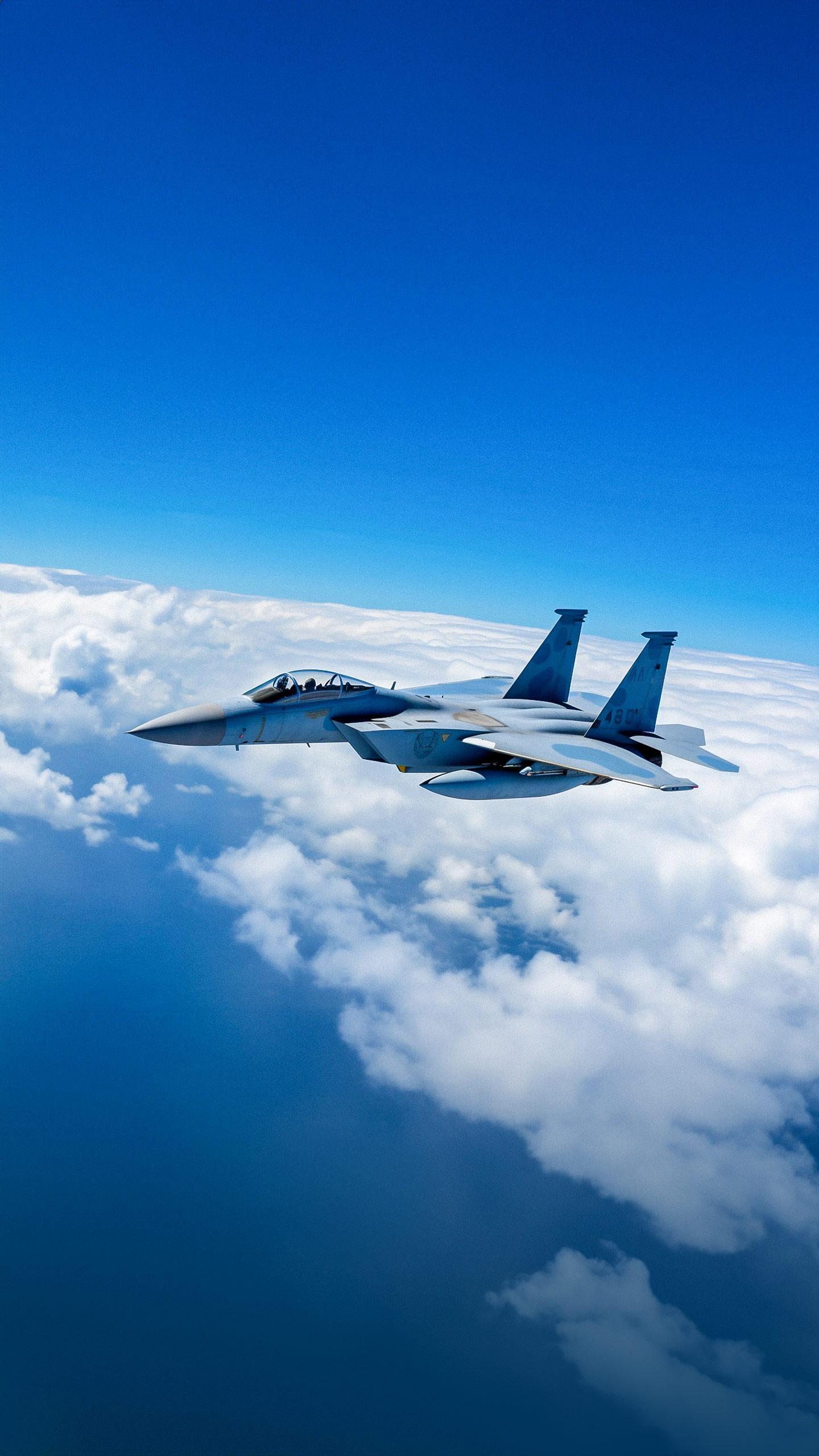
U.S. Air Force Fighter Fleet Faces Age and Size Challenges, Congressional Report Reveals

What's Happening?
A recent report from the nonpartisan Congressional Research Service indicates that the U.S. Air Force's fighter jet fleet is both too small and too old. The report, released on Friday, highlights that the Air Force has
not met its mandated minimum number of fighter planes, with an inventory of 1,098 fighters against a statutory requirement of 1,145 aircraft. The average age of the Air Force fleet is 27.4 years, a significant increase from 17.2 years in 1994, leading to a drop in fighter availability rates from 72.9% in 1995 to 53.9% in 2024. Industrial bottlenecks in production supply chains and spare-parts availability are contributing to delays in new aircraft deliveries. Furthermore, Congress has mandated that the Air Force retain certain aircraft, such as the F-22 Raptor and F-15E Eagle, even when the service seeks to retire them, further complicating modernization efforts. The report also notes a shortage of approximately 1,900 pilots needed for global requirements.
Why It's Important?
The aging and undersized U.S. Air Force fighter fleet has significant implications for national security and global power projection. A smaller, older fleet means reduced readiness and increased maintenance demands, potentially hindering the Air Force's ability to respond effectively to emerging threats. The report specifically points out that U.S. fighters could be outnumbered by modern People’s Liberation Army Air Force aircraft, with China projected to produce up to 1,000 new Chengdu J-20 Weilong fighters by 2030. This potential disparity could challenge U.S. air superiority and influence in critical regions. The congressional mandates to keep older aircraft in service, despite the Air Force's desire to phase them out, create a tension between legislative oversight and military strategic planning. This situation affects not only the operational capabilities of the Air Force but also the defense industrial base, which faces pressure to accelerate production while dealing with supply chain issues. The pilot shortage further exacerbates these challenges, impacting the overall effectiveness and readiness of the fighter force.
What's Next?
The Air Force plans to address these issues by accelerating aircraft purchases, aiming for a goal of 1,558 manned fighters by 2035. This includes acquiring 100 more F-35A Lightning II aircraft by 2030 and up to 24 Boeing F-15EX Eagle II fighters by the end of 2027. Additionally, the development of the F-47 Next Generation Air Dominance Fighter, augmented by 'loyal wingman' drones (Collaborative Combat Aircraft), is central to their future strategy. Congress is expected to closely monitor the costs and timelines of the F-47 program, drawing lessons from past advanced fighter aircraft development programs that ran behind schedule and over budget. The Air Force is also working to address the pilot shortage, aiming to produce about 1,500 pilots annually. The Congressional Budget Office projects that the average age of the Air Force fleet will begin to decline until the early 2030s as new aircraft arrive and older ones are phased out, assuming current plans proceed.
Beyond the Headlines
The challenges facing the U.S. Air Force fighter fleet underscore a broader strategic dilemma for the United States: balancing technological advancement with budgetary constraints and political realities. The reliance on advanced, stealth-capable aircraft like the F-35 and the development of next-generation fighters like the F-47, coupled with unmanned collaborative combat aircraft, signifies a shift towards a more technologically sophisticated air combat doctrine. However, the report implicitly raises questions about the sustainability of such high-cost programs and the potential for over-reliance on technology without sufficient numbers of platforms and trained personnel. The tension between congressional directives to maintain older fleets and the Air Force's modernization goals highlights the complex interplay between legislative power, military strategy, and industrial capacity. This situation could lead to ongoing debates about defense spending priorities, the role of legacy systems, and the optimal force structure needed to maintain a competitive edge against rapidly modernizing adversaries.