Israel Strikes Beirut Suburbs Amid U.S.-Brokered Ceasefire, Escalating Tensions

What's Happening?
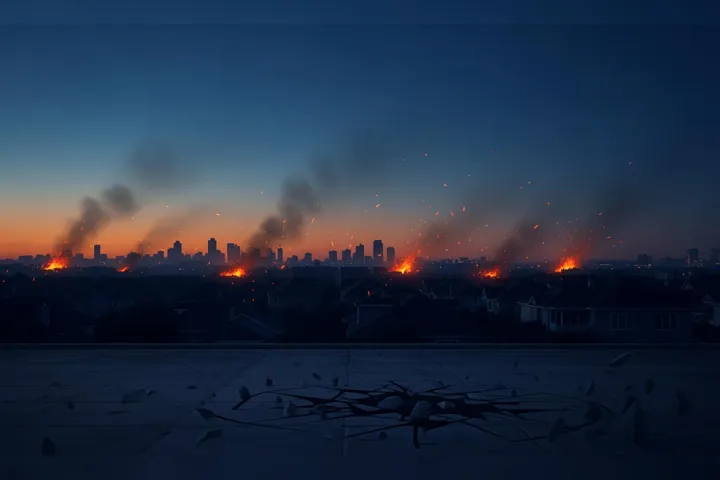
Israel launched an attack on Beirut's southern suburbs, targeting areas associated with the Iranian-backed Hezbollah group. This action comes shortly after a ceasefire agreement was brokered in Washington, which aimed to de-escalate ongoing conflicts in the region. The Israeli government justified the strikes as retaliation for Hezbollah's earlier attacks on northern Israel. Despite the ceasefire, tensions remain high, with Israel continuing its military operations in southern Lebanon. The conflict has resulted in significant casualties and displacement within Lebanon, with over 3,500 deaths reported since the conflict's escalation in March. The situation is further complicated by Iran's involvement and its demand for a comprehensive ceasefire that includes Lebanon as part of its negotiations with the U.S.
Why It's Important?
The Israeli strikes on Beirut highlight the fragile nature of the ceasefire and the complex geopolitical dynamics in the Middle East. The conflict has significant implications for regional stability and international relations, particularly involving the U.S., Iran, and Israel. The ongoing hostilities threaten to disrupt global oil supplies, as the Strait of Hormuz remains a critical transit point for energy resources. The situation poses economic challenges, with rising energy prices impacting global markets. Additionally, the conflict influences U.S. domestic politics, as President Trump faces pressure to manage international relations effectively ahead of upcoming elections. The humanitarian impact is also severe, with large-scale displacement and casualties in Lebanon.
What's Next?
The continuation of hostilities suggests that diplomatic efforts will be crucial in the coming weeks. Pakistan's involvement in mediating talks between the U.S. and Iran indicates a potential avenue for de-escalation. However, the success of these efforts remains uncertain, given the entrenched positions of the involved parties. The international community may increase pressure on the U.S. and Iran to reach a long-term resolution. Meanwhile, Israel's military strategy appears focused on neutralizing Hezbollah as a threat, which could lead to further military engagements. The situation requires careful monitoring, as any escalation could have widespread repercussions.
Beyond the Headlines
The conflict underscores the broader geopolitical struggle for influence in the Middle East, with Iran and Israel as key players. The involvement of external powers like the U.S. and Pakistan highlights the international dimension of the conflict. The humanitarian crisis in Lebanon raises ethical concerns about the impact of prolonged military engagements on civilian populations. The situation also reflects the challenges of achieving lasting peace in a region marked by historical tensions and competing interests. The potential for a broader regional conflict remains a significant concern, necessitating sustained diplomatic efforts.
AI Generated Content
For the benefit of users - Parts of this article may include content generated using AI tools. Our teams are making active and commercially reasonable efforts to moderate all AI generated content. Our moderation processes are improving however our processes are carried out on a best-effort basis and may not be exhaustive in nature. We encourage our users to consume the content judiciously and rely on their own research for accuracy of facts. We maintain that all AI generated content on our platform is for entertainment purposes only. To know more about how we use AI, you can write to us at
Close AI Generated Content