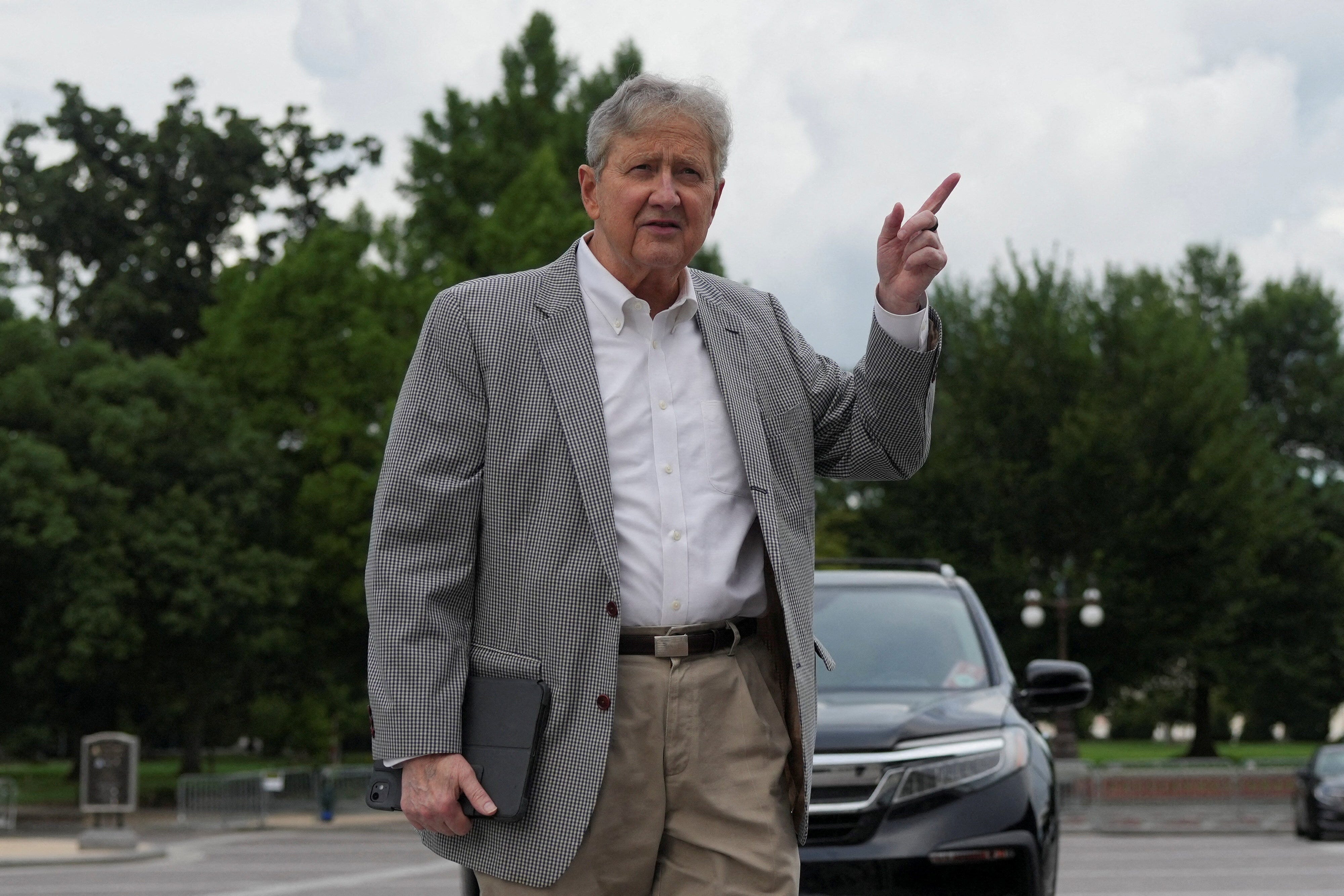
Long-shot push for AI 'kill switch' bill fails in the Senate

WASHINGTON – A long-shot effort by a Republican senator to swiftly pass a bill mandating "kill switches" in advanced AI models was defeated, despite bipartisan momentum to act amid scientists' recent warnings
about rogue models.
The bill failed after Sen. John Kennedy, R-Louisiana, offered the legislation on Sept. 16 via unanimous consent, meaning all 100 senators needed to agree to the measure. Kennedy said his bill wouldn’t put the federal government in charge of any kill switches, but would require developers to create their own mechanisms, which he likened to an "emergency shutoff."
"My bill will rely on them doing the right thing and exercising their own self-interest in using that kill switch," Kennedy said. "It just says the AI companies have to have a fire extinguisher. They decide when to use it, but they've got to have one."
No Democrats came out against the measure, but fellow Republican Sen. Rand Paul of Kentucky objected to Kennedy's request. Paul said he wanted to make sure that Congress has "as many facts as possible before we dictate rules for the whole economy."
Kennedy's request came amid a fast-moving national debate, as top AI leaders have publicly called for more regulations on their own emerging technology. President Donald Trump and House Speaker Mike Johnson have been bearish on federal intervention, however, arguing that continued rapid AI development in the United States will be critical to maintaining a competitive edge against China.
At several points during his push for the proposed kill switch legislation, Kennedy seemed resigned. He said that while he doesn't want to stop AI innovation, he believes Trump would likely veto any dramatic regulatory measures.
"If you're gonna sell one of these AI models that can take a life of its own, then you have to have a kill switch to reassert human control," Kennedy said, comparing the models to "The Terminator" movies. "Government wouldn't be in charge of it. You would be."
President reinforces his stance on AI: Trump dismisses AI guardrails, calling concerns a 'conspiracy'
Paul argued that if Congress acted too hastily, it would risk "killing innovation" and setting the technology back decades given its presence in every facet of people’s daily lives, ranging from business to education to medicine. He said he thought the government's role would be "very vague" under Kennedy's bill and proposed a bipartisan committee to study the issue more
"I don't oppose the spirit of this bill, but I do ask that we have all of the information," Paul said. "We should not impose new regulations on AI throughout our whole economy without studying, without debate, without a single committee hearing. (Are we) gonna just put this blanket regulation on the whole economy with no discussion in one fell swoop? It's not entirely clear what this bill will require."
The measure's failure at once underscored the pressure members of Congress are facing to enact new AI regulation – and the complexity of getting anything consequential done anytime soon.
A separate bipartisan "kill switch" push in the House would go further than Kennedy's legislation, also giving the Department of Homeland Security the authority to order tech companies to shut down advanced AI that gets out of control. The House bill, called the AI Kill Switch Act – sponsored by Reps. Ted Lieu, D-California, and Nathaniel Moran, R-Texas – would mandate incident reporting, too.
Moran told USA TODAY he’s hopeful that bill could gain momentum in this Congress or the next. But Kennedy seemed much more pessimistic about any consequential AI bills getting across the finish line anytime soon.
"Congress is not going to do anything," Kennedy said. "We are not going to get off of our ice-cold, lazy butts, and address this anytime soon. It's just not going to happen. And we all know that."