The Senate’s constitutional role still matters today | Opinion

Smart and clairvoyant, our nation’s founders clearly were intelligent and had wisdom. They envisioned the principles of the Declaration of Independence and our Constitution. They could see into the future,
detect issues and problems. They answered questions before the average person knew the issues existed.
Our Constitution has stabilized us since 1789, including through the Civil War, World Wars, assassinations, the Sept. 11 attacks and multiple catastrophes. We have experienced many trials and tribulations. Yet our Constitution is strong. The United States is one of the oldest constitutional republics in the world. Let us understand it better. Let us keep it strong.
The Constitution’s enduring foundation
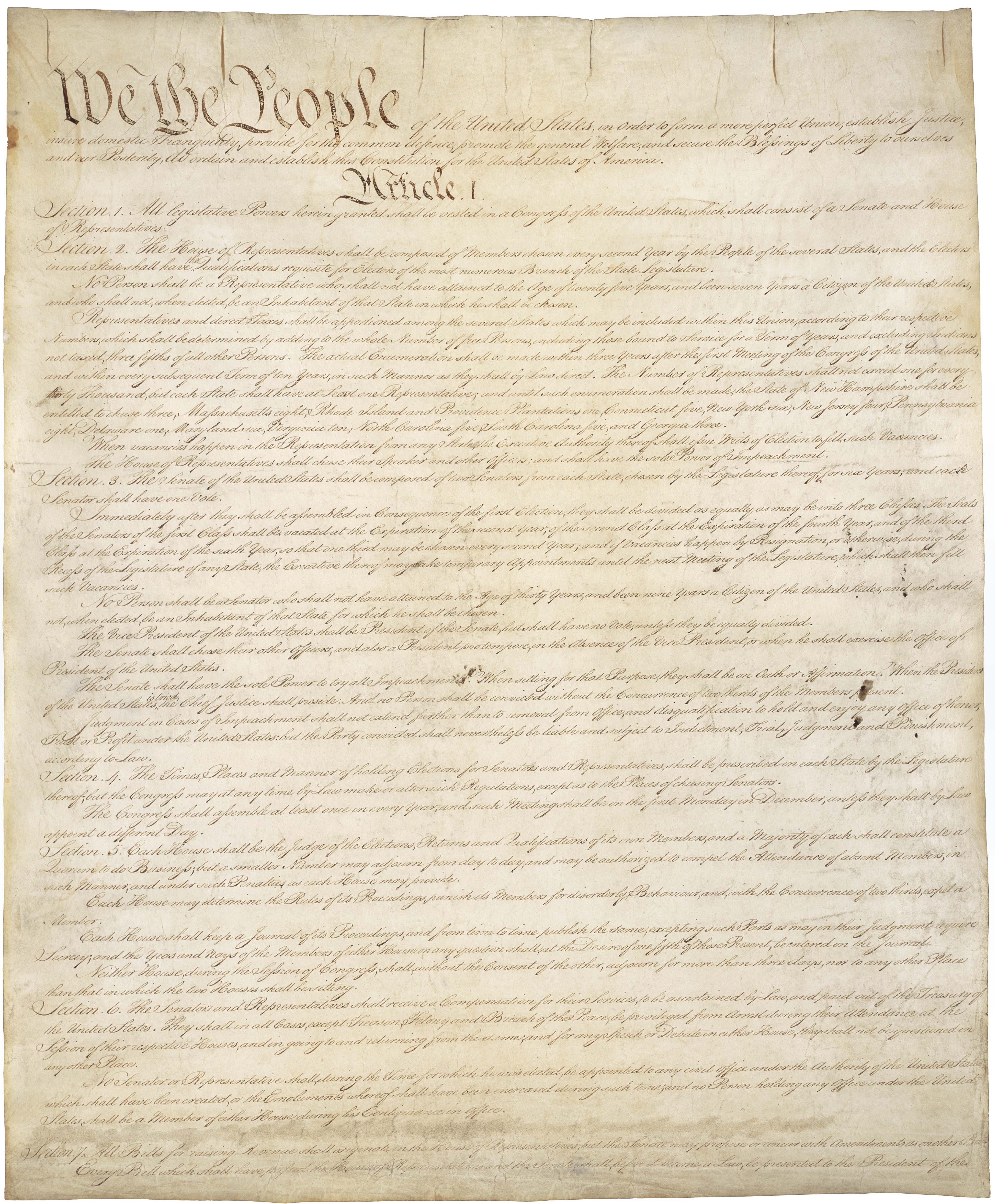
Our Constitution begins with the words “We the People of the United States, in Order to form a more perfect Union, establish Justice,....” All power in America comes from the people and is not delegated to the people. The first paragraph provides for domestic tranquility, a common defense, general welfare and liberty now and for our descendants who succeed us. Those are the reasons we have a Constitution. Those powers not delegated to the federal government nor prohibited by the Constitution “…to the States, are reserved to the States respectively, or to the people.” Our Tenth Amendment says exactly that.
How the founders designed the Senate
We now explore Section 3 of Article I, which establishes the Senate. Originally the Senate consisted of two senators from each state, and they were chosen by the state legislatures thereof. Because of allegations of fraud and political shenanigans by state legislatures, our Constitution was amended.
The Seventeenth Amendment changes Senate elections
The Seventeenth Amendment of 1913 changed the selection mode of senators to statewide elections, but the elected senators still held office for six years. Electors for senators have the qualifications of the most numerous branch of his or her state legislature.
When a Senate vacancy occurs, the executive authority (usually the governor) of the state will issue writs of election to fill such vacancies. The state legislatures may empower the executive through legislation to temporarily fill such vacancies prior to the election to permanently fill the Senate office. That is a prerogative of the state legislatures.
Opinion: To understand America, start with its founding documents
Senators must be 30 years old and have been a citizen of the U.S. for nine years. The Vice President shall be President of the Senate with no vote, unless there is a tie, wherein she or he may vote. The Senate shall choose their other officers.
The Senate’s role in impeachment trials
If the House impeaches, the Senate shall have sole power to try an impeachment of an officer. If the President is tried, the Chief Justice of the United States shall preside.
No person impeached shall be convicted unless there is a two-thirds vote “of the Members present.” Article II of the Constitution states: “The President, Vice President and all civil Officers…shall be removed from Office on Impeachment for, and Conviction of, Treason, Bribery, or other high Crimes and Misdemeanors.”
Impeachment is not a criminal proceeding
Judgment in impeachment cases shall extend only to removal from office and rendering an accused disqualified from holding an “Office of honor, Trust or Profit” in the United States. The party may still be tried in criminal court, federal or state, for the same conduct. Such a subsequent criminal trial is not double jeopardy.
The impeachment trial is not a criminal trial.
Continuing our study of constitutional government
Our study of our founding documents and American government will continue with the Senate and House of Representatives, or Congress.
Reading the Constitution is time well spent.
Paul G. Summers, a lawyer, is a former appellate and senior judge, district attorney general, and the Attorney General of Tennessee. Raised in Fayette County, Judge Summers resides in Nashville and Holladay.