Doomsday Clock Moves Closer to Midnight: Experts Warn of AI and Leadership Failures
What's Happening?
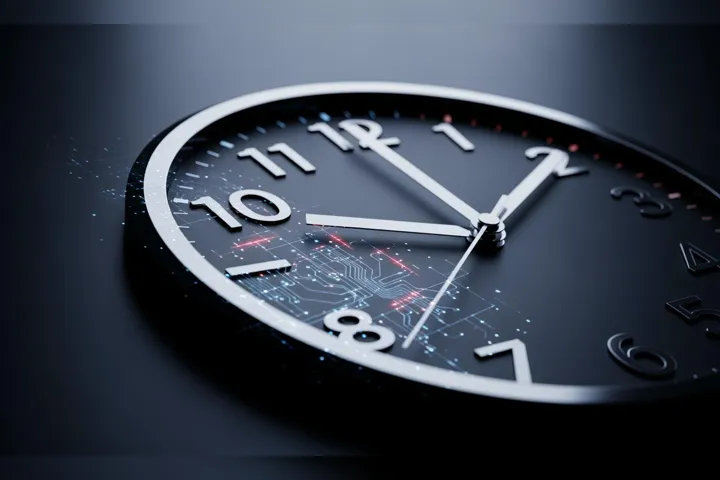
The Bulletin of the Atomic Scientists has adjusted the Doomsday Clock to 85 seconds to midnight, marking the closest it has ever been to a global catastrophe. This decision reflects increased risks from nuclear tensions, disease, and the rise of artificial intelligence (AI). The clock, a symbolic representation of humanity's proximity to self-destruction, was initially set at 7 minutes to midnight in 1947. The recent adjustment highlights concerns over global leadership failures and escalating military conflicts, particularly involving nuclear-armed states. The Bulletin cites recent skirmishes between Pakistan and India, as well as Russia's use of a nuclear-capable missile against Ukraine, as examples of rising tensions. Additionally, the expiration of the New START Treaty, which limits strategic nuclear arsenals, is seen as a potential catalyst for a nuclear arms race.
Why It's Important?
The adjustment of the Doomsday Clock underscores the growing existential threats facing humanity, particularly from nuclear conflict and AI. The potential expiration of the New START Treaty could lead to an unchecked nuclear arms race, increasing global instability. Furthermore, the rise of AI poses new challenges, such as the creation of synthetic pathogens and the spread of disinformation, which could exacerbate global chaos. These developments highlight the need for effective global leadership and governance to address these threats. The Bulletin's warning serves as a call to action for policymakers to prioritize safety and human rights in technology development and international relations.
What's Next?
The Bulletin of the Atomic Scientists emphasizes the need for immediate action to reverse the Doomsday Clock. This includes redesigning technology platforms to prioritize human rights and implementing AI governance that focuses on safety. The expiration of the New START Treaty on February 5 presents an urgent challenge for international diplomacy to prevent a nuclear arms race. Additionally, addressing the spread of disinformation and ensuring information integrity are critical steps in maintaining democratic processes and global stability. The Bulletin's call to action urges global leaders to collaborate on these issues to avert potential disasters.
Beyond the Headlines
The Doomsday Clock's adjustment highlights deeper issues of global governance and the ethical implications of technological advancements. The rise of AI and its potential misuse in military and biological contexts raises questions about the ethical responsibilities of developers and policymakers. The spread of disinformation facilitated by AI challenges the integrity of democratic systems and the public's ability to make informed decisions. These developments underscore the need for a comprehensive approach to technology governance that balances innovation with ethical considerations and global security.
AI Generated Content
For the benefit of users - Parts of this article may include content generated using AI tools. Our teams are making active and commercially reasonable efforts to moderate all AI generated content. Our moderation processes are improving however our processes are carried out on a best-effort basis and may not be exhaustive in nature. We encourage our users to consume the content judiciously and rely on their own research for accuracy of facts. We maintain that all AI generated content on our platform is for entertainment purposes only. To know more about how we use AI, you can write to us at
Close AI Generated Content