Why Texas is at the heart of Trump's mass detention strategy

A quarter of all immigrants detained by the Trump administration are held in Texas' 27 detention centers, data from U.S. Immigration and Customs Enforcement shows.
The more than 16,000 detainees highlight
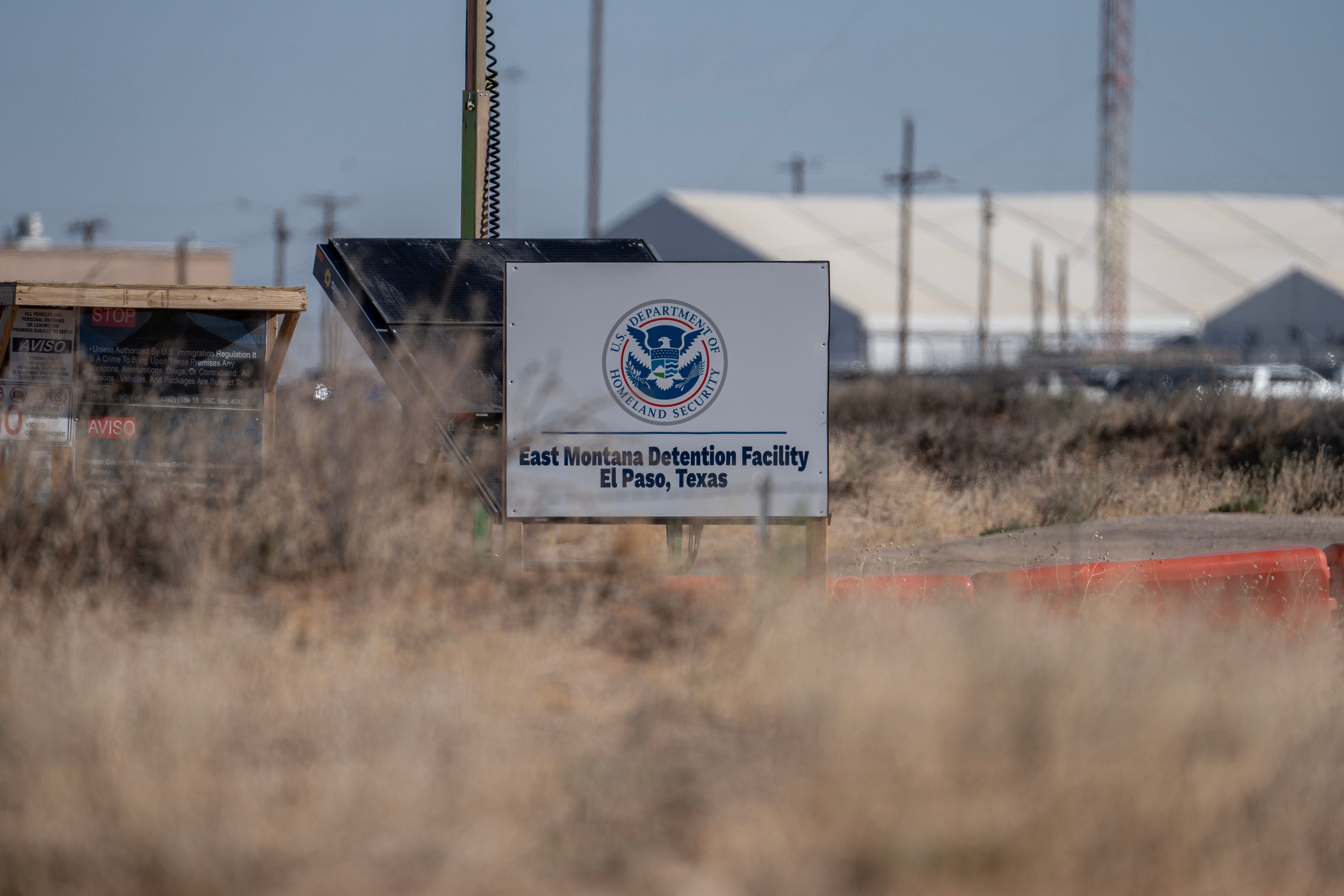
how the Lone Star State is at the heart of the administration's immigration policies focused on aggressive arrests and mass detentions. El Paso's Camp East Montana is the largest detention center in the U.S.
In all, 65,861 immigrants were being detained across the country in 218 detention facilities and county jails as of Aug. 6, according to data released by ICEthrough a Freedom of Information Act request by the Deportation Data Project and provided to the El Paso Times by Adam Sawyer, who compiles ICE detainee data at Detentionreport.com.
Of these, 16,237 were detained in facilities in Texas, roughly 25% of the entire detained population. Camp East Montana on the Fort Bliss Army Post was holding 1,487 of those detainees on Aug. 4.
As of Sept. 1, about 2,000 detainees were being held at the detention center, which is considered one of the most troubled and dangerous in the country. Watchdog and civil rights groups say the facility is inhumane and failing to meet federal government standards.
At its peak, over 19,000 detainees were held in Texas between January and February, according to data atDetentionreport.com. This increase in the detained population came as the Trump administration arrested thousands of migrants across the country, including during its high-profile Operation Metro Surge in Minnesota.
The Trump administration's increased immigration enforcement operations across the country have led to historic numbers of immigrants being detained.
ICE agents detained 49,571 immigrants nationwide in July 2026, averaging about 1,600 arrests per day. At least a quarter of those arrested were transferred to detention facilities across Texas.
More: Immigrants are traveling hundreds of miles to El Paso for ICE check-ins
Why is Texas the ICE detention and deportation hub?
Texas plays a significant role in the federal government's immigration enforcement, detention and deportation system.
The state has 27 immigration detention facilities operated by local governments, the federal government and private companies, making it home to the nation's largest detention network.
Other states also hold large detainee populations and serve as hubs for removal flights. Louisiana held 7,579 detainees in 11 facilities, while Arizona held 2,346 detainees across six detention centers, according to ICE data from Aug. 6.
Texas' immigration enforcement and detention infrastructure has expanded over time through state and federal border security initiatives, including Senate Bill 4 and Operation Lone Star. Combined with extensive detention capacity and the presence of private detention contractors, those factors have helped make Texas a major center for immigration detention operations, according to immigration policy experts.
"We have the infrastructure that's built in order to hold people," Sarah Cruz, a policy and advocacy strategist for border and immigrants’ rights with the American Civil Liberties Union's Texas branch, said. "All these things are contributing to it …. this is sort of the perfect landscape for enforcement and detention."
More: 'It's a relief': How 100% inspections regulate Mexican cattle exports to US
The Texas immigrant detention system has been built up over decades. There are a number of reasons why the system has become a large part of the immigrant detention system.
One factor that has contributed to Texas becoming one of the top states is that it shares a 1,254-mile border with Mexico. This has historically allowed for the rapid deportation of Mexicans; many of those detained in operations across the country are channeled to Texas and Louisiana for removals.
"The reason why they concentrate in these places is because they want to be able to remove them quickly," Jeremy Slack, a professor at University of Texas at El Paso, said. "The other piece of this is that it's really important to remember the detention infrastructure … is built off the same private companies that are operating these things."
In previous administrations, thousands of Mexicans were deported across the border from Texas, but the Trump administration has largely shifted to contracting charter flights for removals, with only 1,185 of 18,009 Mexicans being deported across the border in May 2026.
More: Camp East Montana: A year of deaths, controversy and management woes
Slack said that detainee removals are not always a rapid process, with immigrants often challenging their detentions. These challenges mean that immigrants are often held far longer, sometimes for several months.
These removals require a willing court system with high rates declining immigration relief, something that Texas offers, Néstor Rodríguez, sociology professor at the University of Texas in Austin, said.
He suggests that the political will of the state government also supports detention and removals — making Texas an enforcement hub.
"This is the dream world for the detention of immigrants for the U.S. government," Rodríguez said. "There is no doubt that sometimes migrants are channeled to Texas simply because they're going to be in this legal district where the court systems tend to be more favorable to enforcement."
Many of these immigrants fall into a black hole of defense, as Texas falls within the Fifth Circuit Court of Appeals, where the appeals court has long upheld policies that roll back immigrant rights, Cruz pointed out. This leaves immigrants with few options to fight their removals.
How has detention shifted in El Paso?
The Trump administration steadily expanded detention capacity in Texas during its first two years. But over the last decade, El Paso has seen shelters and detention centers come and go, with temporary sites being set up under both Republican and Democratic administrations as the number of immigrants arriving at the border increased.
Over the past decade, multiple ICE and Border Patrol detention centers have been opened along the border in El Paso.
In 2018, the first Trump administration opened a shelter for unaccompanied minors at the Tornillo port of entry. The site was initially used in 2016 to process children and families before being expanded and eventually having the capacity of over 4,000 beds for the migrant children. Nearly 6,200 children were cycled through the tent shelter by the time it closed in January 2019.
Another site used to hold immigrants encountered at the border was the Clint Border Patrol station, which was thrust into the public eye in 2019. The station was used to hold hundreds of unaccompanied minors in 2019, where they were held in neglectful conditions.
Yet another shelter opened in September 2020, known as Casa Trail House in Montana Vista. It had a capacity of 500 unaccompanied minors and was shut down in September 2024.
The administration of former President Joe Biden opened the soft-sided U.S. Border Patrol Central Processing Center off of Highway 54 in 2021 and it had a capacity of 1,040 detainees. This site was shut down in 2025 as the Trump administration prepared to open Camp East Montana.
Currently, ICE operates two detention centers in El Paso: Camp East Montana, which opened in August 2025 and can hold 5,000 detainees, and the Services Processing Center, which has operated since 1966 and has a capacity of 840 detainees.
The Trump administration also purchased three massive warehouses in Socorro, Texas, initially intended to be used as immigration detention facilities capable of holding 8,500 detainees. But U.S. Rep. Veronica Escobar, D-El Paso, announced that the Trump administration has scrapped those plans and will sell the warehouses.
Escobar said it was shameless that Texas is using immigration detention centers "to line the pockets of private prison corporations like those poorly running Camp East Montana."
"We regrettably live in a state led by Republican politicians so eager to please the president, they’ve let the administration run wild using Texas as ground zero for costly, inhumane immigration detention," Escobar said.
Jeff Abbott covers the border for the El Paso Times and can be reached at :jdabbott@usatodayco.com; @palabrasdeabajo on Twitter or @palabrasdeabajo.bsky.social on Bluesky.