Supreme Court Allows Termination of TPS for Haitians Amidst Ongoing Violence

What's Happening?
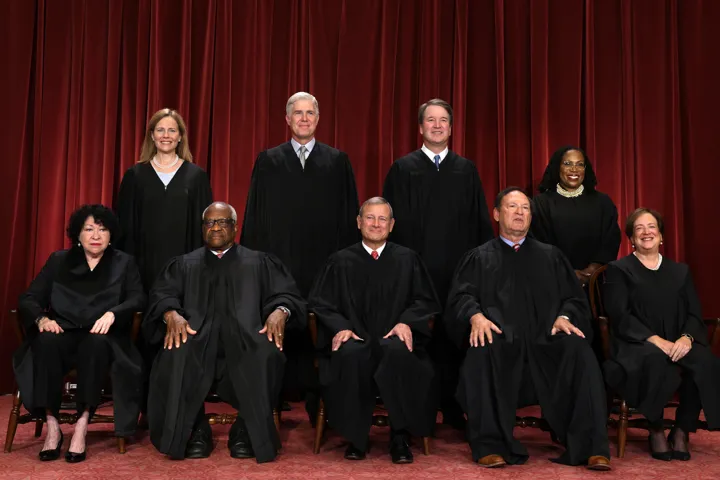
The U.S. Supreme Court has ruled in favor of the Trump administration's decision to end Temporary Protected Status (TPS) for Haitians, despite ongoing violence and instability in Haiti. The 6-3 decision allows the government to revoke TPS for approximately 350,000 Haitians and 6,100 Syrians, a move that has been met with criticism from humanitarian experts and dissenting justices. The ruling comes as Haiti faces severe challenges, with criminal gangs controlling much of the capital, Port-au-Prince, and widespread violence leading to the displacement of 1.5 million people. The decision overturns lower court orders that had previously blocked the administration from ending these protections.
Why It's Important?
The Supreme Court's decision has significant implications for thousands of Haitians who have been living in the U.S. under TPS since the 2010 earthquake. The ruling underscores the administration's push for stricter immigration controls and highlights the legal complexities surrounding TPS. Critics argue that the decision disregards the dire conditions in Haiti, where gang violence and political instability have escalated. The ruling could lead to increased deportations, affecting the lives of many Haitians who have established roots in the U.S. and potentially straining U.S.-Haiti relations.
What's Next?
Following the ruling, the Department of Homeland Security is expected to proceed with plans to terminate TPS for Haitians, which may lead to legal challenges and advocacy efforts from immigrant rights groups. The decision may also prompt discussions in Congress about the future of TPS and broader immigration reform. In Haiti, the ongoing violence and humanitarian crisis will likely continue to draw international attention and calls for increased support and intervention.
Beyond the Headlines
The Supreme Court's ruling raises questions about the balance between executive power and judicial oversight in immigration policy. It also highlights the ethical considerations of sending individuals back to countries experiencing severe instability. The decision may set a precedent for future TPS cases and influence the U.S.'s approach to humanitarian protections.
AI Generated Content
For the benefit of users - Parts of this article may include content generated using AI tools. Our teams are making active and commercially reasonable efforts to moderate all AI generated content. Our moderation processes are improving however our processes are carried out on a best-effort basis and may not be exhaustive in nature. We encourage our users to consume the content judiciously and rely on their own research for accuracy of facts. We maintain that all AI generated content on our platform is for entertainment purposes only. To know more about how we use AI, you can write to us at
Close AI Generated Content