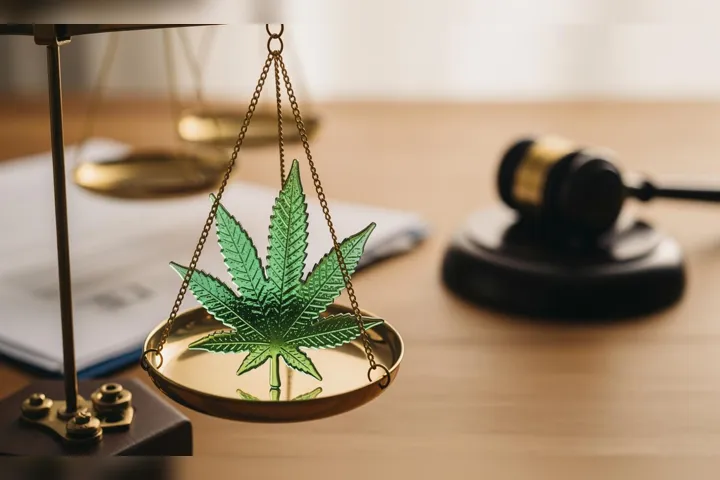
Trump Administration Reclassifies Medical Marijuana, Impacting State Laws

What's Happening?
The Trump administration has reclassified state-licensed medical marijuana from Schedule I to Schedule III, marking a significant shift in federal marijuana policy. This reclassification acknowledges the medical use of cannabis and eases research barriers, but it does not legalize marijuana federally. States retain the authority to enforce their own marijuana laws, meaning that arrest patterns remain unchanged in states where cannabis is illegal. The reclassification is expected to expand medical research and provide tax relief for medical marijuana businesses. However, it does not affect state criminal laws or decriminalize marijuana at the federal level.
Why It's Important?
This policy change represents a major step in aligning federal marijuana regulations with state laws, where medical marijuana is already legal in many states. By reclassifying marijuana, the Trump administration is facilitating research into its medical applications, which could lead to better treatment options for patients. The decision also provides financial benefits to medical marijuana businesses by allowing them to deduct expenses on federal taxes. However, the continued federal prohibition and state-level enforcement disparities highlight the complex legal landscape surrounding marijuana in the U.S. The reclassification may pressure states to reconsider their marijuana penalties, especially as federal law now formally recognizes medical use.
What's Next?
The Trump administration plans to hold a hearing in June to consider the broader rescheduling of marijuana from Schedule I to Schedule III. This could lead to further changes in federal marijuana policy, potentially impacting state laws and enforcement practices. As the reclassification process unfolds, states may face increased political and legal pressure to align their marijuana laws with federal standards. The ongoing debate over marijuana legalization and regulation is likely to continue, with significant implications for public policy, law enforcement, and the cannabis industry.
AI Generated Content
For the benefit of users - Parts of this article may include content generated using AI tools. Our teams are making active and commercially reasonable efforts to moderate all AI generated content. Our moderation processes are improving however our processes are carried out on a best-effort basis and may not be exhaustive in nature. We encourage our users to consume the content judiciously and rely on their own research for accuracy of facts. We maintain that all AI generated content on our platform is for entertainment purposes only. To know more about how we use AI, you can write to us at
Close AI Generated Content