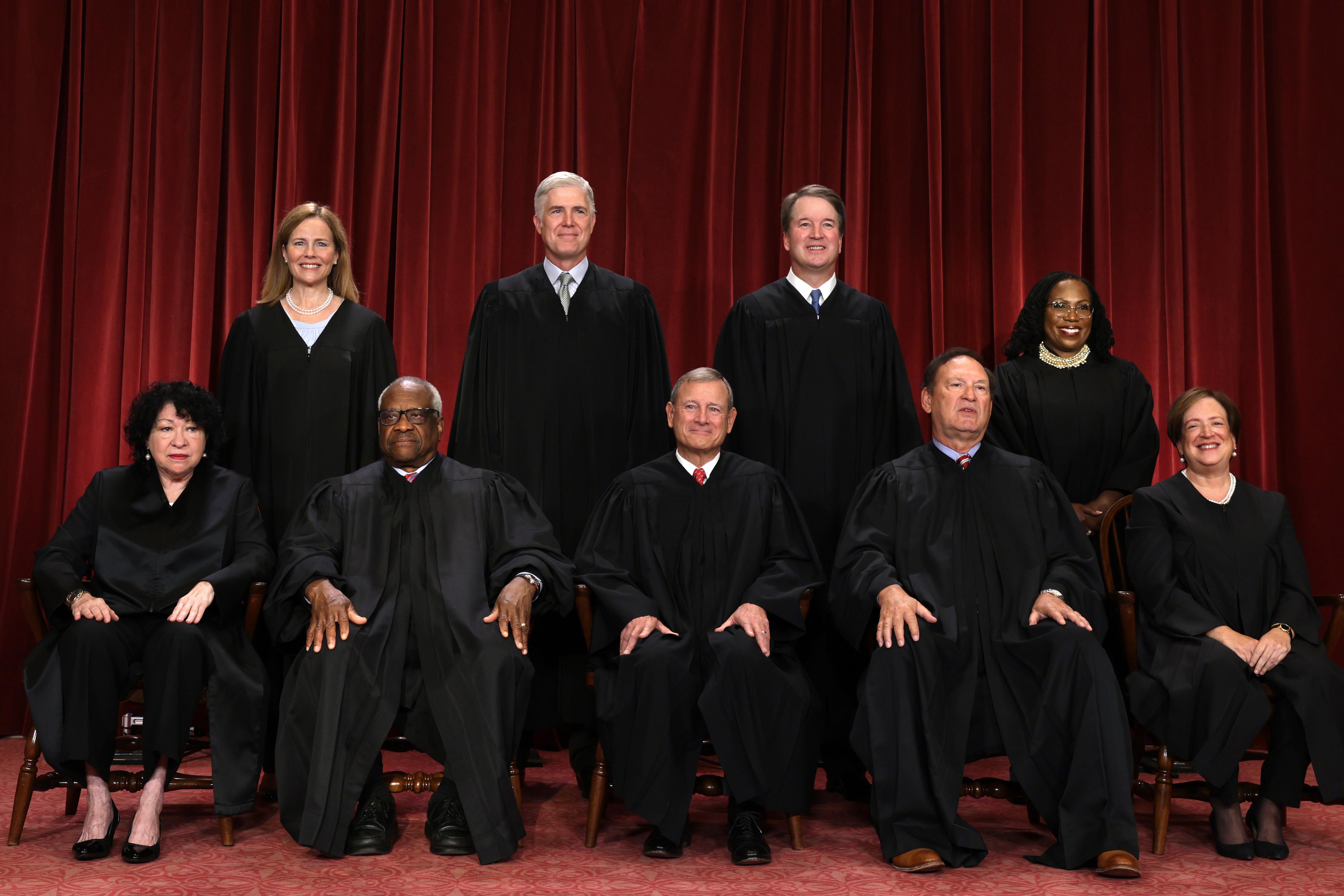
Supreme Court Justices Debate 'Previously Unavailable' Rule in Death Row Case

What's Happening?
The U.S. Supreme Court recently heard arguments in Guerrero v. Johnson, a case concerning whether a Texas death row inmate, Dexter Johnson, can file a second federal post-conviction challenge to his sentence.
Johnson argues that updated psychiatric standards, specifically the American Psychiatric Association's DSM-5, now classify him as intellectually disabled, making his execution unconstitutional under Atkins v. Virginia. The Antiterrorism and Effective Death Penalty Act of 1996 generally bars successive habeas petitions, but an exception exists for claims based on a 'new rule of constitutional law... that was previously unavailable.' Texas Solicitor General William Peterson contended that Atkins was decided before Johnson's crimes, meaning no 'new rule' was 'previously unavailable.' Justices debated the interpretation of 'previously unavailable,' with Justice Elena Kagan suggesting a rule is unavailable if it would have been dismissed in court. Justice Clarence Thomas expressed skepticism about when a rule ceases to be 'new,' while Justice Amy Coney Barrett compared it to the evolution of technology. The core of the debate revolves around whether evolving medical diagnostic standards constitute a 'new rule' that was 'previously unavailable' for a prisoner's claim.
Why It's Important?
This case holds significant implications for death row inmates and the finality of legal judgments in the U.S. If the Supreme Court rules in favor of Johnson, it could open a pathway for other inmates to challenge their sentences based on evolving medical or scientific standards, potentially leading to a re-evaluation of numerous capital cases. Conversely, a ruling for Texas would reinforce the strict limitations on successive habeas petitions, making it more difficult for inmates to introduce new evidence or interpretations of existing law. The decision will clarify the scope of the 'previously unavailable' exception under the Antiterrorism and Effective Death Penalty Act, impacting how federal courts handle claims related to intellectual disability in capital punishment cases. This could affect the legal strategies of defense attorneys and prosecutors nationwide, as well as the resources allocated to re-examining past convictions. The outcome will also influence the balance between judicial efficiency and the constitutional rights of individuals facing execution.
What's Next?
A decision in Guerrero v. Johnson is anticipated by late June, though it could be issued earlier. The Supreme Court's ruling will provide crucial guidance on the interpretation of 'new rule of constitutional law' and 'previously unavailable' within the context of successive habeas petitions. Depending on the outcome, lower courts will need to adapt their procedures for evaluating claims based on evolving diagnostic criteria for intellectual disability. Legal scholars and civil rights organizations will closely analyze the decision for its impact on capital punishment jurisprudence and the rights of death row inmates. States, particularly those with active death penalty statutes, will likely review their protocols for assessing intellectual disability in light of the Court's ruling. The decision could also prompt legislative discussions regarding the balance between judicial finality and the application of evolving scientific understanding in legal proceedings.
Beyond the Headlines
The Guerrero v. Johnson case delves into the complex interplay between legal precedent, scientific advancement, and constitutional rights. The debate over whether evolving medical standards, like those in the DSM-5, constitute a 'new rule' highlights a fundamental tension in the legal system: how to apply static laws to dynamic scientific understanding. This case raises ethical questions about the definition of intellectual disability in a legal context and whether an individual's constitutional protections should evolve with scientific consensus. The discussion among the justices, particularly Justice Thomas's skepticism about when a rule ceases to be 'new,' underscores the challenge of defining 'newness' in legal terms, especially when it pertains to scientific or medical criteria. The outcome could set a precedent for how courts address future cases where scientific or medical advancements challenge established legal definitions, potentially influencing areas beyond capital punishment, such as mental health evaluations in criminal justice or disability rights.