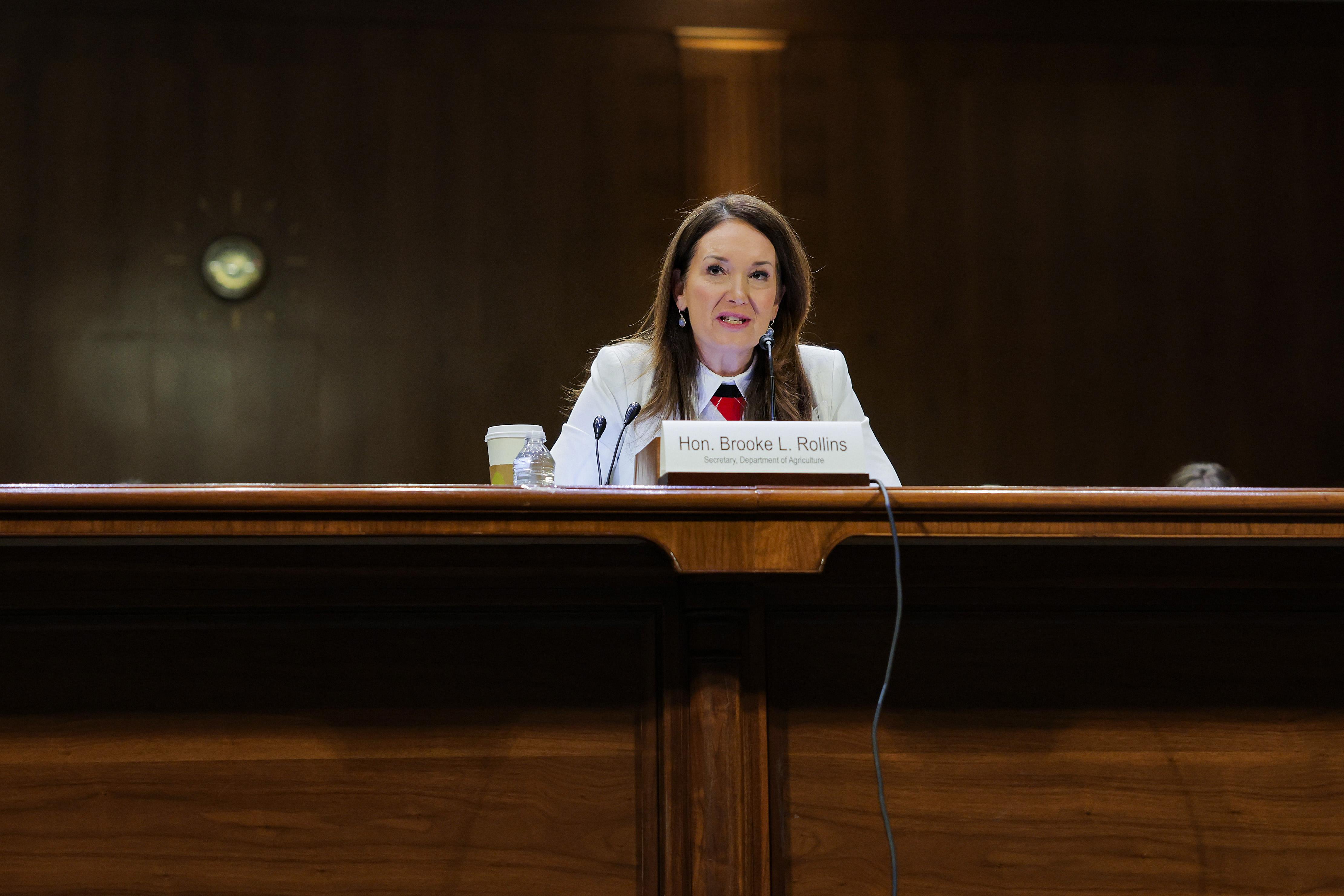
USDA Secretary Brooke Rollins Announces 'Farmer and Rancher Freedom Framework' to Combat Agricultural Lawfare

What's Happening?
In February 2026, USDA Secretary Brooke Rollins officially launched the Farmer and Rancher Freedom Framework, a new initiative designed to address what the department terms 'agricultural lawfare.' This
framework explicitly defines agricultural lawfare as the use of administrative, legal, and legislative government systems to negatively impact farmers, ranchers, and agricultural producers. The USDA has also established an online platform where farmers and ranchers can report instances of alleged lawfare. This development marks a significant acknowledgment by the federal department responsible for American agriculture that the legal system itself can impose substantial costs and challenges on agricultural producers. The initiative aims to provide a mechanism for producers to address legal risks that can be as detrimental as traditional agricultural risks like weather or commodity prices.
Why It's Important?
The USDA's formal recognition of 'agricultural lawfare' is a pivotal moment for the U.S. agricultural sector. It highlights the increasing burden of legal and regulatory challenges faced by farmers and ranchers, which can lead to significant economic losses, even if producers ultimately prevail in court. Unlike other industries, agriculture is land-based, making producers particularly vulnerable to litigation that can effectively act as a form of regulation, impacting land use, environmental compliance, and operational viability. This framework signals a shift in how the USDA views the legal landscape for its stakeholders, potentially leading to more proactive measures to protect agricultural producers from what it identifies as undue legal pressure. The ability for farmers to report instances of lawfare could provide valuable data for future policy adjustments and legal protections.
What's Next?
The establishment of the Farmer and Rancher Freedom Framework suggests that the USDA will likely continue to monitor and address the issue of agricultural lawfare. The online reporting mechanism will gather data that could inform future policy decisions, legislative proposals, or legal guidance aimed at mitigating the impact of such legal challenges on agricultural producers. Stakeholders, including farmer advocacy groups and legal organizations, will likely engage with the USDA to further define and address specific instances of lawfare. The framework may also lead to increased scrutiny of how federal agencies interact with agricultural operations and how legal interpretations affect farming practices. Future developments could include educational programs for farmers on legal risks and resources, or even legislative efforts to provide clearer protections against what the USDA deems agricultural lawfare.
Beyond the Headlines
The USDA's initiative delves into the complex interplay between the judiciary, administrative agencies, and the agricultural sector. It raises fundamental questions about the balance of power and the practical implications of legal and regulatory frameworks on essential industries. The concept of 'lawfare' suggests a weaponization of legal processes, which could have broader implications for other regulated sectors. This development also underscores the ongoing debate about judicial activism versus legislative intent, particularly in environmental and land-use regulations that frequently impact agriculture. The framework could spark a re-evaluation of how legal precedents and agency interpretations shape the economic viability and operational freedom of farmers, potentially leading to a broader discussion on regulatory overreach and the protection of property rights in the context of national food security.