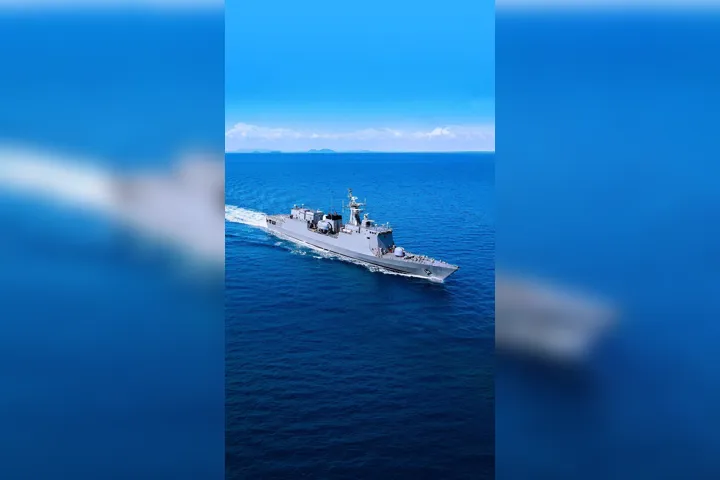
U.S. and Iran Compete for Control of Strait of Hormuz Amid Escalating Attacks

What's Happening?
The United States and Iran are engaged in a tense standoff over control of the Strait of Hormuz, a critical maritime corridor for global trade. Recent attacks have intensified the situation, with the U.S. military striking numerous targets in Iran, including air defense systems and missile sites. Iran, in turn, has retaliated by attacking nations hosting U.S. military forces and asserting its control over the strait. The conflict has disrupted shipping and raised concerns about a potential return to full-scale hostilities. The U.S. maintains that the strait remains open, while Iran claims it is closed, leading to a global energy crisis as oil prices fluctuate.
Why It's Important?
The Strait of Hormuz is a vital passage for a significant portion of the world's traded crude oil and natural gas. Control over this waterway has far-reaching implications for global energy markets and geopolitical stability. The ongoing conflict between the U.S. and Iran threatens to escalate into a broader regional war, potentially disrupting global trade and energy supplies. The situation also highlights the fragile nature of international diplomacy in resolving such high-stakes disputes. The outcome of this standoff could significantly impact global oil prices and economic stability, affecting industries and consumers worldwide.
What's Next?
As tensions continue to rise, diplomatic efforts are underway to de-escalate the situation. Mediators from countries like Pakistan, Qatar, and Egypt are working to reach a final agreement to end the conflict. However, the path to resolution remains uncertain, with both the U.S. and Iran showing no signs of backing down. The international community is closely monitoring the situation, as any further escalation could have severe consequences for regional and global stability. The potential for renewed negotiations or a shift in military strategies will be critical in determining the future of the Strait of Hormuz and the broader Middle East region.
AI Generated Content
For the benefit of users - Parts of this article may include content generated using AI tools. Our teams are making active and commercially reasonable efforts to moderate all AI generated content. Our moderation processes are improving however our processes are carried out on a best-effort basis and may not be exhaustive in nature. We encourage our users to consume the content judiciously and rely on their own research for accuracy of facts. We maintain that all AI generated content on our platform is for entertainment purposes only. To know more about how we use AI, you can write to us at
Close AI Generated Content