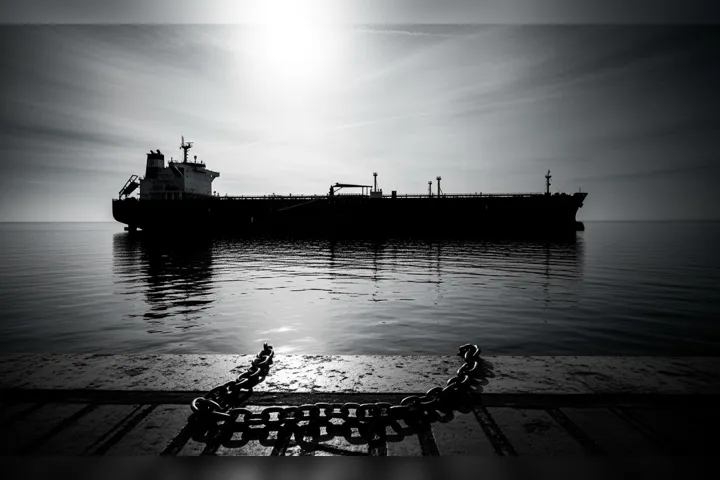
U.S. Plans Further Seizures of Tankers Transporting Venezuelan Oil Amid Sanctions

What's Happening?
The United States is preparing to intercept additional ships carrying Venezuelan oil following the recent seizure of a tanker, as part of its strategy to increase pressure on Venezuelan President Nicolas Maduro. This action marks the first interdiction of an oil cargo from Venezuela, which has been under U.S. sanctions since 2019. The U.S. has assembled a list of several more sanctioned tankers for potential seizure, aiming to disrupt the financial resources of the Maduro government. The U.S. Treasury has also imposed sanctions on six supertankers and four Venezuelans, including relatives of the country's first lady. The move is part of a broader U.S. effort to curb the transport of sanctioned oil, which often involves a shadow fleet of tankers operating under opaque ownership and without top-tier insurance coverage.
Why It's Important?
The U.S. actions are significant as they aim to tighten economic pressure on the Maduro regime by targeting its primary revenue source—oil exports. By seizing tankers, the U.S. seeks to disrupt the flow of Venezuelan oil to international markets, particularly to China, which is a major buyer. This could further strain Venezuela's economy and potentially destabilize Maduro's government. The seizures also serve as a warning to shipowners and operators involved in transporting Venezuelan crude, potentially deterring future shipments and complicating Venezuela's ability to sell its oil. The broader geopolitical implications include heightened tensions between the U.S. and countries like China and Russia, which have economic ties with Venezuela.
What's Next?
Further seizures are expected as the U.S. continues to monitor and target tankers involved in transporting Venezuelan oil. The timing of these actions will depend on logistical arrangements for receiving seized ships. The U.S. government is likely to face diplomatic challenges, as Venezuela and its allies may view these actions as aggressive and potentially illegal. The situation could lead to increased tensions in the Caribbean region, where U.S. military presence has been bolstered. Additionally, the legal process for seizing and unloading the oil cargoes will be closely watched, as it involves complex international maritime laws.
Beyond the Headlines
The U.S. strategy of targeting the shadow fleet highlights the challenges of enforcing international sanctions in a globalized economy. The opaque nature of tanker ownership and the lack of insurance coverage complicate enforcement efforts and raise questions about the effectiveness of sanctions. The situation also underscores the ethical and legal debates surrounding the use of military force to enforce economic sanctions, with some experts questioning the legality of such actions under international law. The broader impact on global oil markets, including potential price fluctuations, will be an area of concern for international stakeholders.
AI Generated Content
For the benefit of users - Parts of this article may include content generated using AI tools. Our teams are making active and commercially reasonable efforts to moderate all AI generated content. Our moderation processes are improving however our processes are carried out on a best-effort basis and may not be exhaustive in nature. We encourage our users to consume the content judiciously and rely on their own research for accuracy of facts. We maintain that all AI generated content on our platform is for entertainment purposes only. To know more about how we use AI, you can write to us at
Close AI Generated Content