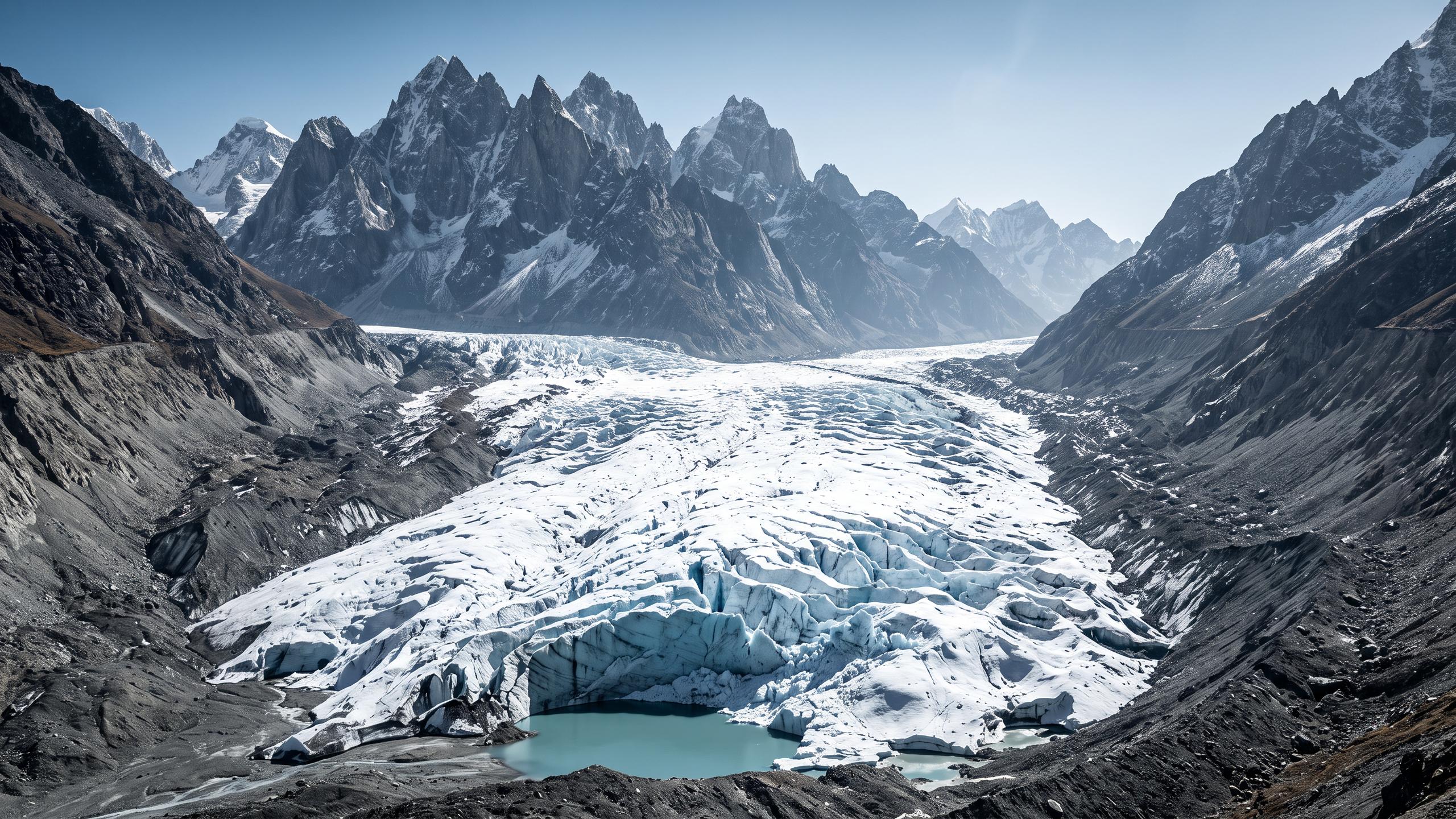
World Meteorological Organization Warns of Dire Consequences from Glacial Retreat on Water Security

What's Happening?
The World Meteorological Organization (WMO) has issued a warning regarding the severe implications of glacial retreat on global water security. Dr. Narelle van der Wel, head of Cryosphere Monitoring at the WMO,
stated that while accelerated melting initially increases runoff and flood risk, the long-term effect is a diminished capacity of glaciers to store water and sustain river flows during dry periods. This phenomenon is particularly critical in regions like the Himalayas, where melting glaciers threaten the water supply for up to 1.65 billion people. The Himalayan region is experiencing warming at nearly twice the global average, with temperatures rising 0.3°C per decade. This rapid warming makes ice highly sensitive, leading to increased melting of permafrost, snow, and ice, which in turn destabilizes slopes and increases hazard risks such as rockfalls, landslides, and avalanches. The WMO emphasizes that the precise cause of recent disasters, such as the floods in Nepal, is still under investigation, but rising temperatures are undeniably altering the cryosphere.
Why It's Important?
The WMO's warning highlights a critical environmental and humanitarian crisis with far-reaching consequences for water security, agriculture, and disaster preparedness. The shrinking of glaciers, particularly in the Hindu Kush Himalaya region, directly impacts the availability of water for a vast population, affecting both rural mountain communities dependent on glacial meltwater for livestock and major urban centers. This decline in water flow leads to increased drought conditions and greater variability in water supply, making it challenging for communities to manage their resources. Economically, water-dependent industries, such as winemaking in regions like the Andes, face significant threats. The increased frequency of natural disasters like flash floods, landslides, and avalanches due to destabilized slopes poses a direct threat to human lives, infrastructure, and livelihoods. The WMO's insights underscore the urgent need for robust early warning systems and climate adaptation strategies to mitigate these growing risks and protect vulnerable populations from the escalating impacts of climate change.
What's Next?
The WMO's ongoing monitoring and research into glacial retreat and its impacts will continue to provide crucial data for understanding and addressing this global challenge. Efforts to strengthen early warning systems, particularly in vulnerable regions like the Himalayas, are paramount. The WMO, in partnership with organizations like the Caribbean Meteorological Organization (CMO), is actively involved in initiatives to enhance multi-hazard early warning systems, as seen in Jamaica's commitment to protecting citizens through such advancements. These initiatives align with the United Nations' 'Early Warnings For All' mandate, aiming for universal protection by the end of 2027. Continued investment in training, technology, and interoperability of warning systems will be essential to ensure timely, clear, and actionable alerts reach affected communities. Furthermore, international cooperation and policy development based on WMO's scientific assessments will be critical in formulating effective climate change mitigation and adaptation strategies to safeguard water resources and reduce disaster risks globally.
Beyond the Headlines
The WMO's findings extend beyond immediate environmental concerns, touching upon profound ethical and societal implications. The disproportionate impact of climate change on communities that have contributed least to the problem, such as those in Nepal, raises significant questions of climate justice. The need for developed nations, historically major contributors to climate change, to support vulnerable countries in building resilience and adapting to these changes becomes a moral imperative. The long-term shifts in water availability could also trigger geopolitical tensions, particularly in transboundary river basins where multiple nations rely on shared water sources. Moreover, the degradation of natural landscapes and ecosystems due to glacial melt and associated disasters could lead to significant cultural losses for indigenous communities whose identities and livelihoods are deeply intertwined with these environments. The WMO's work underscores the interconnectedness of climate science, humanitarian aid, international relations, and cultural preservation in the face of a rapidly changing planet.