Research Identifies Two Distinct Autism Subtypes Through Brain Connectivity

What's Happening?
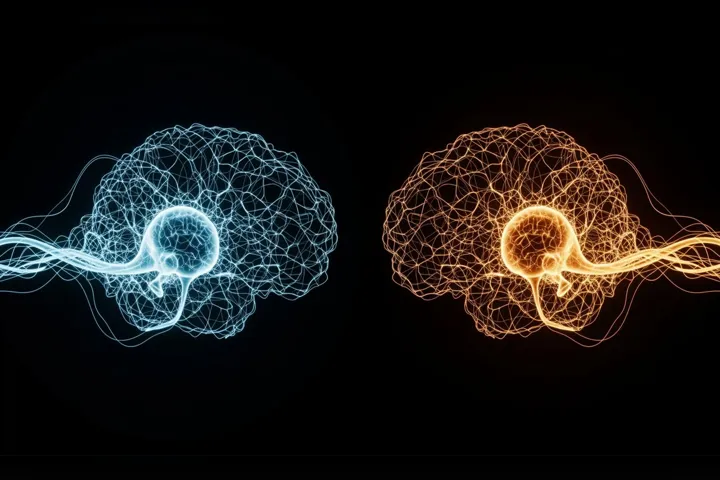
An international research team, including the Child Mind Institute in New York and the Istituto Italiano di Tecnologia in Italy, has identified two distinct subtypes of autism based on brain connectivity patterns. The study, published in Nature Neuroscience, distinguishes between 'hyperconnectivity' and 'hypoconnectivity' subtypes. The hyperconnectivity subtype is characterized by excessive communication between brain areas, while the hypoconnectivity subtype shows reduced communication. This research utilized functional magnetic resonance imaging (fMRI) data from over 1,900 human brain scans and 20 mouse models to map these connectivity patterns to specific biological pathways. The findings suggest that these subtypes account for approximately 25% of individuals with autism, offering a foundation for precision medicine approaches.
Why It's Important?
This study is significant as it provides a biological basis for the variability observed in autism spectrum disorder, which has traditionally been treated as a single condition despite its diverse manifestations. By identifying distinct subtypes, the research paves the way for more personalized and effective treatment strategies. This could lead to improved outcomes for individuals with autism by targeting specific biological mechanisms rather than relying solely on behavioral assessments. The study's approach of linking brain connectivity patterns to genetic and immune pathways also highlights the potential for cross-species research to inform human medical practices.
What's Next?
The researchers emphasize the need for further studies to explore additional subtypes within the autism spectrum, as the current findings capture only two dominant patterns. Larger datasets and refined analytical methods could reveal more subtypes, enhancing the precision of autism diagnosis and treatment. The study's success in using mouse models as a 'biological Rosetta Stone' suggests that future research could continue to leverage animal models to uncover the molecular underpinnings of other neurological conditions.
AI Generated Content
For the benefit of users - Parts of this article may include content generated using AI tools. Our teams are making active and commercially reasonable efforts to moderate all AI generated content. Our moderation processes are improving however our processes are carried out on a best-effort basis and may not be exhaustive in nature. We encourage our users to consume the content judiciously and rely on their own research for accuracy of facts. We maintain that all AI generated content on our platform is for entertainment purposes only. To know more about how we use AI, you can write to us at
Close AI Generated Content