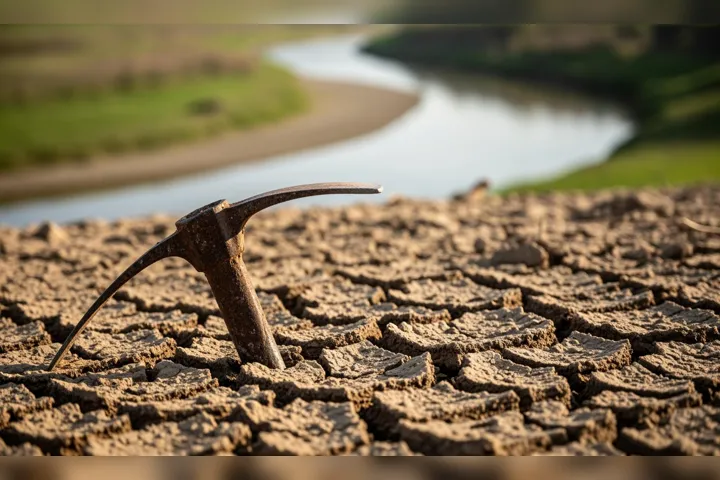
Rare Earth Mining in Myanmar Threatens Mekong River and Southeast Asian Agriculture

What's Happening?
Toxic runoff from rare earth mining operations in Myanmar is contaminating rivers that flow into Thailand, posing a significant threat to the Mekong River and its basin's fisheries and farmland. The unregulated mining boom, driven by rising demand for rare earth materials, is centered in Myanmar and spreading to Laos. This contamination endangers the lives and livelihoods of millions who depend on the Mekong River for agriculture and fishing. The heavy metal pollutants, including arsenic, mercury, lead, and cadmium, pose severe health risks, particularly to children and pregnant women. Thailand, a major rice exporter, is particularly vulnerable as these toxins threaten its global food exports. Despite the severity of the situation, responses have been limited due to regional conflicts and smuggling issues.
Why It's Important?
The contamination of the Mekong River has far-reaching implications for Southeast Asia's economy and food security. As a critical water source for millions, the river's pollution could devastate agricultural output, affecting global food supply chains. Thailand's rice exports, which are significant to the U.S. and other countries, are at risk, potentially leading to economic losses and food shortages. The situation also highlights the environmental and health costs of the global demand for rare earth elements, which are essential for modern technology. The lack of effective regional cooperation and regulation exacerbates the problem, leaving communities vulnerable to health hazards and economic instability.
What's Next?
Efforts to address the contamination are currently limited to local monitoring and education initiatives. However, there is a pressing need for international cooperation to regulate mining activities and mitigate environmental damage. The situation may prompt increased scrutiny of rare earth supply chains and pressure on governments to implement stricter environmental protections. Additionally, the health impacts on affected communities could lead to increased healthcare demands and social unrest. The ongoing conflict in Myanmar complicates these efforts, making it challenging to implement comprehensive solutions.
Beyond the Headlines
The situation underscores the ethical and environmental dilemmas associated with the extraction of rare earth elements. As global demand for these materials grows, the environmental degradation and human health risks associated with their extraction become more pronounced. This case highlights the need for sustainable mining practices and the importance of balancing technological advancement with environmental stewardship. The contamination of the Mekong River also raises questions about the responsibility of consumer nations in addressing the environmental impacts of their resource demands.
AI Generated Content
For the benefit of users - Parts of this article may include content generated using AI tools. Our teams are making active and commercially reasonable efforts to moderate all AI generated content. Our moderation processes are improving however our processes are carried out on a best-effort basis and may not be exhaustive in nature. We encourage our users to consume the content judiciously and rely on their own research for accuracy of facts. We maintain that all AI generated content on our platform is for entertainment purposes only. To know more about how we use AI, you can write to us at
Close AI Generated Content