NASA Astronauts Complete Unexpected 286-Day ISS Mission Due to Starliner Issues

What's Happening?
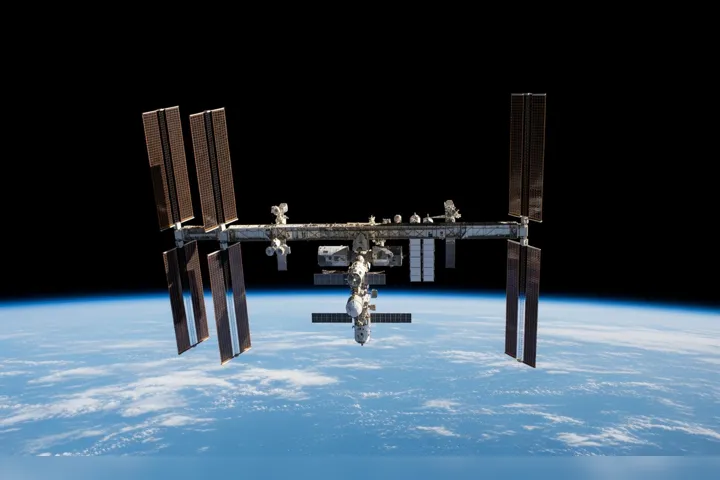
NASA astronauts Suni Williams and Butch Wilmore embarked on what was initially planned as an eight-day mission to the International Space Station (ISS) in June 2024. However, due to significant thruster problems with the Boeing Starliner spacecraft, their mission extended to 286 days. The Starliner, which was supposed to return the astronauts to Earth, developed thruster issues that led NASA to deem it unsafe for the return journey. Consequently, Williams and Wilmore remained on the ISS, integrating into the station's regular crew rotations and participating in scientific research and maintenance activities. They eventually returned to Earth aboard a SpaceX capsule in March 2025, marking the longest accidental extension of a human spaceflight in NASA's history.
Why It's Important?
This incident highlights significant challenges within Boeing's Commercial Crew Program, which has faced delays and technical issues since its inception. The Starliner program, despite a $4.2 billion contract with NASA, has struggled to meet expectations, contrasting sharply with SpaceX's successful Crew Dragon missions. The extended mission underscores the importance of having reliable spacecraft for crewed missions and raises questions about Boeing's future role in NASA's commercial crew endeavors. The situation also emphasizes the need for robust contingency planning in space missions, as the astronauts' safety and mission success depend on the reliability of their spacecraft.
What's Next?
The future of Boeing's Starliner program remains uncertain. NASA has not committed to a specific date for the next Starliner mission, and the unresolved engineering issues with the thrusters pose ongoing challenges. Boeing has expressed its intention to address these problems in future vehicles, while NASA continues to seek a second commercial crew provider as a backup to SpaceX. The decision on whether Boeing will continue in this role will depend on technical, financial, and political considerations that are yet to be resolved.
Beyond the Headlines
The extended mission of Williams and Wilmore also sheds light on the psychological and physical demands of long-duration spaceflights. Despite the unexpected extension, the astronauts adapted to their prolonged stay, contributing to scientific research and station maintenance. This adaptability highlights the resilience and professionalism required of astronauts. Additionally, the incident may influence future policies and procedures for handling spacecraft malfunctions and mission extensions, potentially leading to more stringent safety protocols and improved spacecraft designs.
AI Generated Content
For the benefit of users - Parts of this article may include content generated using AI tools. Our teams are making active and commercially reasonable efforts to moderate all AI generated content. Our moderation processes are improving however our processes are carried out on a best-effort basis and may not be exhaustive in nature. We encourage our users to consume the content judiciously and rely on their own research for accuracy of facts. We maintain that all AI generated content on our platform is for entertainment purposes only. To know more about how we use AI, you can write to us at
Close AI Generated Content