NOAA Reports Severe Solar Radiation Storm, Potentially Visible Northern Lights Across U.S.

What's Happening?
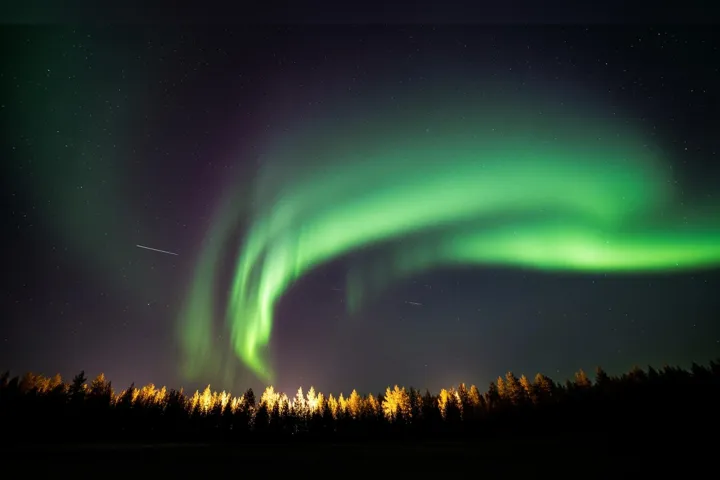
The National Oceanic and Atmospheric Administration (NOAA) has reported the occurrence of the largest solar radiation storm in over 20 years, classified as an S4 severe event. This storm, which began on January 19, is significant due to its potential to create a rare northern lights display visible across parts of the United States that typically do not experience such phenomena. The storm is a result of a Coronal Mass Ejection (CME) from the sun, which has triggered severe G4 geomagnetic storm conditions. These conditions could allow the auroral oval to extend further south, potentially making the northern lights visible in states like Indiana, Illinois, Wisconsin, and possibly as far south as northern California. The NOAA's Space Weather Prediction Center (SWPC) is monitoring the situation closely, as the storm could also impact satellites, power grids, and aviation.
Why It's Important?
The occurrence of such a severe solar radiation storm is significant for several reasons. Firstly, it highlights the vulnerability of modern technology and infrastructure to space weather events. The potential disruptions to satellites and power grids could have widespread implications for communication and energy systems. Additionally, the aviation industry may face challenges, particularly for flights on polar routes, which could experience increased radiation exposure. On a cultural level, the possibility of witnessing the northern lights in areas unaccustomed to such displays could generate public interest and awareness about space weather phenomena. This event underscores the importance of monitoring and preparing for space weather impacts on critical infrastructure and services.
What's Next?
As the solar storm continues, NOAA and the SWPC will provide ongoing updates and forecasts to help mitigate potential impacts. Utilities and satellite operators are likely to activate safeguards to protect their systems from disruptions. The public is encouraged to stay informed through official channels for the latest information on the storm's progression and any visible auroral activity. In the longer term, this event may prompt discussions on enhancing resilience against space weather events, including improved forecasting and protective measures for vulnerable technologies.
AI Generated Content
For the benefit of users - Parts of this article may include content generated using AI tools. Our teams are making active and commercially reasonable efforts to moderate all AI generated content. Our moderation processes are improving however our processes are carried out on a best-effort basis and may not be exhaustive in nature. We encourage our users to consume the content judiciously and rely on their own research for accuracy of facts. We maintain that all AI generated content on our platform is for entertainment purposes only. To know more about how we use AI, you can write to us at
Close AI Generated Content