Extreme heat challenges athletes as seasons grow hotter | Exclusive

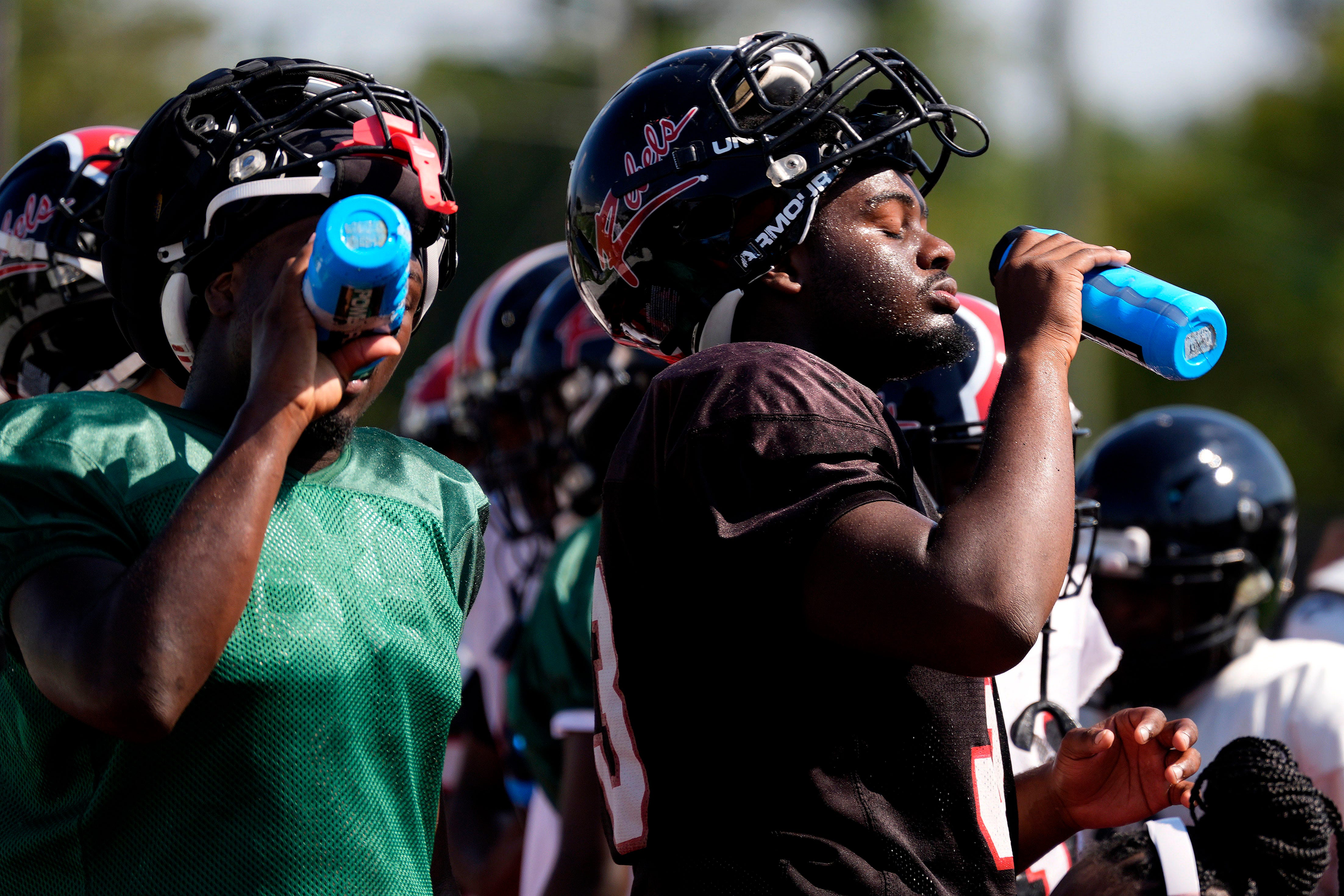
Symptoms of climate change, including extreme heat, are increasingly affecting outdoor sports, prompting changes to practice schedules and additional safety protocols for Augusta's young athletes.
the heat, on top of wearing protective equipment in a sport that's already physically demanding and causes a lot of sweating, it does become an issue," said Daniel Dorsey, athletic director and head football coach at Hephzibah High School.
More: 10 everyday signs climate change is affecting your life | Exclusive
Dorsey said the team sometimes has to move practices indoors on particularly hot days, which are growing in frequency.
"We do our best to prepare players for the heat," he said. "But with temperatures being so high when we get out of school during our normal practice times, it's hard to acclimate to it. We've had to move practices into the gym, which can be challenging because you don't have the same space you would on the field."
Dorsey said being proactive is essential to keeping athletes safe.
"We do our best to take preventive measures," he said. "I go to Sam's Club once a week and buy four or five cases of water. Between weightlifting and everything else, they need to stay hydrated. The biggest part of handling the heat and preparing your body is making sure it's properly hydrated."
Additional adjustments are sometimes necessary, Dorsey said.
"We may start practice indoors and spend the last hour or 30 minutes outside," he said. "If it's really hot, we might practice without pads. I tell them to take the helmets and shoulder pads off to reduce exertion and the risk of heat exhaustion."
Heat causes physiological, psychological impacts on athletes
Dr. Jessica Murfree, an assistant professor of sport administration in the Department of Exercise and Sport Science at the University of North Carolina at Chapel Hill, said extreme heat is affecting athletes across all levels of competition.
"Extreme heat has physiological, mental and psychosocial effects, as well as impacts on the way we live our lives," Murfree said. "There are also socioeconomic stressors. Physiologically, extreme heat can lead to heat stroke, heat exhaustion and other exertional heat-related illnesses, as well as sunburn and dehydration."
According to the U.S. Environmental Protection Agency, temperatures in the contiguous United States have risen 2.5 degrees Fahrenheit since 1970, while temperatures in Alaska have increased by 4.2 degrees. Heat waves are more frequent, longer-lasting, and more intense than they were in previous decades.
Heat waves increased from an average of two per year during the 1960s to six per year during the 2010s and 2020s, according to EPA data.
The average heat wave season across U.S. cities is now 46 days longer than it was in the 1960s. In recent years, the average heat wave in major urban areas has lasted about four days.
Some athletes more vulnerable than others
Murfree said some sports are more vulnerable to heat-related illnesses than others.
"The sports with the greatest environmental exposure are at the highest risk," she said. "That includes sports primarily played and practiced outdoors, sports with longer seasons, and sports that require athletes to spend more time outside.
"Sports with high levels of exertion also carry greater risk because the body has to work harder. Football, soccer, rugby, running and tennis are examples. Summer and early fall sports, in particular, can create a perfect storm of heat, sunlight and intense physical activity."
How heat is changing outdoor sports
Extreme heat is also changing training schedules, competition calendars and recovery protocols, Murfree said.
"Extreme heat has canceled events, relocated them, postponed them and made them more expensive," she said. "It's moved sporting events that we're accustomed to seeing outdoors indoors or altered portions of them. Road races, triathlons and marathons are examples. The routes and conditions for those events are changing."
Murfree said climate change is affecting nearly every aspect of sports. Equipment and apparel companies must continue developing products that protect athletes while maintaining performance and quality. Climate-related changes are also affecting travel, altering event schedules and changing the experience for spectators, coaches and officials, she said.
The long-term impacts could reshape the sports landscape.
"In 20 to 30 years, we might see sports we have enjoyed no longer function in the same way," Murfree said. "Baseball is one example. Over the last 10 to 15 years at the major league level, more games have moved into stadiums with roofs. When new Major League Baseball stadiums are built, they're increasingly being built with roofs."
Child athletes at higher risk
Among the many climate-related concerns facing sports, Murfree said heat remains the most pressing.
"Heat is first and foremost," she said. "It's one of the leading causes of death and disability among young athletes. While I'm interested in other forms of extreme weather, they don't have nearly the same fatality rate."
Youth athletes face greater risks from extreme heat than professional athletes, Murfree said.
"Professional athletes, and even collegiate athletes, have more resources to help adapt to and mitigate the realities of extreme heat," she said. "Young bodies are still developing, so extreme heat poses greater risks to the nervous system, cognitive functioning, and vital organs. Children also have less developed sweating mechanisms. Adults can sweat more effectively and cool their bodies, while kids haven't fully developed that ability yet."
James Leonard, athletic director and head football coach at Aquinas High School, said coaches and trainers closely monitor wet-bulb temperatures.
"The wet-bulb temperature is a tool athletic trainers use to measure heat and humidity," Leonard said. "We follow the guidelines strictly, and the Georgia High School Association has specific rules. If the wet-bulb temperature is too high, practice can be delayed until conditions improve."
Despite recent stretches of extreme heat, Leonard said he does not view it as the biggest challenge facing high school football.
"I don't necessarily see it that way because we're used to the heat here in Augusta," Leonard said. "It's definitely been extreme lately, but I don't see it as too big of a challenge. We have a good trainer, and our coaches do a good job keeping players hydrated."
Leonard said schools have implemented safeguards to help athletes cope with high temperatures.
"We always have plenty of water at practice," he said. "We use cooling towels, a cooling tent in shaded areas, and fans that circulate cool air."
This reporting content is supported by a partnership with Journalism Funding Partners.
Erica Van Buren is the climate change reporter for The Augusta Chronicle, part of the USA TODAY Network. Connect with her at EVanBuren@usatodayco.com or on X: @EricaVanBuren32.