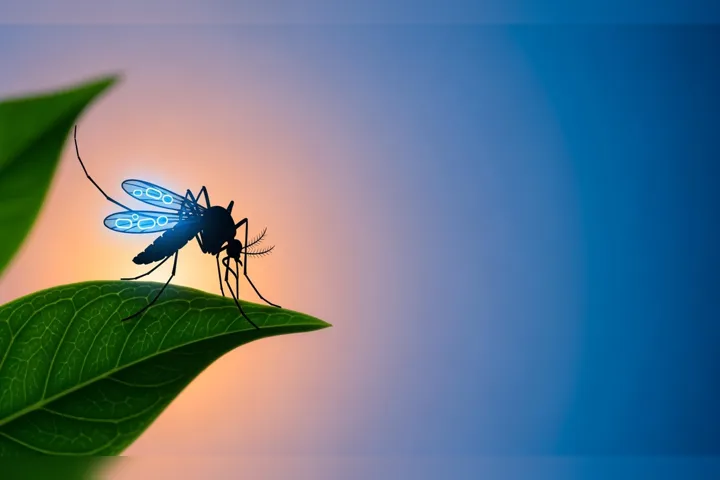
Google Proposes Release of 64 Million Bacteria-Infected Mosquitoes in California and Florida to Combat Disease

What's Happening?
Google has submitted an application to the Environmental Protection Agency (EPA) for an experimental permit to release 64 million mosquitoes infected with the bacterium Wolbachia pipientis in California and Florida. This initiative, part of Google's Debug project, aims to reduce populations of the southern house mosquito, Culex quinquefasciatus, which is known to spread diseases such as West Nile virus and St. Louis encephalitis. The bacterium Wolbachia, when present in male mosquitoes, prevents uninfected females from producing viable offspring, thereby reducing mosquito populations over time. The EPA is currently reviewing the application and has opened a public comment period before making a final decision.
Why It's Important?
The proposed release of Wolbachia-infected mosquitoes represents a significant step in controlling mosquito-borne diseases without the use of broad-spectrum insecticides, which can harm the environment and other beneficial insects. The southern house mosquito is a vector for several diseases, including West Nile virus, which affects thousands of people annually in the U.S. By reducing the population of these mosquitoes, the initiative could lead to a decrease in disease transmission, offering substantial public health benefits. The approach is seen as environmentally conservative, as Wolbachia is a naturally occurring bacterium and does not introduce new toxins into the ecosystem.
What's Next?
The EPA will conclude its public comment period on June 5, after which it will decide whether to grant Google the permit for the mosquito release. If approved, Google plans to release up to 32 million mosquitoes in each state over two years. The success of this initiative could pave the way for similar projects targeting other mosquito species and regions, potentially leading to broader applications of this technology in public health efforts.
Beyond the Headlines
While the initiative is promising, it raises questions about ecological impacts, such as potential shifts in local ecosystems due to changes in mosquito populations. However, experts suggest that the benefits of reducing disease vectors outweigh the risks, as most predators of mosquitoes are generalists and can adapt to changes in prey availability. Continuous monitoring will be essential to assess the long-term ecological effects and ensure that the intervention does not inadvertently create space for other harmful mosquito species.
AI Generated Content
For the benefit of users - Parts of this article may include content generated using AI tools. Our teams are making active and commercially reasonable efforts to moderate all AI generated content. Our moderation processes are improving however our processes are carried out on a best-effort basis and may not be exhaustive in nature. We encourage our users to consume the content judiciously and rely on their own research for accuracy of facts. We maintain that all AI generated content on our platform is for entertainment purposes only. To know more about how we use AI, you can write to us at
Close AI Generated Content