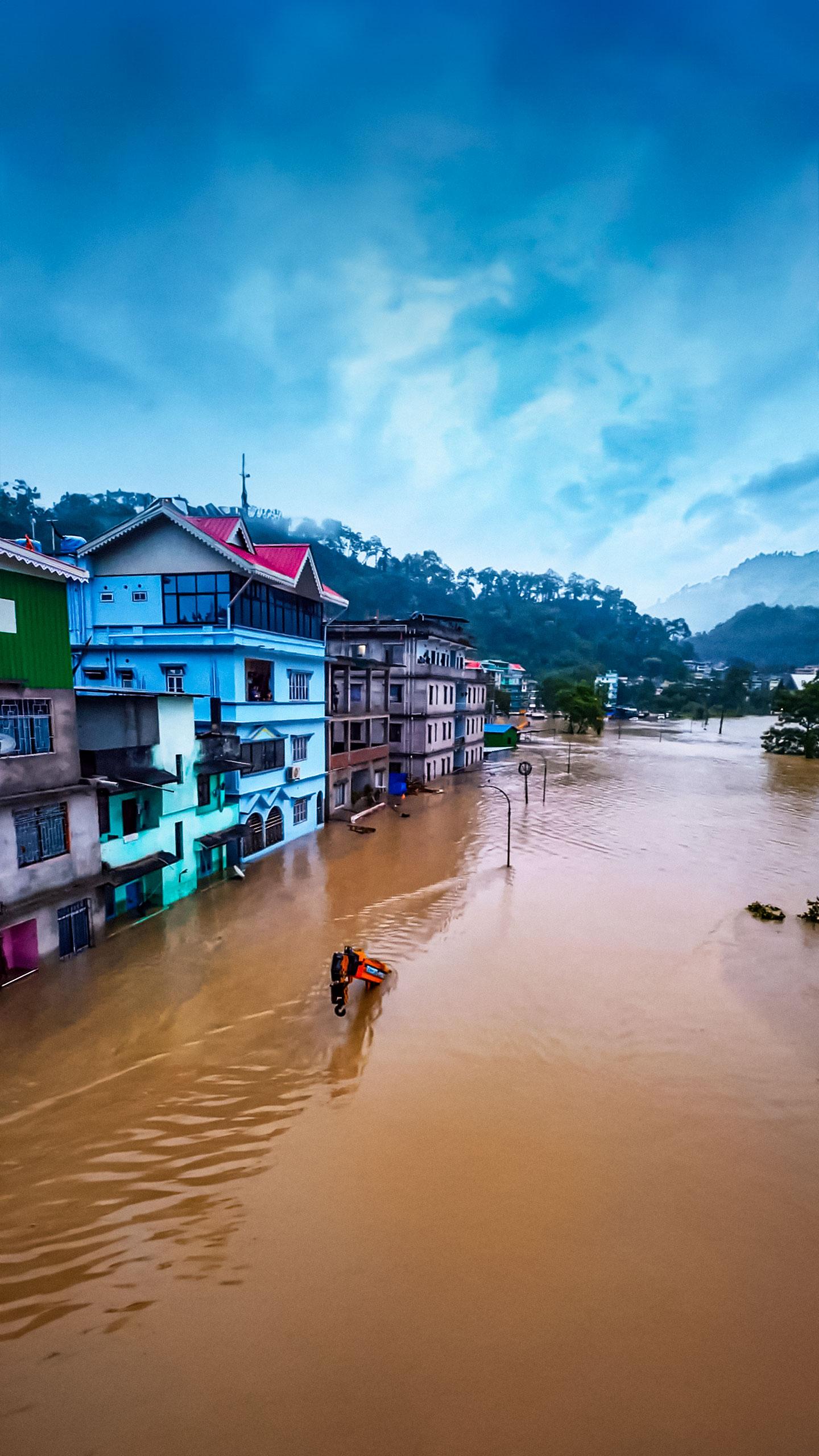
Southwest Region Faces Mandatory Evacuations and Historic River Levels Due to Flash Flooding

What's Happening?
Heavy rainfall has triggered widespread flash flooding and mandatory evacuations across the U.S. Southwest, particularly in Arizona, Colorado, New Mexico, and Utah. In Pagosa Springs, Colorado, officials
warned of potentially 'catastrophic flooding' as the San Juan River was forecast to crest at over 20 feet, surpassing historic levels from a devastating 1911 flood. Communities in northern New Mexico and central Arizona, including Sedona, Gisela, and Camp Verde, have also issued mandatory evacuation orders for residents near swollen rivers and creeks. Flagstaff, Arizona, experienced nearly nonstop rain on Sunday, leading to flooded roads and overwhelming storm drains, with authorities searching for a man who fell into fast-moving floodwaters. Meteorologists from the National Weather Service in Tucson noted that the region is receiving 'two or three months of rain in a span of a couple of days,' fueled by a series of Pacific storm systems.
Why It's Important?
This latest round of severe flooding in the Southwest carries significant implications for public safety, infrastructure, and local economies. Mandatory evacuations disrupt thousands of lives, forcing residents from their homes and businesses. The closure of major highways and local roads isolates communities and impedes emergency response efforts. For tourist towns like Pagosa Springs and Sedona, the flooding directly impacts their primary economic drivers, leading to immediate financial losses and potential long-term recovery challenges. The overwhelming volume of water also strains municipal services, causing issues like sewage backups reported in areas such as Pinetop-Lakeside. Furthermore, the saturation of already soaked lands, particularly in national parks like Zion and Capitol Reef, increases the risk of mudslides and makes backcountry roads impassable, posing dangers to residents and visitors alike.
What's Next?
The heavy rainfall was expected to saturate the region through Monday, with the National Weather Service issuing flood warnings and watches for nearly all of Arizona and parts of southern Utah, southwestern Colorado, western New Mexico, and southern Nevada. Residents in affected areas are urged to remain vigilant and adhere to evacuation orders and advisories from local officials. Emergency crews will continue to conduct rescues and assess damage as floodwaters recede. The focus will shift to recovery efforts, including clearing debris, repairing damaged infrastructure, and providing support to displaced residents. Authorities will also monitor river levels closely for any secondary crests or prolonged flooding, and assess the long-term impact on water resources and land stability in the region.
Beyond the Headlines
The recurring and increasingly severe flooding events in the Southwest highlight a critical vulnerability in a region traditionally characterized by aridity. While these rains can temporarily alleviate drought conditions, their intensity often leads to destructive flash floods rather than beneficial, slow absorption. This paradox underscores the challenges of water management in a changing climate, where extreme weather events are becoming more common. The events also bring to light the need for enhanced early warning systems, resilient infrastructure designed to withstand such deluges, and updated land-use planning that considers increased flood risks. The psychological toll on communities facing repeated evacuations and property damage also warrants attention, pointing to a broader societal need for adaptation strategies to cope with climate-induced environmental shifts.