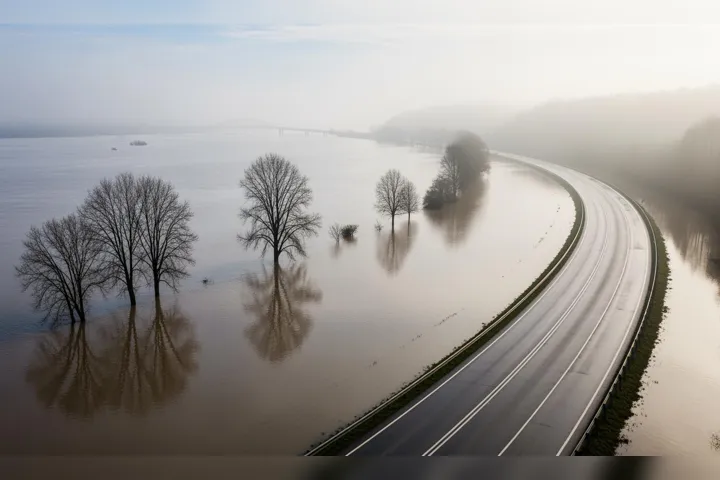
Washington State Faces Historic Flooding, Major Highways Closed and Evacuations Ordered

What's Happening?
Washington State is experiencing severe flooding due to back-to-back atmospheric rivers, leading to a state of emergency. Major highways have been closed, and evacuations are underway as rivers, including the Skagit and Snohomish, reach historic flood levels. The National Weather Service has warned of potentially life-threatening conditions, with widespread urban flooding expected. Governor Bob Ferguson has activated the National Guard to assist with evacuations and rescues. Swiftwater rescue teams have been deployed, and numerous residents have been evacuated from their homes. The flooding has also led to mudslides and road closures, further complicating the situation.
Why It's Important?
The flooding poses significant risks to public safety and infrastructure in Washington State. With major highways closed and thousands of residents evacuated, the economic impact could be substantial. The agricultural sector, local businesses, and transportation networks are likely to be affected, leading to potential disruptions in supply chains and economic activities. The activation of the National Guard highlights the severity of the situation and the need for coordinated emergency response efforts. The flooding also underscores the challenges posed by extreme weather events, which are becoming more frequent and severe due to climate change.
What's Next?
Authorities are closely monitoring the situation as rivers are expected to crest in the coming days. Residents are urged to stay informed through emergency alerts and heed evacuation orders. Efforts to manage the flooding and mitigate its impact will continue, with emergency services and the National Guard playing a crucial role. The state government may seek federal assistance to support recovery efforts. In the longer term, there may be discussions on improving flood defenses and infrastructure resilience to better prepare for future extreme weather events.
Beyond the Headlines
The flooding in Washington State highlights the broader issue of climate change and its impact on weather patterns. As extreme weather events become more common, there is a growing need for comprehensive climate adaptation strategies. This includes investing in resilient infrastructure, improving emergency response systems, and enhancing community preparedness. The situation also raises questions about land use planning and the need to consider environmental factors in development decisions. Addressing these challenges will require collaboration between government agencies, communities, and stakeholders to build a more resilient future.
AI Generated Content
For the benefit of users - Parts of this article may include content generated using AI tools. Our teams are making active and commercially reasonable efforts to moderate all AI generated content. Our moderation processes are improving however our processes are carried out on a best-effort basis and may not be exhaustive in nature. We encourage our users to consume the content judiciously and rely on their own research for accuracy of facts. We maintain that all AI generated content on our platform is for entertainment purposes only. To know more about how we use AI, you can write to us at
Close AI Generated Content