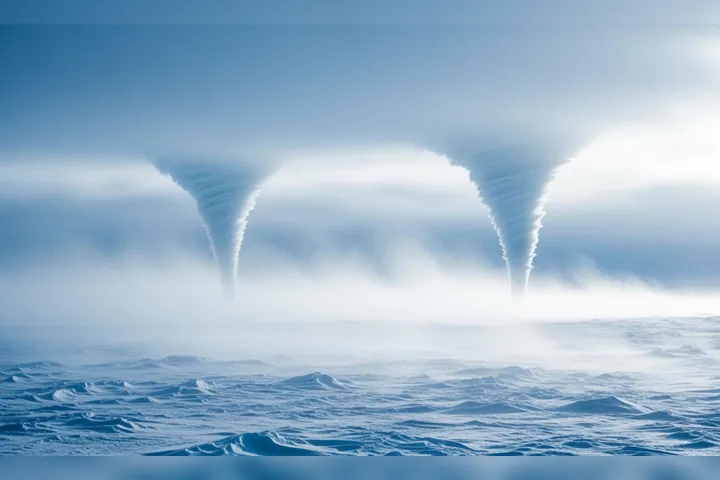
Polar Vortex Forecast Predicts Two Arctic Blasts Impacting U.S. in January

What's Happening?
The polar vortex is expected to bring two significant blasts of cold air to the United States in January. According to climatologist Judah Cohen, the first wave of cold air will occur over the weekend of January 17, followed by a more intense cold spell the following week. Meteorologist Ryan Maue has indicated that this could lead to a historic Arctic blast across North America. The polar vortex, a persistent area of low pressure and cold air over the poles, can weaken and stretch, allowing frigid air to spill southward into the U.S. This phenomenon is anticipated to bring below-normal temperatures to the Eastern U.S., with potential impacts on snow patterns, particularly in regions around the Great Lakes and Northern New England.
Why It's Important?
The forecasted polar vortex events could have significant implications for weather patterns across the United States. The influx of Arctic air may lead to colder temperatures and increased snowfall in certain areas, affecting daily life and potentially disrupting travel and commerce. The cold conditions could also impact energy consumption, as heating demands rise. Additionally, the weather changes may influence agricultural activities, particularly in regions susceptible to frost. Understanding these patterns is crucial for preparing and mitigating the effects on infrastructure and public safety.
What's Next?
As the polar vortex stretches, it is expected to bring cold air from Western Canada into the North-Central and Northeastern U.S. towards the end of January. Meteorologists will continue to monitor the situation, providing updates on potential snowstorms and temperature fluctuations. Stakeholders, including local governments and businesses, may need to prepare for the impacts of these weather changes, such as increased heating costs and potential disruptions in transportation. The situation remains dynamic, with forecasts subject to change as new data becomes available.
Beyond the Headlines
The polar vortex's impact extends beyond immediate weather changes, highlighting broader climate dynamics. The weakening and stretching of the vortex are influenced by global temperature variations, which can have long-term effects on climate patterns. This event underscores the importance of understanding atmospheric phenomena and their role in shaping weather extremes. It also raises questions about the resilience of infrastructure and communities in adapting to increasingly volatile weather conditions.
AI Generated Content
For the benefit of users - Parts of this article may include content generated using AI tools. Our teams are making active and commercially reasonable efforts to moderate all AI generated content. Our moderation processes are improving however our processes are carried out on a best-effort basis and may not be exhaustive in nature. We encourage our users to consume the content judiciously and rely on their own research for accuracy of facts. We maintain that all AI generated content on our platform is for entertainment purposes only. To know more about how we use AI, you can write to us at
Close AI Generated Content