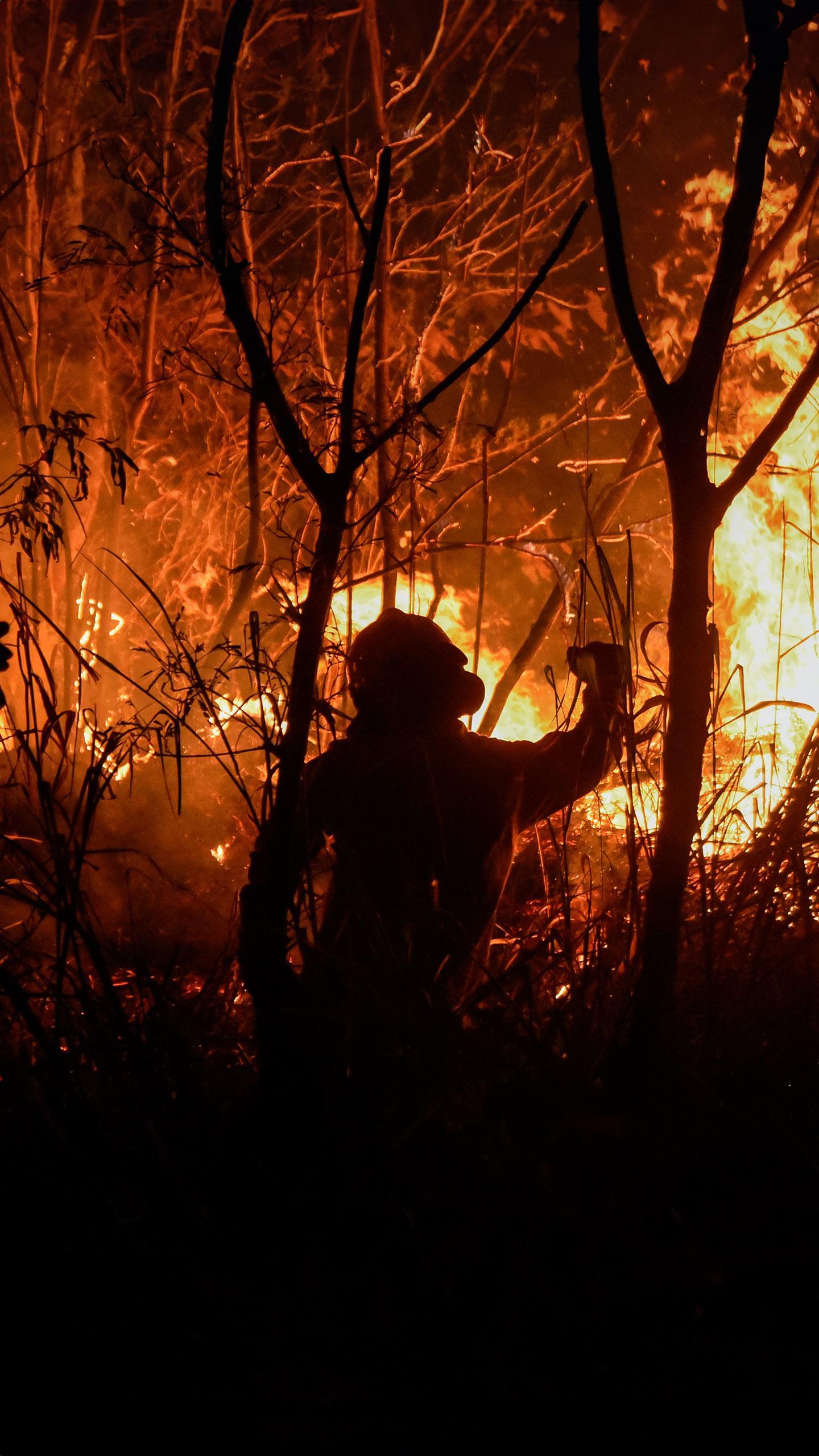
Texas Firefighters Battle Multiple Blazes Amidst Extreme Heat; Dry River Fire Expands to 8,700 Acres

What's Happening?
Firefighting resources across Texas are currently stretched thin as crews battle multiple active wildfires amid unseasonably hot and dry weather conditions. The Texas A&M Forest Service reported receiving
eight new requests for wildfire assistance within a 24-hour period, resulting in over 600 additional acres burned. A primary concern is the Dry River Fire in Sutton County, which has expanded to 8,761 acres and is 30% contained. This blaze, which started on September 15 west of Sonora, led to temporary road closures, though routes have since reopened. Crews are constructing dozer and indirect containment lines while monitoring smoke impacts near Interstate 10. No injuries or structural losses have been reported, and no evacuations are currently in place for the Dry River Fire. Meanwhile, the massive Ross Fire in Palo Pinto and Jack counties has achieved 100% containment after burning 89,989 acres and destroying 167 structures over three weeks.
Why It's Important?
The widespread wildfire activity across Texas underscores the severe impact of persistent drought and extreme heat on the state's landscape and resources. The continuous demand for firefighting assistance strains state and local agencies, highlighting potential resource limitations and the need for robust preparedness. The Dry River Fire's expansion, alongside other active blazes like the Clark, Hydra, Lobo, Breezy, and Medusa Draw Fires, indicates a critical period for wildfire management. The successful containment of the Ross Fire, while a significant achievement, also serves as a stark reminder of the destructive potential of these events. The ongoing conditions pose significant risks to public safety, property, and natural resources, emphasizing the urgent need for effective fire prevention strategies and rapid response capabilities to mitigate further damage and protect communities.
What's Next?
Firefighters will continue to work on containing the Dry River Fire and other active blazes across Texas, focusing on establishing and reinforcing containment lines. The Texas A&M Forest Service will maintain a high level of vigilance, monitoring weather conditions for any changes that could exacerbate fire behavior or lead to new ignitions. Public advisories urging caution statewide are expected to continue, emphasizing the elevated risk due to high temperatures and low relative humidity. State and local authorities will likely assess resource allocation and coordination strategies to ensure effective response to ongoing and potential future incidents. As the dry and hot conditions persist, the state will remain in a heightened state of alert for wildfire threats, requiring sustained efforts in both suppression and prevention.