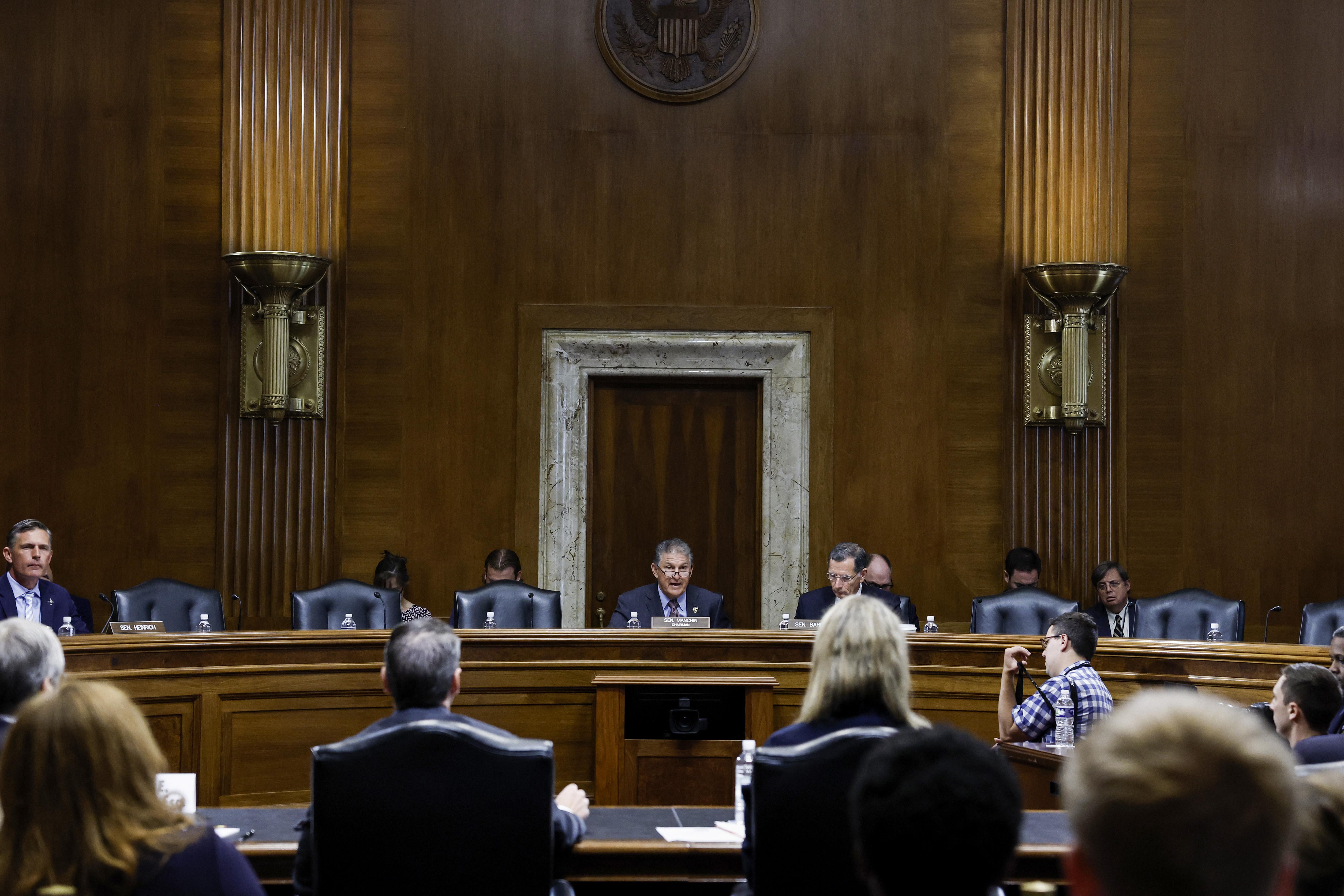
Senate Unanimously Passes Bipartisan Weather Forecasting Bill to Modernize NOAA Programs

What's Happening?
The U.S. Senate has unanimously passed the bipartisan Weather Research and Forecasting Innovation Reauthorization Act of 2026 (Weather Act). This legislation reauthorizes numerous weather forecasting and hazard
communication programs at the National Oceanic and Atmospheric Administration (NOAA). The bill, a bicameral agreement, is now expected to be taken up by the House of Representatives and sent to the President's desk before the end of the 119th Congress. Key sponsors include Senator Ted Cruz (R-Texas), Chairman of the Senate Commerce Committee, and Senator Maria Cantwell (D-Wash.), Ranking Member. The Weather Act incorporates over a dozen bipartisan bills, including Senator Cruz’s NOAA Weather Radio Modernization Act, which aims to upgrade weather radio equipment for more reliable emergency broadcasts. The legislation was developed in response to gaps identified after the deadly July 2025 floods in Texas’ Hill Country.
Why It's Important?
This legislation is crucial for enhancing the nation's preparedness and response capabilities to severe weather events, which are becoming increasingly dangerous and costly. By modernizing NOAA's forecasting technologies and improving research-to-operations transitions, the Weather Act aims to deliver more accurate and timely forecasts for various hazards, including floods, hurricanes, tornadoes, droughts, landslides, wildfires, and atmospheric rivers. Improved forecasting and communication of weather risks will provide communities, emergency managers, and first responders with more time to prepare and act, ultimately saving lives and protecting property across the country. The bill also addresses critical infrastructure needs by planning for the deployment of next-generation weather radar and closing radar coverage gaps, particularly in flash-flood prone regions. This comprehensive approach ensures that the U.S. remains at the forefront of weather science and disaster preparedness.
What's Next?
Following the Senate's unanimous passage, the Weather Act is anticipated to move to the House of Representatives for a vote. Given the bicameral agreement already reached, it is expected that the House will pass the bill, sending it to the President for signature. Once enacted, NOAA will begin implementing the reauthorized programs and initiatives. This will include advancing next-generation forecasting technologies, modernizing radar networks, and enhancing public communication systems like NOAA Weather Radio. The legislation's impact will be seen in improved weather outlooks for various sectors, including agriculture and water management, and more effective warnings for the general public. Continued bipartisan cooperation will be essential for the successful execution of these programs and for future adaptations to evolving weather challenges.
Beyond the Headlines
The unanimous passage of the Weather Act underscores a rare area of bipartisan consensus in U.S. politics: the critical need for robust national infrastructure and scientific capabilities to protect citizens from natural disasters. This legislation reflects a proactive approach to climate resilience, acknowledging the increasing frequency and intensity of extreme weather events. Beyond immediate safety, the bill's focus on long-range forecasting and improved data collection has significant economic implications for industries like agriculture, shipping, and energy, allowing for better planning and risk mitigation. The emphasis on modernizing NOAA's aging radar network also highlights the ongoing challenge of maintaining and upgrading essential public services in an era of rapid technological advancement, demonstrating a commitment to investing in foundational scientific agencies for national security and public welfare.