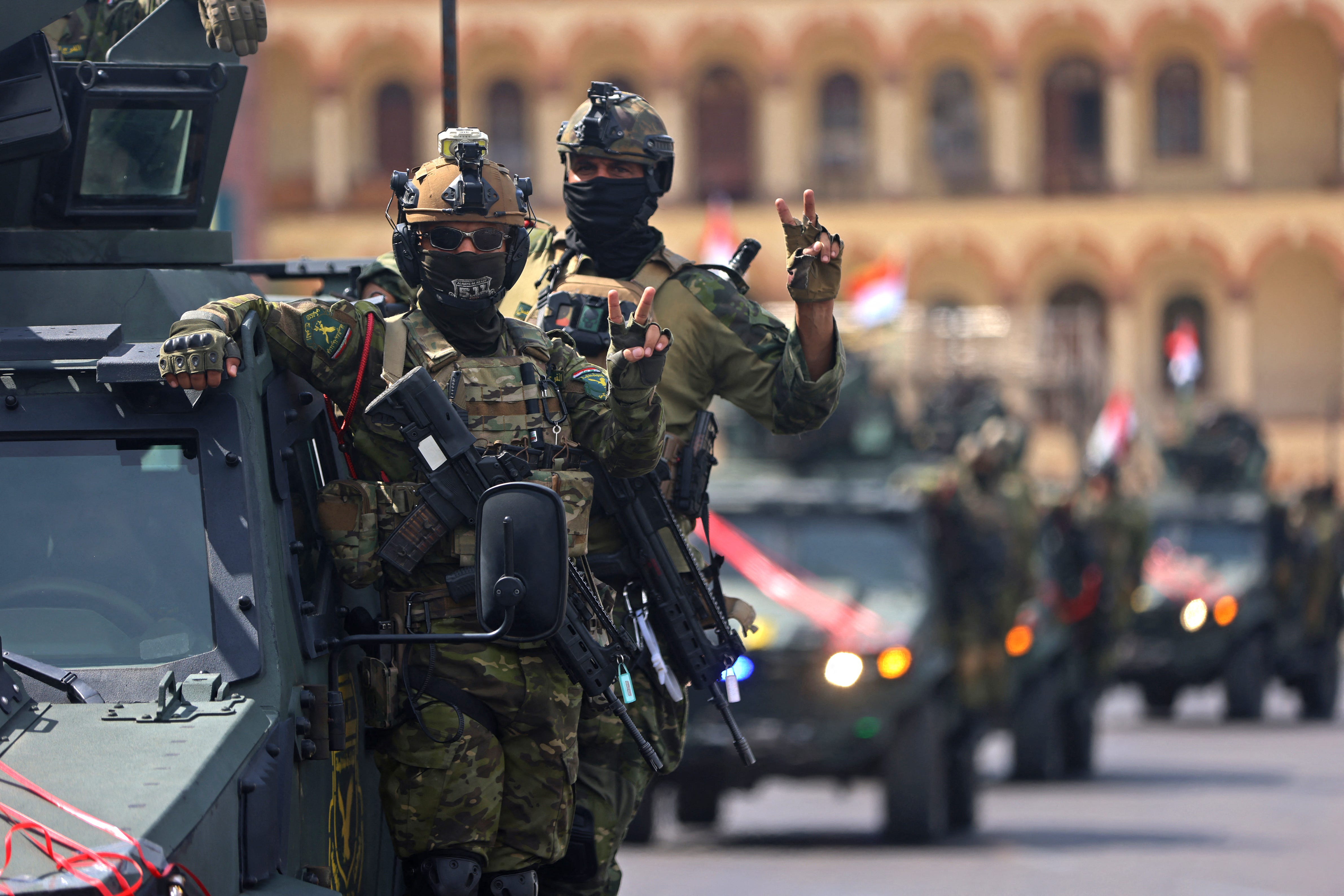
US troops are gone from Iraq, but ISIS remains. What comes next?

The US military has completed its withdrawal from Iraq, ending a 12-year mission aimed at defeating the Islamic State group (ISIS) and shifting primary responsibility for the country's security to Iraqi
U.S. Central Command said Wednesday that the final US troops and equipment completed an “orderly departure” from Erbil Air Base in northern Iraq. The move formally ends Operation Inherent Resolve's military mission in Iraq under a 2024 agreement between Washington and Baghdad.
The US military said the campaign defeated ISIS as an organized military threat in Iraq. American forces will continue to provide targeted training and intelligence support to Iraqi partners as the two countries move toward a bilateral defense relationship, according to the Department of War.
The withdrawal comes as Iraqi officials and security experts weigh how the country will handle remaining Islamic State cells and powerful Iran-aligned militias. Iran-backed groups have celebrated the US departure, while officials in Iraq's Kurdish region have expressed concern about losing US military capabilities, including air-defense systems, according to AP. Reuters also reported concerns among Iraqi security officials that the withdrawal could create openings for ISIS and increase the influence of Iran-backed militias.
Why did the US leave Iraq?
The U.S. invaded Iraq in 2003 and withdrew its forces in 2011. American troops returned in 2014 after ISIS captured large areas of Iraq and Syria, leading to the creation of a U.S.-led coalition to help Iraqi forces fight the group.
Iraq declared victory over ISIS' territorial control in 2017, although the group has continued to operate through scattered sleeper cells. Washington and Baghdad agreed in 2024 to wind down the coalition's military mission in Iraq.
Most U.S. troops had already left Iraqi bases last year. The remaining forces were concentrated in the semi-autonomous Kurdistan region, where Erbil Air Base became the final departure point.
The coalition's broader counter-ISIS mission continues outside Iraq. Its headquarters has moved to Jordan, while U.S. forces continue counter-ISIS operations in Syria alongside coalition partners and the Syrian government, CENTCOM said.
What happens to Iraq's security?
The Iraqi government now has primary responsibility for addressing the country's remaining security threats, including ISIS remnants and Iran-aligned militias, according to the Department of War.
Iraqi Prime Minister Ali al-Zaidi has described the US withdrawal as the beginning of a new phase focused on Iraq's sovereignty and the strength of its security institutions, AP reported. He said Iraqi forces would continue fighting ISIS and that his government would work to ensure non-state groups no longer maintain weapons.
The effort to disarm militias remains unresolved. Some smaller groups have agreed to surrender their weapons, but powerful Iran-backed factions have rejected the prospect or attached conditions to disarmament, AP reported.
Al-Zaidi has pushed the government's deadline for militia disarmament to June 2027, according to AP.
Iran and allied Iraqi groups have portrayed the U.S. withdrawal as a victory. Reuters reported that some Iraqi security experts also fear the departure could give Iran-backed groups greater influence over Iraq's security and political decisions.
Could ISIS return?
ISIS remains a concern even after the U.S. military's departure.
Reuters reported that Iraqi and Kurdish security officials worry about losing U.S. intelligence, logistical assistance and drones that helped Iraqi forces monitor ISIS remnants. Kurdish commander Sirwan Barzani told Reuters that he had seen increased movement by suspected ISIS sleeper cells after the withdrawal was announced.
Kurdish officials have also raised concerns about the removal of US air-defense systems. The Kurdish regional government said the region experienced more than 1,000 drone and ballistic-missile attacks during the recent U.S.-Iran conflict, AP reported.
The U.S. military maintains that Iraqi security forces are prepared to take the lead. The Department of War said the United States remains committed to counterterrorism and will continue working with Iraq and its partners to prevent ISIS from rebuilding in Iraqi territory.
Contributing: Reuters
Reporter Anthony Thompson can be reached at ajthompson@usatodayco.com, or on X @athompsonUSAT