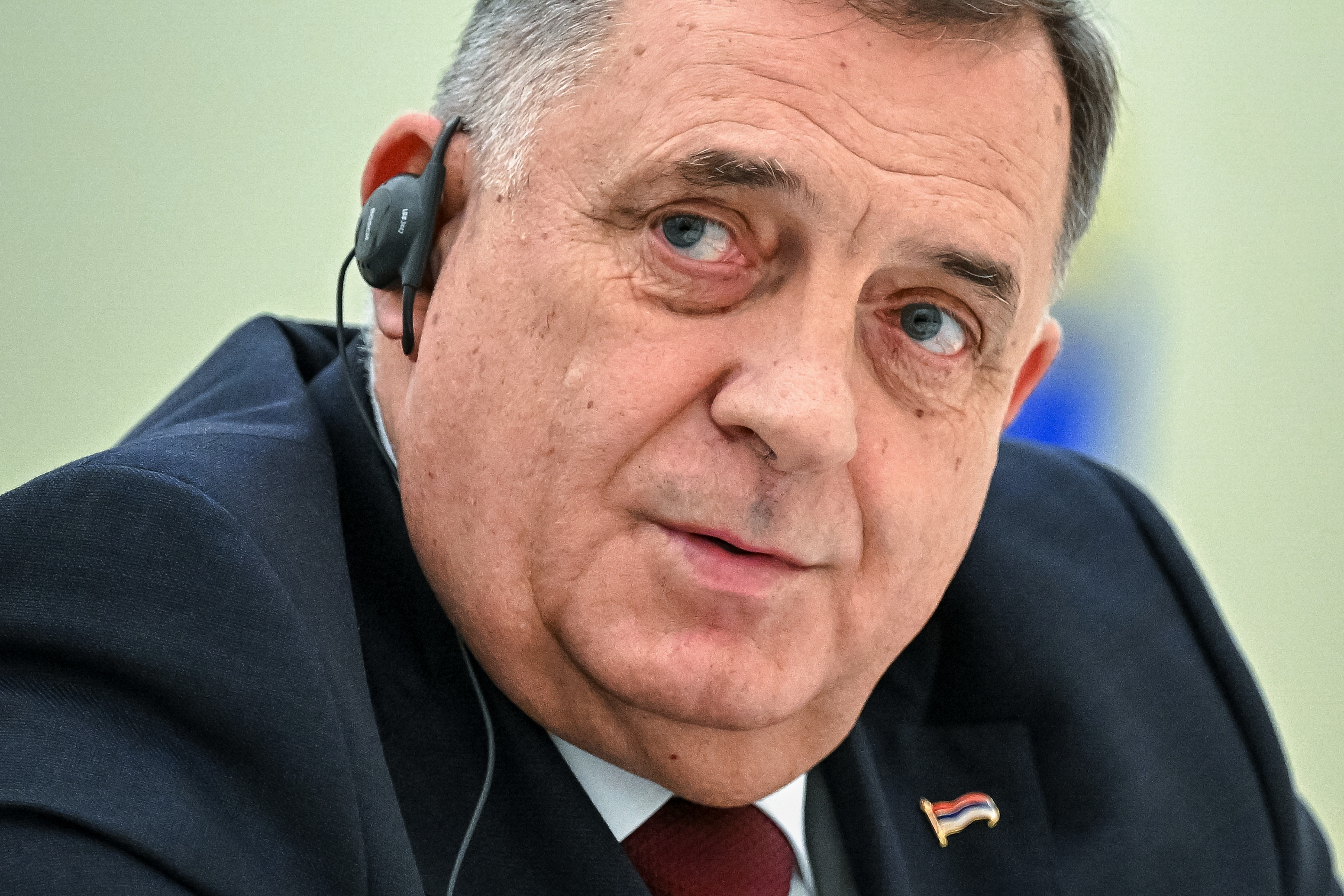
Bosnian Serb leaders meet with Russia's President Vladimir Putin ahead of weekend election in Bosnia

SARAJEVO, Bosnia-Herzegovina (AP) — Bosnian Serb pro-Russian ruling politicians on Tuesday met with Russia's President Vladimir Putin just days ahead of a general election this weekend in Bosnia.
leader Milorad Dodik and Prime Minister Savo Minic met with Putin in Moscow. Bosnian Serb official RTRS television said they won support from the Russian president for the vote on Sunday.
Bosnia's around 3.4 million voters will choose a multi-ethnic presidency, the central Parliament and the institutions of the two entities. The complex network of institutions was created in a peace agreement that ended Bosnia's 1992-95 war.
Dodik, who is a former Bosnian Serb president, is staunchly pro-Russian and has traveled to Moscow ahead of past elections as well.
Dodik has been banned from holding public office in Bosnia but remains the leader of the governing Alliance of Independent Social Democrats and has dominated the preelection campaign in the Serb-held part of Bosnia.
While a chief Russian ally in the Balkans, Dodik has repeatedly clashed with Western officials overseeing peace in the country. He faced U.S. sanctions during the Biden administration.
The Balkan nation remains ethnically tense and economically weak decades after the end of the war. Bosnia is formally seeking European Union membership but progress has been slow.
Dodik's calls for separation of the Serb entity from Bosnia have sparked fears in the West of renewed instability in the Balkans as the war rages in Ukraine.
War-era tensions ahead of the Oct. 4 election were revived by the public homage among Bosnian Serbs and in Serbia to the wartime army commander Ratko Mladic who died in late August while serving a life sentence for genocide and other war crimes.
Bosnian Serbs view Mladic as a hero despite his conviction by a U.N. court over the massacre of more than 8,000 Muslim men and boys in Srebrenica in 1995, and other atrocities. Key Bosnian Serb officials attended the funeral service for Mladic in Belgrade that sparked harsh EU criticism.
The Bosniaks, who are mainly Muslim, and Croats, together form Bosnia's second entity called the Federation of Bosnia-Herzegovina. The ethnic Serb and the Bosniak-Croat entities are bound together by joint central institutions.
The war in 1992 started after Bosnia declared independence from the Serb-led former Yugoslavia and ethnic Serbs took up arms to carve out their own state and join Serbia. More than 100,000 people died in the conflict that displaced millions.