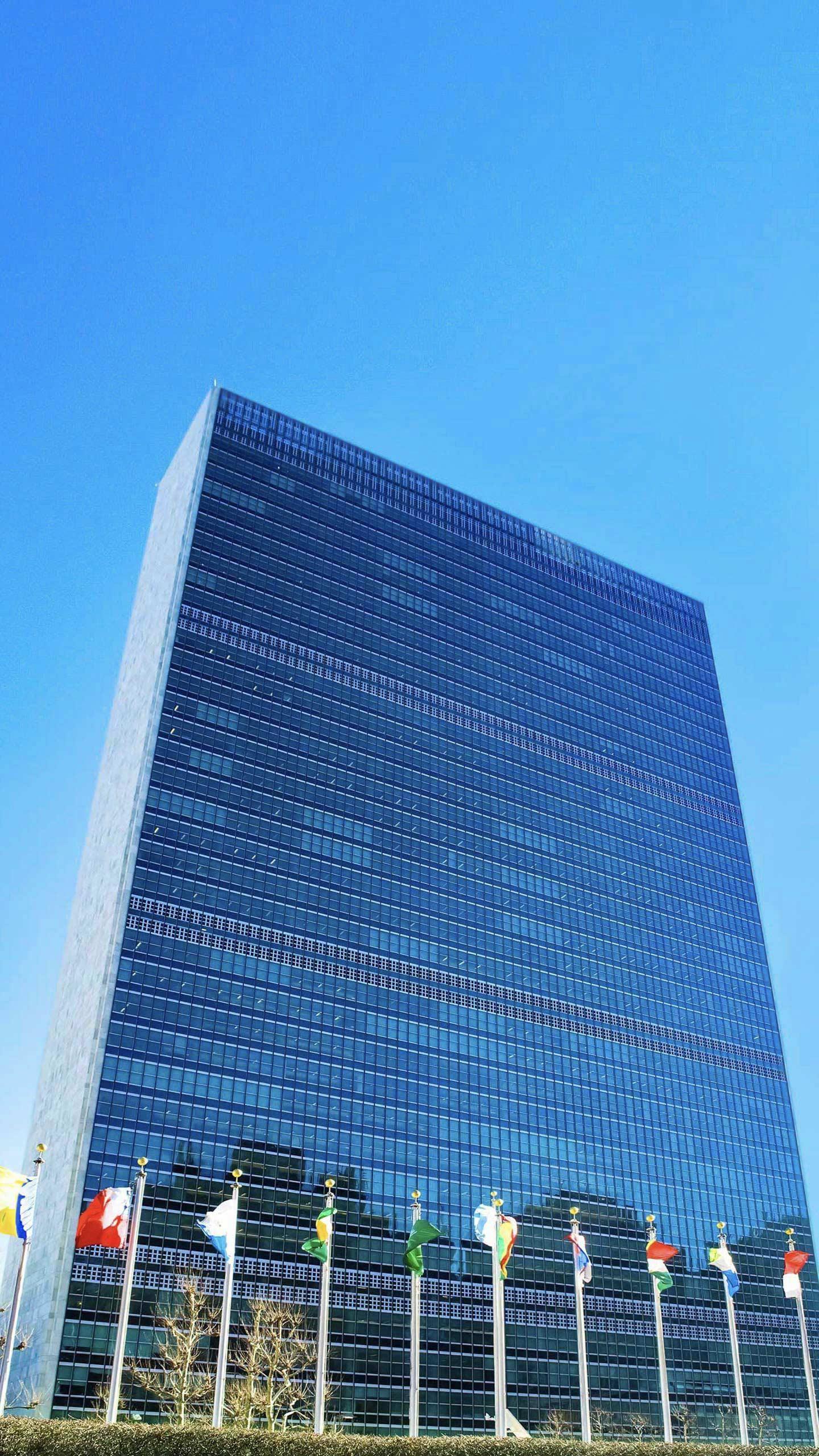
Former UN Official Urges Deep Reform for United Nations to Address Global Challenges

What's Happening?
Erik Solheim, former UN Under-Secretary-General and Executive Director of the United Nations Environment Programme, has called for stronger multilateral cooperation and deep reform of the United Nations.
Speaking on the sidelines of the Global Governance Forum in Xiongan, Solheim emphasized that global challenges such as conflicts and climate change cannot be tackled by any single country. He highlighted the necessity for the UN to undergo significant restructuring to effectively address these complex issues. Solheim's remarks underscore a growing sentiment among international figures that the current framework and operational mechanisms of the UN are insufficient to meet contemporary global demands. His call for reform is rooted in the belief that a more robust and adaptable UN is crucial for fostering international stability and progress in an increasingly interconnected world. The discussion around UN reform often centers on making the organization more efficient, representative, and capable of rapid response to emerging crises.
Why It's Important?
The call for deep reform of the United Nations by a former high-ranking official like Erik Solheim signals a critical juncture for international governance. The UN, established post-World War II, faces scrutiny regarding its effectiveness in preventing conflicts, addressing humanitarian crises, and tackling global issues like climate change. A reformed UN could potentially lead to more coordinated international responses to global threats, benefiting U.S. foreign policy objectives that often rely on multilateral cooperation. Conversely, a failure to reform could diminish the UN's relevance, forcing individual nations, including the U.S., to bear a greater burden in managing global challenges unilaterally or through ad-hoc alliances. The U.S., as a permanent member of the Security Council, has a significant stake in the UN's structure and efficacy, as reforms could alter its influence or require adjustments to its diplomatic strategies. The debate over reform also touches upon the distribution of power and representation within the UN, which could have long-term implications for global political dynamics.
What's Next?
The ongoing discussions surrounding UN reform are likely to intensify, particularly as global challenges continue to mount. Member states, including the U.S., will face increasing pressure to engage in substantive dialogues about potential structural and operational changes. Key areas for future debate will likely include the expansion of the UN Security Council, the reform of its veto power, and improvements in bureaucratic efficiency. Proposals for reform often involve complex negotiations among diverse national interests, making consensus difficult but essential. International forums and diplomatic channels will serve as platforms for these discussions, with various nations advocating for changes that align with their geopolitical interests. The outcome of these reform efforts could redefine the UN's role in global affairs, influencing its capacity to mediate conflicts, enforce international law, and coordinate responses to humanitarian and environmental crises. The U.S. will need to navigate these discussions carefully to protect its interests while also contributing to a more effective global governance framework.
Beyond the Headlines
The push for UN reform extends beyond mere operational adjustments; it delves into fundamental questions about global power structures and the principles of international cooperation. At its core, the debate reflects a tension between the UN's founding ideals of collective security and the realities of a multipolar world with shifting geopolitical landscapes. Ethical considerations arise regarding equitable representation, particularly for underrepresented regions, and the moral implications of the veto power held by a few nations. Legally, reforms could necessitate amendments to the UN Charter, a complex undertaking requiring broad international consensus. Culturally, a reformed UN might foster a more inclusive global dialogue, potentially shifting the balance of influence and promoting a more diverse set of perspectives in international decision-making. The long-term implications could include a re-evaluation of national sovereignty in the face of global challenges, potentially leading to new models of shared responsibility and governance that transcend traditional state-centric approaches.