EU Bolsters Space Independence Amid U.S. Uncertainty and Russian Threats

What's Happening?
The European Union is actively strengthening its independent space capabilities, focusing on military space surveillance, satellite communications networks, and expanding launch capacity. This push is driven
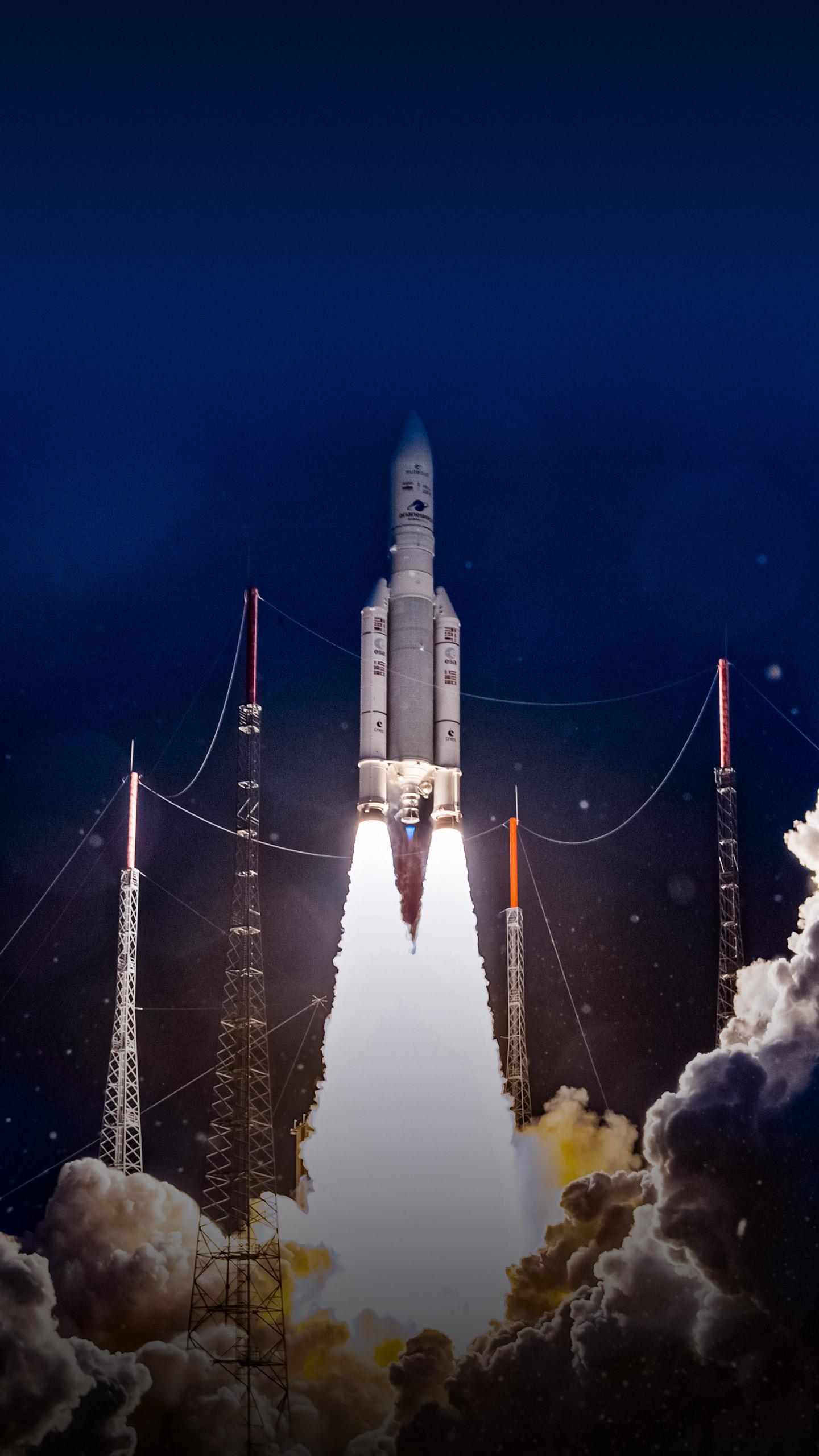
by heightened uncertainty regarding U.S. cooperation and the need for Europe to operate its own surveillance and communication networks, especially in light of Russian nuclear threats. Fifteen EU member states, including Germany, France, and Italy, have agreed to jointly acquire and share military space surveillance information to address satellite collision risks and operational interference. This initiative, valued at approximately $56.02 million, aims for initial operational capability by early 2029. Additionally, the EU is developing its secure satellite communications network, IRIS², to ensure reliable communications for governments, defense, and security agencies during crises. The European Space Agency (ESA) is also exploring increased launch rates for Ariane 6 and Vega C rockets and fostering new launch providers to meet growing demand for satellite deployment.
Why It's Important?
This strategic shift by the EU has significant implications for global space dynamics and U.S. foreign policy. Europe's determination to reduce dependence on the United States for critical space services could lead to a re-evaluation of existing international space cooperation frameworks. The EU's investment in its own capabilities, including secure satellite communications and independent launch capacity, signals a move towards greater autonomy in space, potentially altering the competitive landscape for U.S. space companies. The joint procurement of space surveillance information and the development of IRIS² highlight a concerted effort to mitigate risks associated with relying on external partners for essential defense and security infrastructure. This could impact U.S. defense contractors and technology providers who have historically supplied European nations. Furthermore, the EU's actions underscore a growing concern among allies about the reliability of U.S. support, prompting them to build self-sufficiency in critical areas.
What's Next?
The EU plans to complete a supplier assessment survey for space surveillance information by December 2026, followed by a project arrangement among member states in 2027–2028, and the pursuit of a framework contract. Initial operational capability for the joint space surveillance information framework is expected in early 2029. The IRIS² secure satellite communications network is scheduled to begin services in phases from 2029. The ESA will continue to examine higher annual launch rates for Ariane 6 and Vega C and support new launch providers through initiatives like the European Launcher Challenge. Annual exercises are also planned to test response procedures for the strengthened Space Threat Response Architecture (STRA). These developments indicate a sustained and accelerated effort by the EU to solidify its independent space capabilities in the coming years.
Beyond the Headlines
The EU's push for space independence extends beyond immediate security concerns, reflecting a broader geopolitical realignment. The 'wake-up call' experienced by Europe due to U.S. companies withdrawing from an international space summit and NASA's decision to pull out of a European Venus mission highlights a growing sentiment of distrust and the need for strategic autonomy. This could lead to a more fragmented global space ecosystem, with distinct blocs developing their own capabilities and standards. Ethically, the emphasis on military space surveillance raises questions about the weaponization of space and the potential for increased international tensions. Culturally, it signifies a shift in European identity, moving towards a more self-reliant and assertive role on the global stage, particularly in critical technological domains. The long-term implications could include a more competitive and less collaborative international space environment.