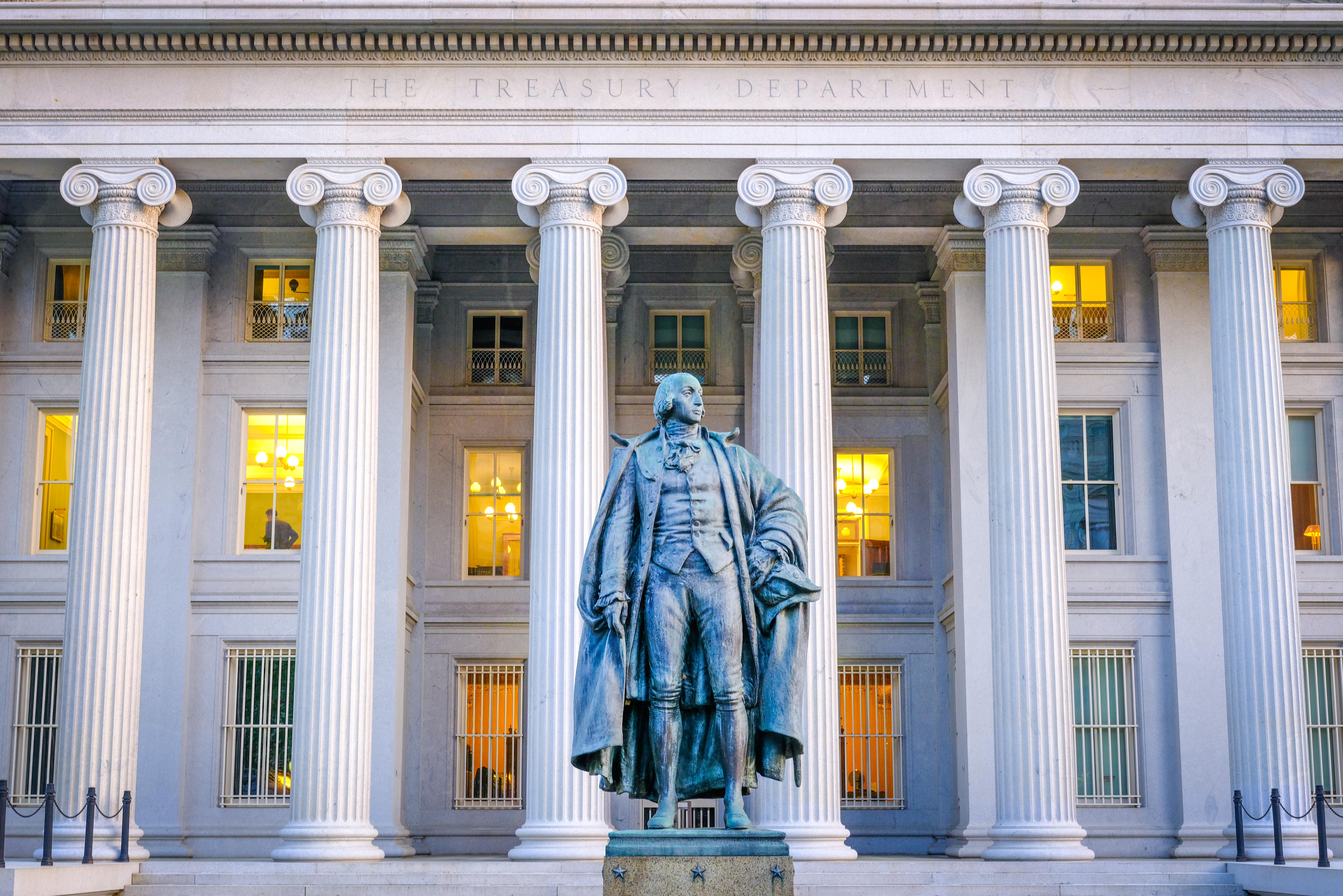
U.S. Treasury Sanctions Canadian Money Services Firms Over Iran-Related Transactions

What's Happening?
The U.S. Department of the Treasury announced new sanctions targeting eight Canadian money services businesses. These firms, based in Ontario and British Columbia, are accused of enabling the Iranian regime,
sanctioned entities associated with it, and other illicit actors to move assets into and out of Iran. The sanctions, part of 'Operation Economic Outcast,' were issued by the Treasury’s Office of Foreign Assets Control (OFAC). The designated businesses include Diverse Trade Inc (doing business as Million Exchange), 1380079 BC Limited, Top PC Technician Inc, NIA Nations Currency Ltd, 2397639 Ontario Ltd (doing business as Farah Exchange), CCC Inc, B Galaxy Inc, and Darvish Exchange. Additionally, the Treasury's Financial Crimes Enforcement Network (FinCEN) issued an order cutting off virtual currency exchanger MEXC Global from the U.S. financial system due to its alleged facilitation of at least $16 billion in illicit transactions linked to Iran, North Korea, and Russia.
Why It's Important?
These sanctions are significant as they effectively sever the targeted Canadian firms from the dollar-based financial system, blocking any assets they hold in the United States and prohibiting transactions with U.S. persons or entities. This action underscores the U.S. government's commitment to preventing Iran and other sanctioned entities from circumventing international financial restrictions. Secretary of the Treasury Scott Bessent emphasized that Canada will not be a safe haven for illicit financial facilitators supporting the Iranian regime. The move aims to disrupt financial channels used by Iran globally, impacting its ability to fund its activities. The inclusion of a virtual currency exchanger like MEXC Global highlights the U.S. Treasury's expanding focus on digital assets in its efforts to combat illicit finance and sanctions evasion, affecting the broader cryptocurrency ecosystem.
What's Next?
The U.S. Treasury is expected to continue its aggressive stance against entities that facilitate sanctions evasion for Iran and other adversaries. Further investigations and designations of individuals or entities involved in similar illicit financial activities are likely. The action against MEXC Global signals a potential increase in scrutiny and regulatory actions against virtual currency platforms that are perceived to have inadequate anti-money laundering controls or facilitate transactions with sanctioned parties. Financial institutions and businesses globally, particularly those with ties to Canada or involved in virtual currency, will need to enhance their compliance measures to avoid inadvertently engaging with sanctioned entities or facing similar penalties from the U.S. Treasury.
Beyond the Headlines
This round of sanctions reflects a broader U.S. strategy to exert economic pressure on Iran and its proxies, aiming to curb their influence and activities. The targeting of Canadian firms also highlights the extraterritorial reach of U.S. sanctions and the expectation that allied nations will cooperate in enforcing these measures. The focus on virtual currency exchangers like MEXC Global indicates a growing concern within the U.S. government about the use of digital assets for illicit finance, potentially leading to more stringent regulations and enforcement actions in the cryptocurrency sector. This could prompt a re-evaluation of compliance frameworks by virtual asset service providers worldwide to mitigate risks associated with sanctions evasion and illicit financial flows.