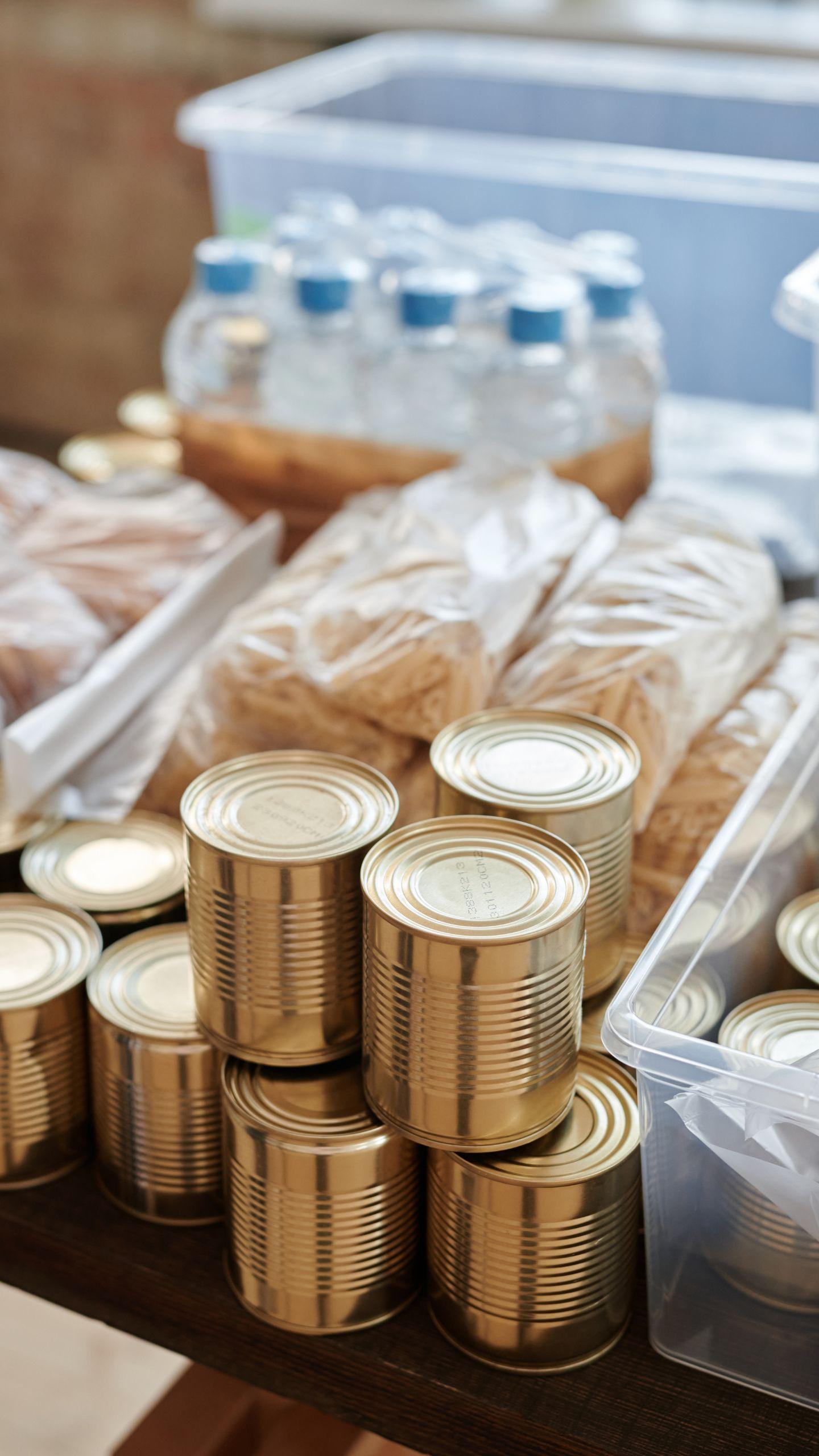
UK Government Relaunches 'Be Ready' Campaign, Urging Households to Stockpile Three Days of Supplies

What's Happening?
The United Kingdom government has relaunched its 'Be Ready' campaign, advising households to prepare for potential national emergencies by stockpiling three days' worth of essential supplies. This initiative
comes in response to recent severe weather events, such as last winter's storms and this summer's wildfires, which have highlighted vulnerabilities in essential services like telephone, electricity, water, and internet. Dan Jarvis, in a written statement to Parliament, emphasized how extreme weather can disrupt daily life and critical infrastructure. The guidance specifically recommends that Britons store nine liters of bottled water and non-perishable food for three days. Additionally, the government suggests including items such as hand sanitizer, a flashlight with batteries, and a radio in emergency kits. Wes Streeting commented on the campaign, aiming to make people 'alert but not alarmed,' while also questioning the country's resilience if supermarket payment systems were to fail. The campaign also ties emergency planning to cyber and infrastructure risks, with Jarvis warning about disruptions to services from extreme weather and Streeting highlighting the threat of cyberattacks and hostile-state pressure on everyday systems.
Why It's Important?
This campaign underscores a growing concern within the UK government regarding national resilience against various threats, ranging from natural disasters to cyberattacks. By encouraging individual preparedness, the government aims to mitigate the immediate impact of service disruptions on the populace, thereby reducing the burden on emergency services and infrastructure during crises. The emphasis on cyber and infrastructure risks reflects an acknowledgment of modern vulnerabilities, particularly in an increasingly digital and interconnected society. The potential failure of critical systems, such as supermarket payment networks, as highlighted by Wes Streeting, could lead to widespread societal disruption and economic instability. This proactive approach to public preparedness could serve as a model for other nations facing similar challenges, promoting a culture of self-reliance and community resilience. However, it also raises questions about the adequacy of national infrastructure and emergency response systems if individual stockpiling becomes a necessary measure for basic survival.
What's Next?
Following the relaunch of the 'Be Ready' campaign, the UK government will likely continue to promote its guidance through various public awareness channels. The focus will be on encouraging widespread adoption of the recommended stockpiling practices among households. There may be further discussions and policy developments regarding the resilience of national infrastructure, particularly in light of the identified vulnerabilities to extreme weather and cyber threats. The National Cyber Security Centre's recent issuance of 50,000 alerts to organizations regarding a PHP software security vulnerability further emphasizes the ongoing need for robust cybersecurity measures. Future government statements or reports might detail progress on infrastructure hardening and public engagement with the 'Be Ready' initiative. The campaign's success will likely be measured by public uptake and the perceived improvement in national preparedness for various emergencies.
Beyond the Headlines
The 'Be Ready' campaign reflects a broader societal shift towards acknowledging and preparing for an era of increased uncertainty, driven by climate change, geopolitical tensions, and technological vulnerabilities. Beyond the practical advice of stockpiling, the campaign subtly communicates a message about the evolving role of the state and individual responsibility in national security. It suggests a move away from a purely reactive disaster response to a more proactive, community-based resilience model. Ethically, it raises questions about equitable access to resources for stockpiling, as not all households may have the financial means or storage capacity to comply with the recommendations. Culturally, it could foster a greater sense of collective responsibility and community preparedness, or conversely, it might inadvertently fuel anxiety and a sense of impending crisis. The long-term implications could include changes in consumer behavior, with increased demand for non-perishable goods and emergency supplies, and potentially a re-evaluation of urban planning and infrastructure development to enhance resilience.