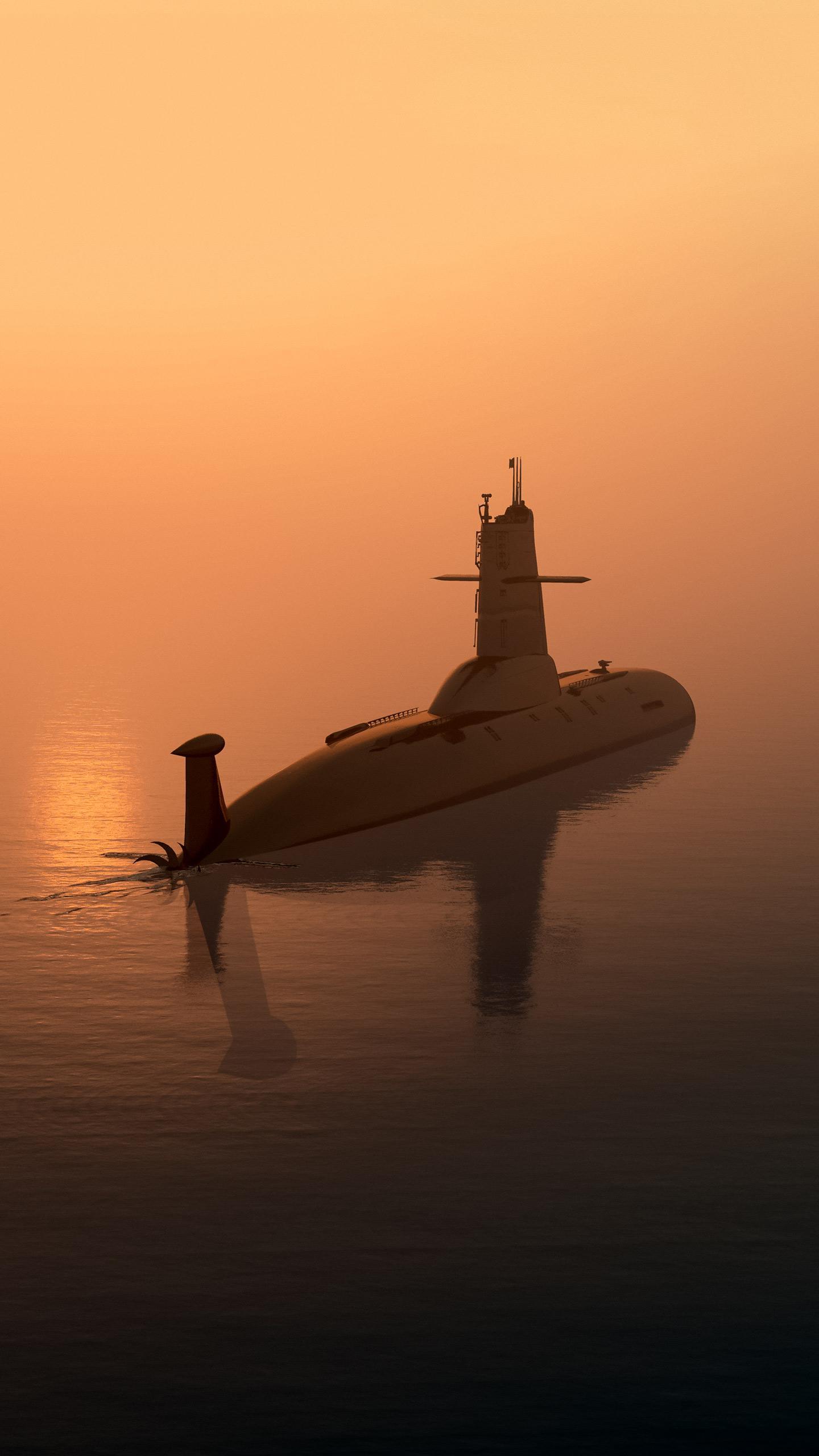
Australia Advances $8 Billion Naval Base Upgrade to Host U.S. and UK Nuclear Submarines

What's Happening?
Australia is proceeding with an A$8 billion (approximately US$5.2 billion) upgrade of its HMAS Stirling naval base. This significant investment is aimed at accommodating rotating U.S. and British nuclear-powered
submarines starting in late 2027. Defence Minister Richard Marles announced an additional A$88 million investment in Australia's submarine workforce, coinciding with the unveiling of the 2026 Nuclear-Powered Submarine Workforce Strategy. The upgrades to HMAS Stirling, located near Perth, are part of the AUKUS security partnership between Australia, the United States, and the United Kingdom. These enhancements include new submarine berths at Diamantina Pier, improved shore power infrastructure, emergency management facilities, and a new submarine training center. The training facility, expected to be completed by early 2027, will feature 16 Virginia-class submarine simulators. The USS Colorado, a U.S. Navy Virginia-class attack submarine, is currently undergoing maintenance at HMAS Stirling, with over 100 Australian personnel involved, and is anticipated to be the first U.S. vessel operating under the planned rotational force next year. Marles indicated that approximately 1,200 American households might relocate to the region over the next four to five years as the submarine presence expands.
Why It's Important?
This substantial investment and infrastructure development underscore the deepening military cooperation within the AUKUS alliance, directly impacting U.S. strategic capabilities in the Indo-Pacific. By providing a forward operating base for U.S. nuclear-powered submarines, Australia significantly enhances the U.S. Navy's reach and presence in a region increasingly characterized by geopolitical competition. This move is crucial for projecting power and maintaining stability, particularly in response to the rapid expansion of Chinese and Russian submarine fleets. The relocation of American households and the involvement of Australian personnel in maintenance and training signify a long-term commitment and integration of forces, fostering interoperability and shared defense responsibilities. For the U.S., this reduces logistical burdens and provides a critical strategic advantage, allowing for more agile and sustained submarine operations closer to potential areas of conflict. The AUKUS program also aims to enable Australia to operate its own conventionally armed, nuclear-powered submarine fleet from the early 2030s, further strengthening allied naval power.
What's Next?
The HMAS Stirling upgrades are scheduled for completion by late 2027, with the training facility operational by early 2027. The USS Colorado is expected to be the first U.S. vessel to operate under the planned rotational force next year. Over the next four to five years, approximately 1,200 American households are projected to relocate to the region, supporting the expanded submarine presence. The A$88 million workforce investment will span six years, expanding technical training and employment pathways for at least 275 apprentices and trainees in Western Australia and South Australia. This ongoing development will support the long-term goal of Australia operating its own nuclear-powered submarine fleet from the early 2030s, with the wider AUKUS program expected to support over 20,000 Australian jobs in the coming decades. Continued collaboration and resource allocation will be necessary to ensure the successful implementation and sustained operation of this strategic initiative.
Beyond the Headlines
The establishment of this advanced naval base and the integration of U.S. and UK nuclear submarines into Australian operations represent a significant shift in regional security architecture. Beyond military implications, this development could foster deeper economic and social ties between the U.S. and Australia, as evidenced by the projected relocation of American families. It also highlights the increasing importance of burden-sharing among allies in maintaining global security, particularly in contested maritime domains. The AUKUS partnership, with its focus on advanced military technology and nuclear propulsion, sets a precedent for future defense collaborations and could influence other nations' strategic alignments. The ethical and environmental considerations of hosting nuclear-powered vessels, while not explicitly detailed, will likely remain a subject of public and political discourse, requiring transparent management and robust safety protocols. This initiative also underscores a broader trend of naval modernization and strategic positioning in response to evolving global power dynamics.